Jason Hennah is a qualified signwriter, military veteran and Director of Sign Portal, with hands-on experience in signage manufacturing, installation, laser cutting, engraving and CNC fabrication.
Military discipline drives quality
At Sign Portal, Jason Hennah applies his military background to enforce repeatable, standards-led production: plan the work, prove the process, then repeat without drift.
The discipline and accountability from service translate into checklists, first-article sign-offs and documented workflows that keep quality consistent across printing, routing, laser work and installs.
On the floor that looks like substrate and ink batch traceability, pre-flight checks at artwork handover, and device/media profiles locked to each SKU so a reprint six months later looks like day one. First-off parts are measured for hole centres, edge clearances and legibility/contrast before the rest of the batch moves. Install packs carry the same data, so the crew on site sees exactly what was approved — not a guesswork printout.
Scaling Australian in-house

As Director of Sign Portal, Jason has grown the operation around genuine in-house manufacturing in Australia to tighten control, speed up delivery and protect quality.
Investment in flatbed and roll-to-roll printing, precision laser cutting and CNC routing gives tighter quality control, faster lead times and true customisation for complex jobs.
That capability spans everyday and specialist materials: 3–4 mm ACM panels and 1.6–3.0 mm aluminium for exterior plates, cast acrylic for clear edge finishes, polycarbonate for impact-prone areas, and stainless steel for asset tags. CNC programs use onion-skin passes and tabbing so small parts don’t chatter; roll-to-roll work is kiss-cut for clean weeding on label runs. For acrylic, the team prints second-surface whites for depth, then laser-cuts for polished edges. And one rule is non‑negotiable in any pro shop: never laser PVC — it damages the machine and creates hazardous fumes.
Today, Sign Portal supplies signage to more than 150 councils nationwide, along with government organisations and brands including Economic Development Queensland, Queensland Rail, KTM, BYD, Google, Carpet Call and Southern Cross Audio.
- Emergency reprints for vandalised safety signs match previous batches exactly because artwork, materials and colour settings are version-controlled in the production system.
- Mixed-material wayfinding sets (ACM panels, acrylic inserts and vinyl overlays) hold a uniform brand colour by profiling each substrate and print mode before production.
- Large runs of serialised asset labels are cut and engraved in a single pass using laser jigs and variable data, reducing handling and keeping numbering error-free.
Merchandising Libraries signage and display solutions
Jason is also Director of Merchandising Libraries, a global supplier of signage, merchandising and display solutions for public, school and community libraries.
Across both businesses he focuses on product development and manufacturing workflows that deliver durable, easy-to-maintain displays for high-traffic spaces.
Typical library solutions include low-glare shelf labelling systems, interchangeable end-panel graphics, magnetic or slide-in holders for rapid updates, and rounded-edge acrylic pieces that stand up to heavy handling. For children’s areas, materials and finishes are chosen to resist scuffing and clean down easily without lifting print.
Standards-driven data

Seeing a gap in off-the-shelf software, Jason led the development of a sign-specific CRM that centralises enquiries, quoting, artwork control, production scheduling and proof history to reduce variation and errors.
Practically, that means artwork is version-locked to part numbers, bill-of-materials templates drive the right media and laminates, and barcoded job travellers tie every stage back to the approved proof. Colour libraries are device- and substrate-specific, so repeats don’t drift when a job moves between flatbed and roll machines.
Training apprentices in traditional and digital signmaking
Jason backs the future of the trade by employing young people and offering apprenticeship pathways at Sign Portal.
Apprentices learn brush skills and layout fundamentals alongside flatbed UV printing, laser cutting, CNC routing and digital finishing, so they can problem-solve on real jobs from day one.
They also get hands-on with the details that separate tidy jobs from callbacks: knife pressure and blade choice for clean weeding, when to choose cast over calendered films, the right combination of primer, VHB tape and mechanical fixing, and safe lifting/setup for large-format installs. Seeing a job from quote to install teaches why tolerances on drawings matter once you’re on site with a drill in hand.
Practical production guidance

Through the Signage Academy, Jason shares insights drawn from manufacturing and delivering real projects at scale.
Articles cover materials, production methods, installation, durability, compliance, maintenance and product selection, giving trades, councils and organisations clear, experience-based guidance.
Expect straight answers to everyday decisions: when to specify acrylic versus polycarbonate for impact zones, how to keep colours consistent across ACM, vinyl and acrylic in the same job, ways to reduce graffiti-removal time with the right films, and practical fixing details for posts, walls and glazing.

Keep learning
Related Articles
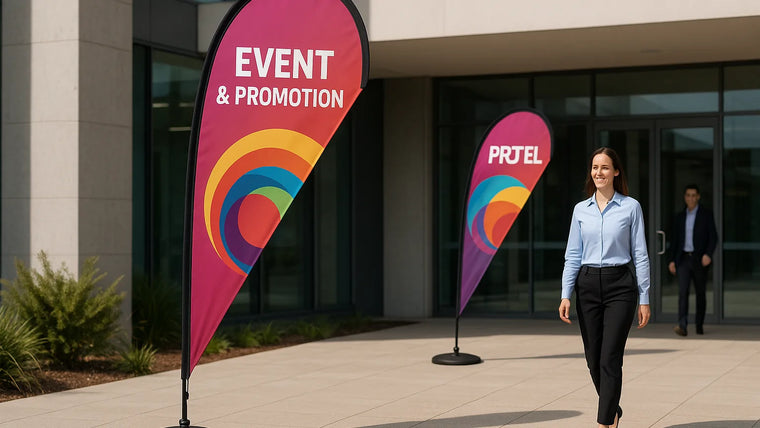
Teardrop Banners for Events and Promotions
Teardrop banners are aerodynamic, curved‑top fabric flags that hold tension to minimise flapping, delivering high visibility for events, retail forecourts and outdoor activations. Systems...
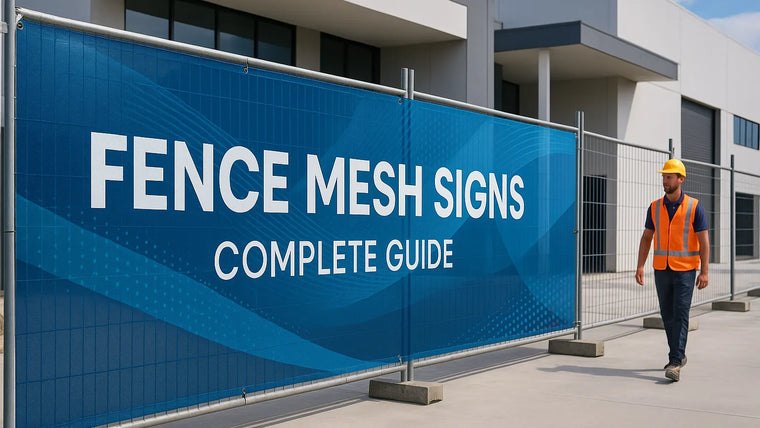
Fence Mesh Signs: Complete Guide
Fence mesh signs are printed mesh banners designed for temporary fencing and hoardings. Mesh allows airflow and can help reduce wind load compared with...
Best Materials for Crowd Control Barrier Graphics
For most outdoor events in Australia, perforated mesh banner is a versatile option because airflow can help reduce wind effects and it’s quick to...