Sign Portal Signage Academy
Knowledge that makes an impact.
Practical guides, compliance information, product knowledge and expert insights to help businesses choose, create, install and maintain signage.
Browse by Category
Explore articles by topic to find the information you need.
Latest from the Signage Academy
Clear, practical advice from our Australian signage team.
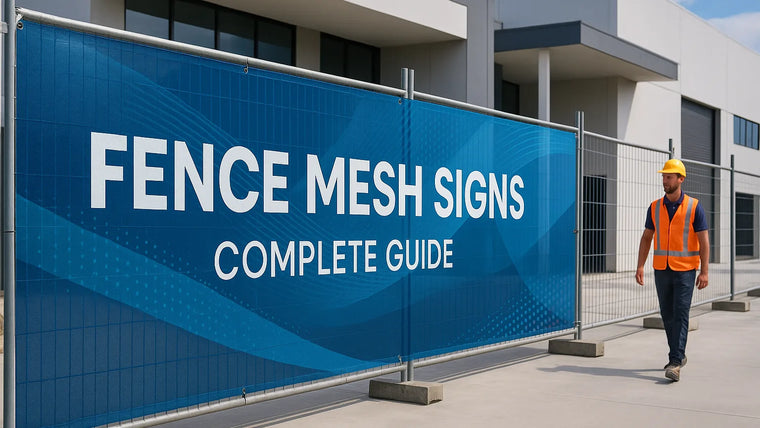
Fence Mesh Signs: Complete Guide
Fence mesh signs are printed mesh banners used on temporary fencing and hoardings. The perforated material allows airflow compared with a solid banner, while...
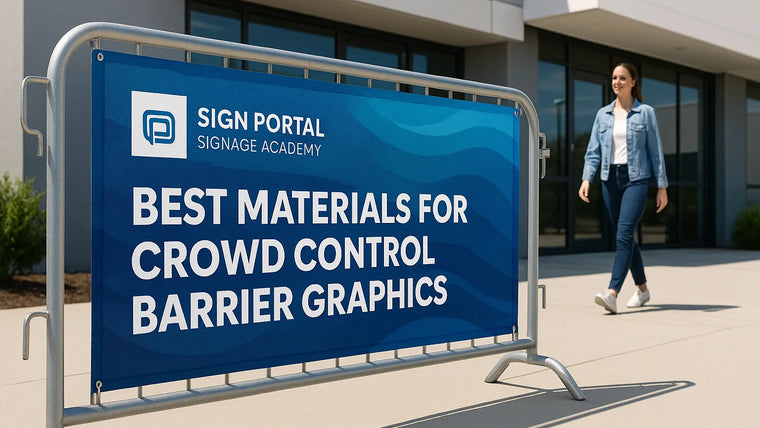
Best Materials for Crowd Control Barrier Graphics
For most outdoor events in Australia, perforated mesh banner is a versatile option because airflow can help reduce wind effects and it’s quick to...
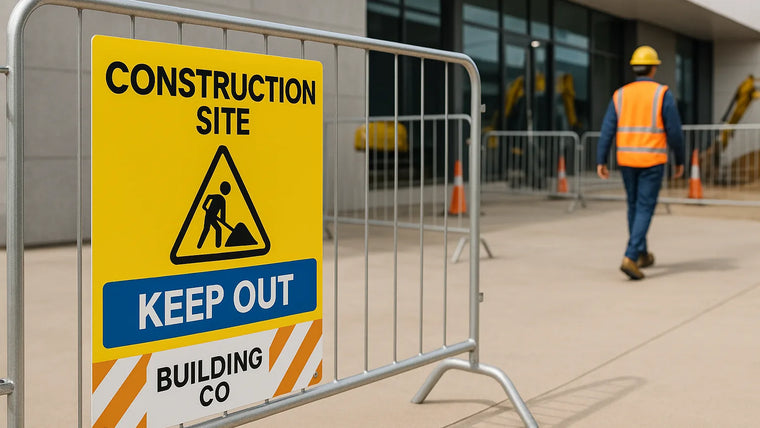
Crowd Barrier Signage for Construction Sites
Crowd barrier signage for construction sites uses panels, banners or decals mounted to portable barriers to guide pedestrians, brand perimeters and reinforce safety messages....
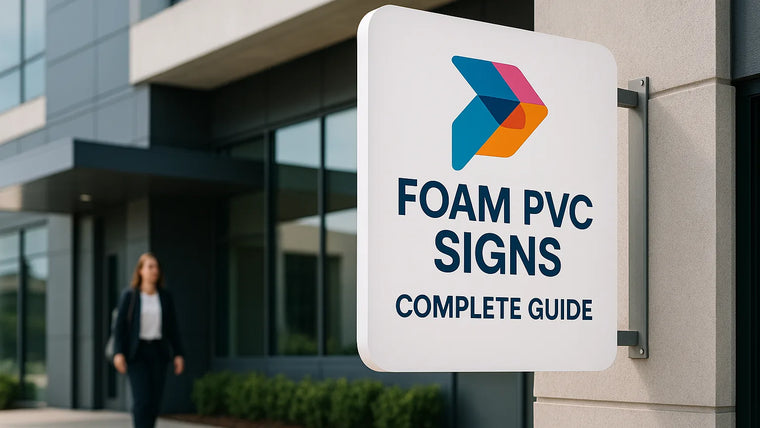
Foam PVC Signs: Complete Guide
Foam PVC (expanded PVC, often sold as Foamex) is a lightweight, rigid sheet ideal for indoor signage, POS displays and exhibition panels, and for...

What Is Corflute and Why Is It Used for Signs?
Corflute is a fluted polypropylene sheet used for temporary signage. It’s lightweight, economical and easy to print, so it’s popular for events, real estate,...
Corflute Signs Australia: Complete Guide
Corflute signs are lightweight fluted polypropylene panels often used for short‑term promotions, real estate boards, event branding and site notices. They can be printed...
Benefits of Aluminium Signs for Outdoor Use
Aluminium substrates are a common choice for outdoor signage in Australia because they offer corrosion resistance, a good stiffness‑to‑weight ratio, and strong compatibility with...
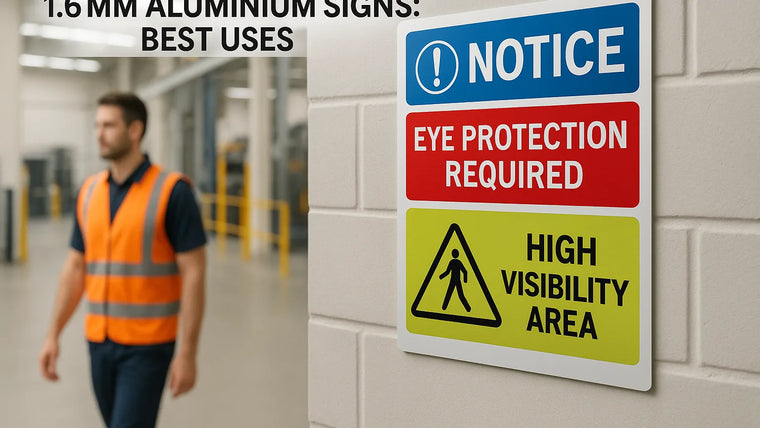
1.6mm Aluminium Signs: Best Uses
1.6 mm solid aluminium is a robust, non-composite choice for small-to-medium plates — equipment tags, wall-mounted safety notices, plant/asset ID panels and reflective-faced signs....
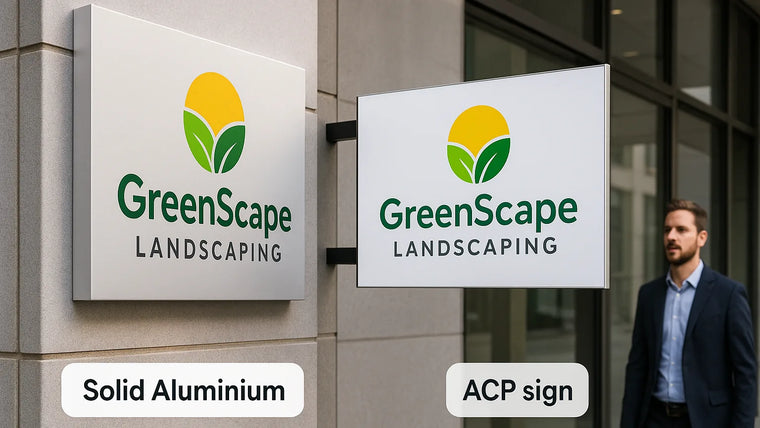
Solid Aluminium vs ACP Signs: Which Should You Choose?
Choose solid aluminium sheet when a non‑composite metal substrate is required by the project or authority, when pairing with a specified reflective system for...
Aluminium Signs Australia: Complete Guide
Aluminium signs are made from either aluminium composite panel (ACP) or solid aluminium sheet. Choose based on structure, durability, compliance and finish requirements:- ACP...
Solar Labels Australia: Complete Guide for Installers
In Australia, solar labels should clearly identify isolation points, multiple supplies, DC hazards, inverter circuits and earthing on PV and hybrid systems. Choose durable...
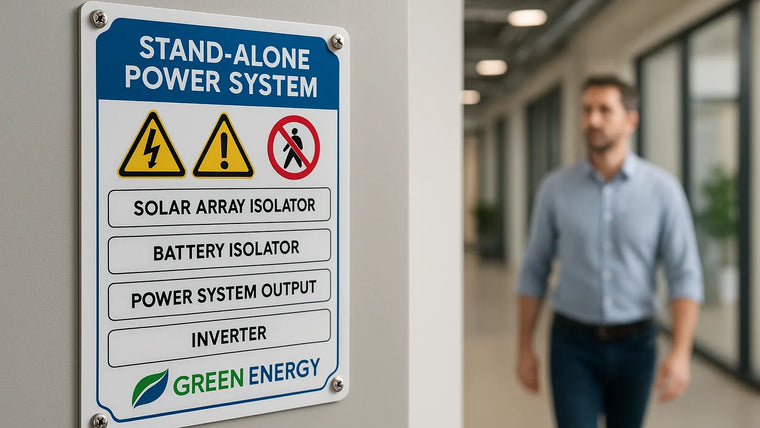
Labels for Stand-Alone Power Systems
Effective labels for stand‑alone power systems should help people identify energy sources and isolation points, recognise hazards and follow site procedures. Typical inclusions are...
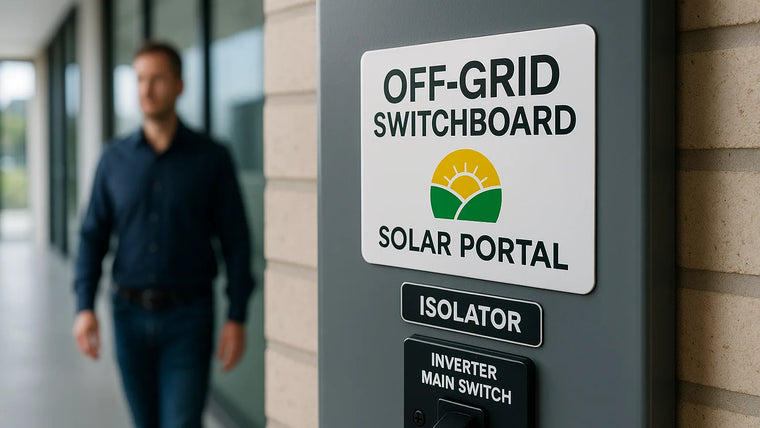
Off-Grid Switchboard Labels: Material and Placement Considerations
Choose durable label systems matched to the environment—engraving laminates, phenolic or reverse‑printed acrylic plates, or printed decals with a compatible protective laminate. Use high‑bond...
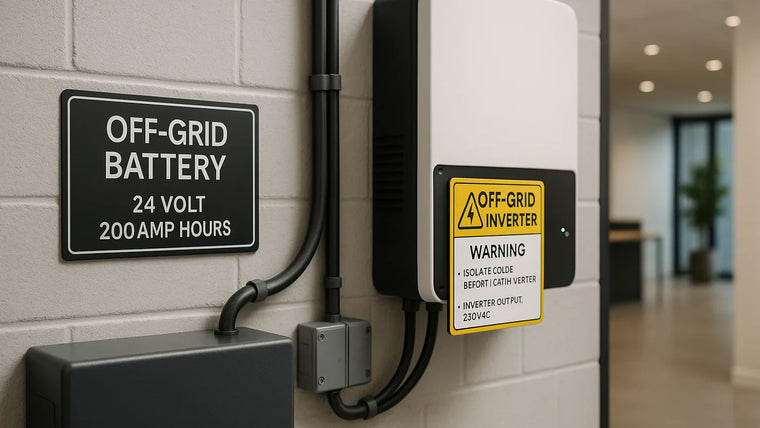
Off-Grid Battery and Inverter Labels Explained
Off‑grid battery and inverter labels identify equipment, communicate DC hazards and support isolation or restart steps. Durable options include engraved laminates, reverse‑printed acrylic and...
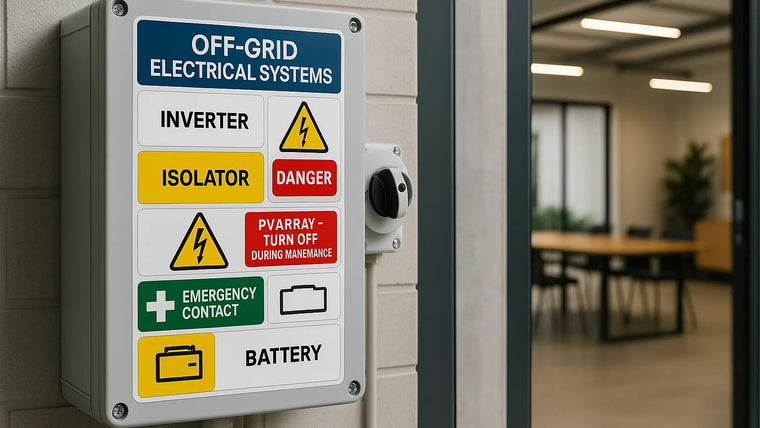
What Labels Are Commonly Used on Off-Grid Electrical Systems?
Typical off‑grid labelling covers: equipment/location IDs (inverters, PV combiners/enclosures, battery cabinets, generator/ATS, main switchboard, remote isolators; earthing system type and MEN link location); isolator/switch...
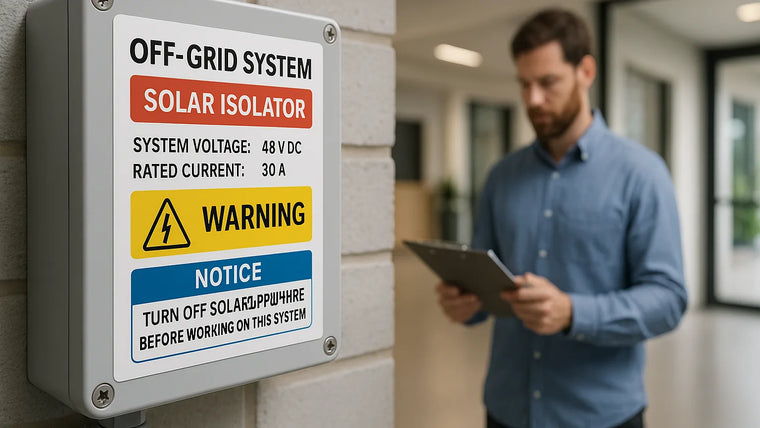
Off-Grid System Labels: Complete Guide
Off‑grid/stand‑alone power system labelling should clearly and permanently identify equipment, energy sources (PV, battery/ESS and generator), isolation points, hazards and any shutdown/start‑up instructions relevant...
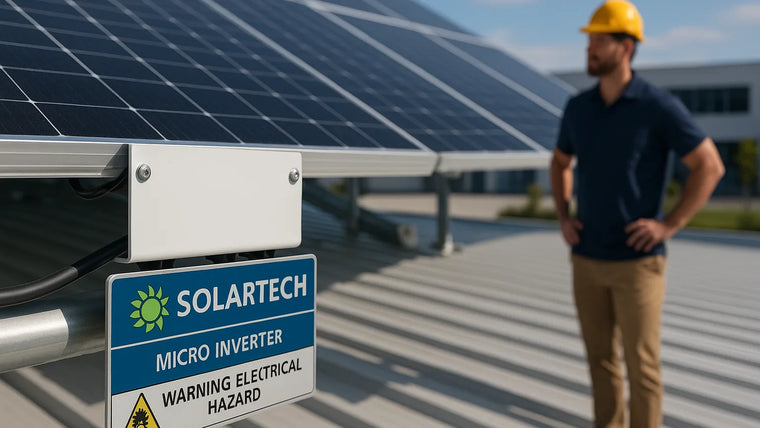
Durable Label Materials for Rooftop and Outdoor Solar Equipment
Specify durable, UV- and weather-stable labels suited to the substrate and exposure, and ensure wording, colours and placement align with AS/NZS 5033:2021, AS/NZS 4777.1,...
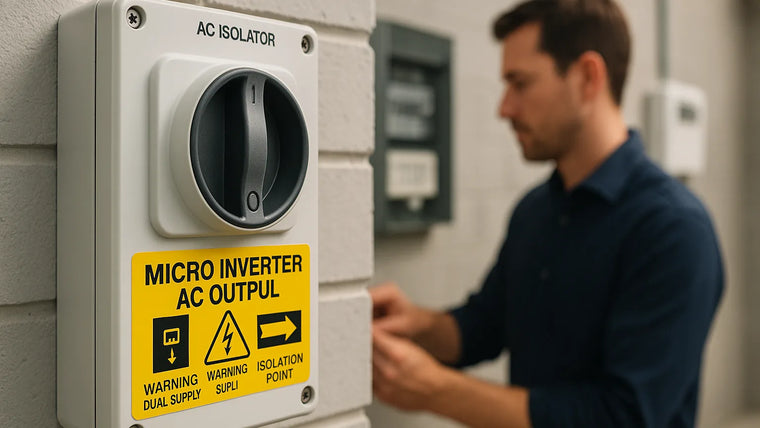
What Are Micro Inverter Labels Used For?
Micro‑inverter labels identify, warn and guide people on the AC side of PV systems that use module‑level micro‑inverters. In Australia they are commonly used...
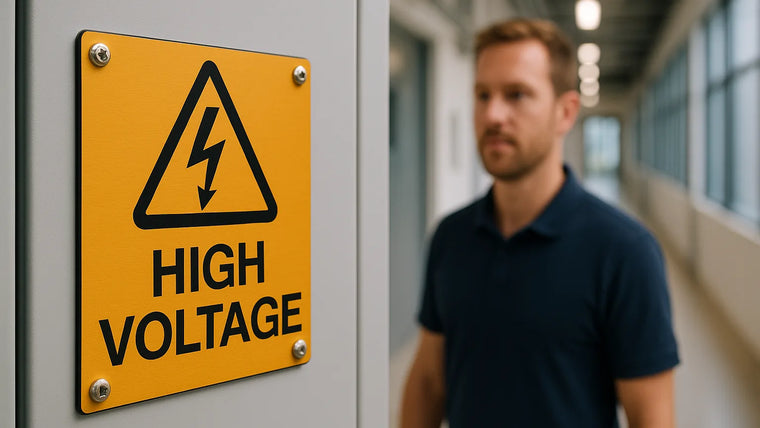
High Voltage Labels: Materials and Typical Uses
High voltage labels warn about hazardous electrical energy on equipment and access points. This overview of high voltage labels materials and typical uses helps...
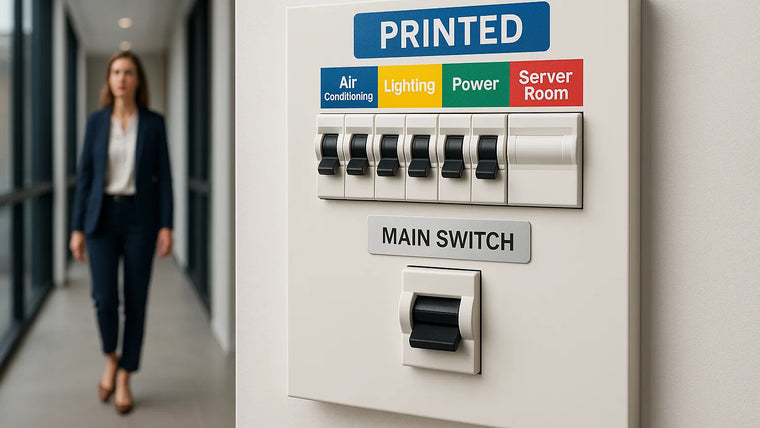
Switchboard Labels: Printed vs Engraved Options
For switchboard labels, choose printed when you need full‑colour graphics, fast turnaround and efficient variable data (sequential numbers, barcodes/QRs, unique IDs). Builds include direct...
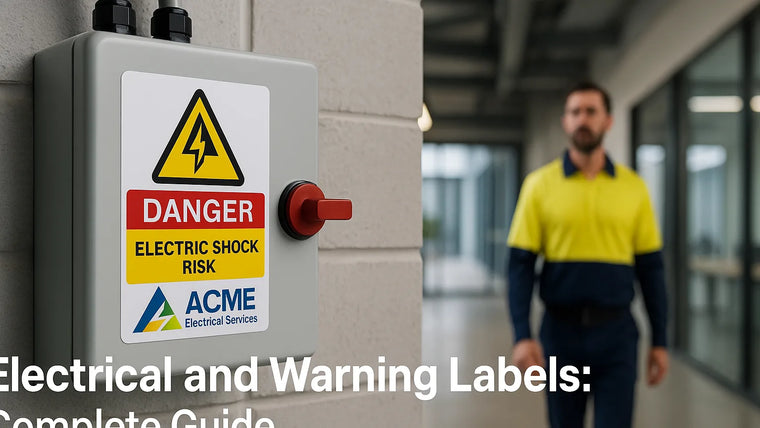
Electrical and Warning Labels: Complete Guide
Electrical and warning labels clearly identify electrical hazards, isolation/LOTO points, energy sources, circuit IDs and equipment ratings to support safe operation and maintenance. Specify...
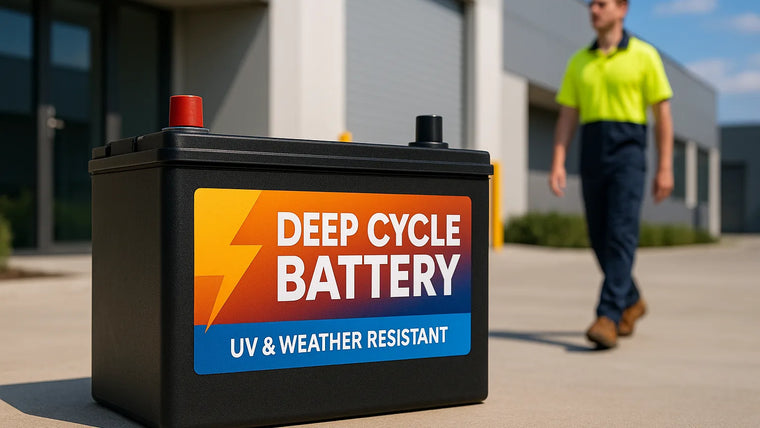
Outdoor Battery Labels: UV and Weather Resistance
For outdoor battery systems, specify premium cast PVC labels (50–70 µm) with UV‑inhibiting overlaminate (25–50 µm) or hard‑coated polycarbonate overlays (250–500 µm), or use...
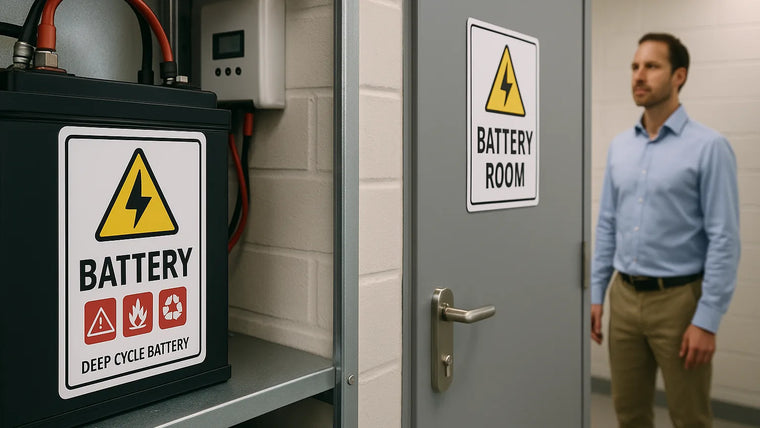
Where Are Battery Labels Typically Installed?
Install battery labelling at all points of operation, isolation and access, including: on each battery module/case and on the exterior of enclosures and racks...
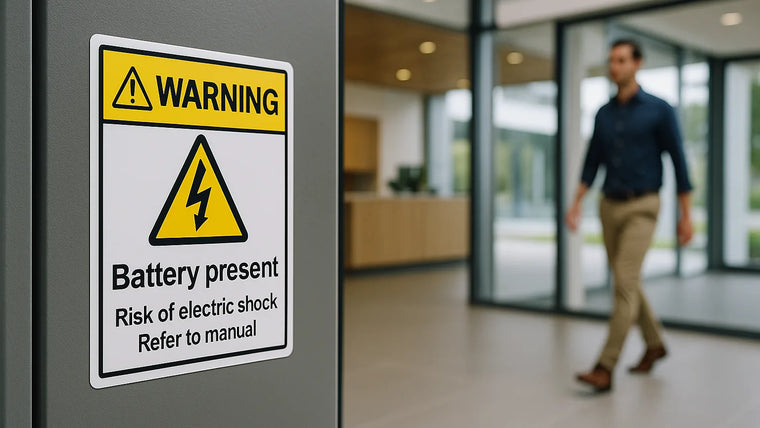
Battery Warning Labels: Materials, Adhesives and Durability
Select materials and construction to match the duty. Face stock: cast vinyl for general outdoor use (7–10 year UV); 50–100 µm polyester for heat/chemical...
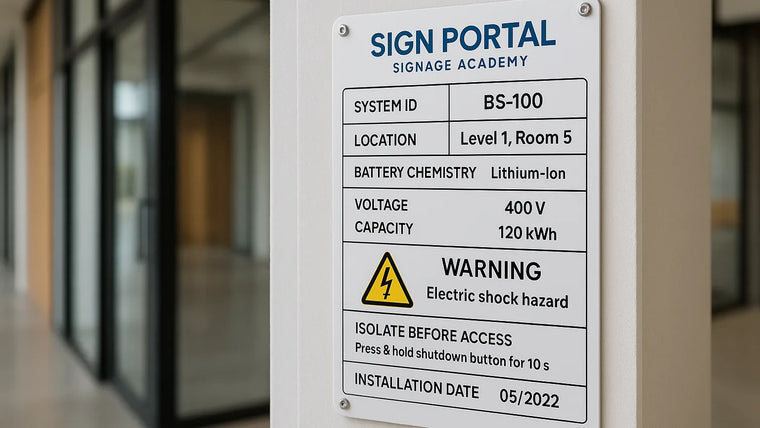
What Information Is Commonly Shown on Battery System Labels?
Battery system signage should, at a minimum, identify the system and guide isolation and emergency response. Good practice in Australia is to include:- System...
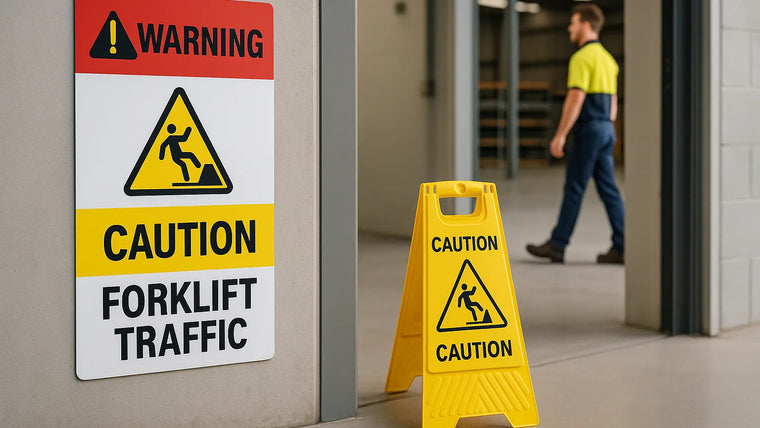
Where Should Warning & Caution Signs Be Installed?
Before the last safe decision point on the approach to a hazard so people can see, understand and act in time. Keep clear, unobstructed...
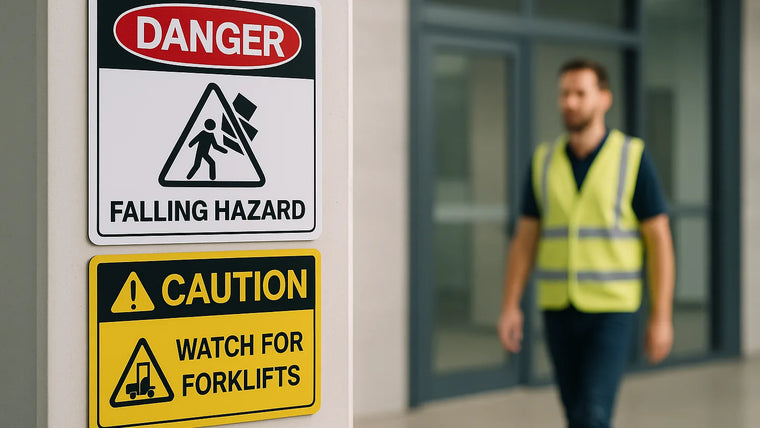
When Are Warning & Caution Signs Used?
Select the correct sign category based on a risk assessment, then position and design the sign so the hazard is unmistakable at the point...
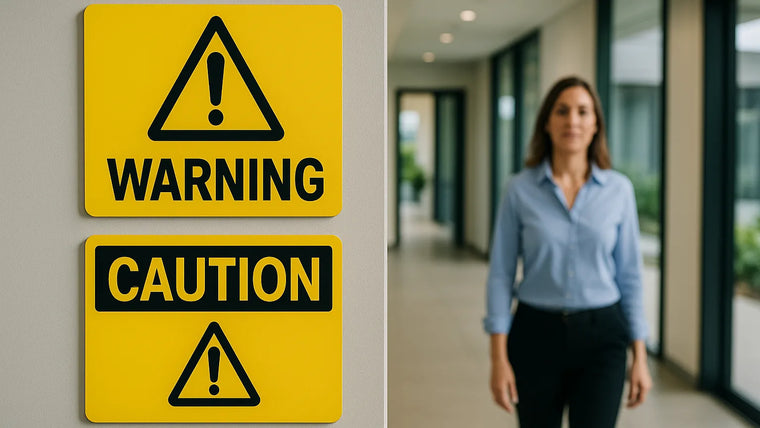
Warning & Caution Signs: Colours, Symbols and Meaning Explained
In Australian workplace practice, both “Warning” and “Caution” are used as headings on yellow hazard-style signs.- Warning: highlights a specific hazard that could cause...
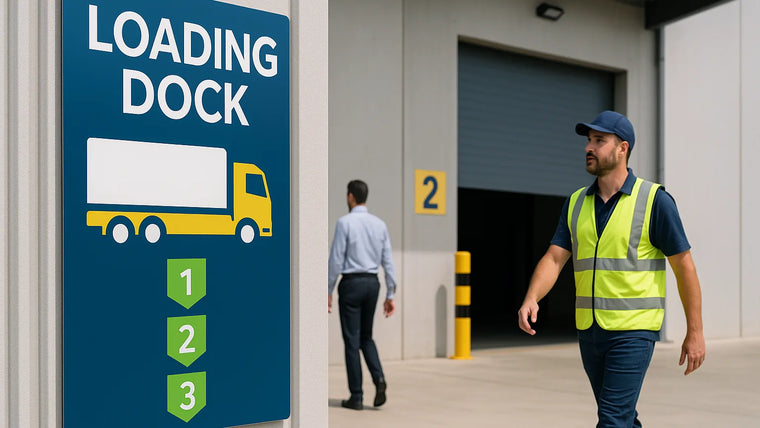
Loading Dock Signage for Warehouses and Distribution Centres
Effective loading dock signage for warehouses and distribution centres follows a clear site-specific hierarchy: hazard and control messages (e.g. forklifts operating, pedestrian exclusion, PPE),...
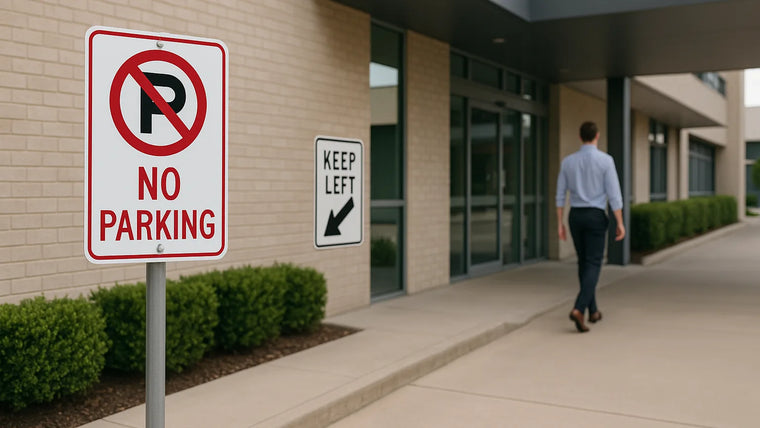
Where Should Traffic & Parking Signs Be Installed?
Install traffic and parking signs so they are conspicuous on approach and readable in time for drivers at prevailing speeds. Prioritise clear sightlines and...
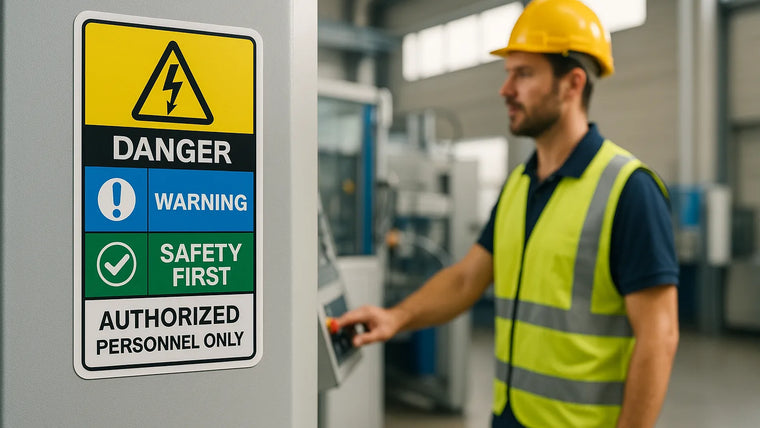
Self-Adhesive Vinyl Safety Labels: When to Use Them
Use self-adhesive vinyl safety labels when you need fast, clean installation on smooth, non-porous surfaces (e.g. glass, painted metal, powder-coated steel, sealed plastics), custom...
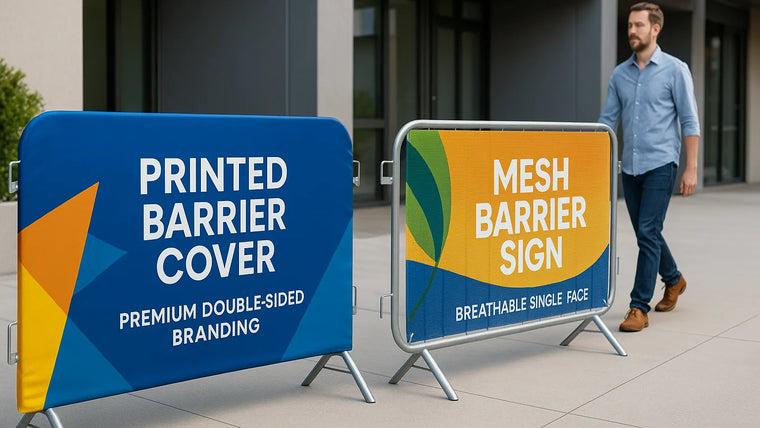
Printed Barrier Covers vs Mesh Barrier Signs
Choose printed barrier covers for full‑coverage, double‑sided branding that hides scuffed rails and boosts privacy — best where presentation is paramount and barriers are...

A-Frame Signs for Real Estate and Open Homes
Portable sandwich boards are a proven way to direct pedestrians and slow-moving vehicles to inspections, reinforce agency branding at the kerb, and repeat key...

Outdoor A-Frame Signs for Cafes and Retail
Outdoor A-frame (sandwich board) signs are portable, double‑sided footpath displays used by cafés, pubs and retailers to capture passing trade.What to choose:- Frame: Heavy‑duty...
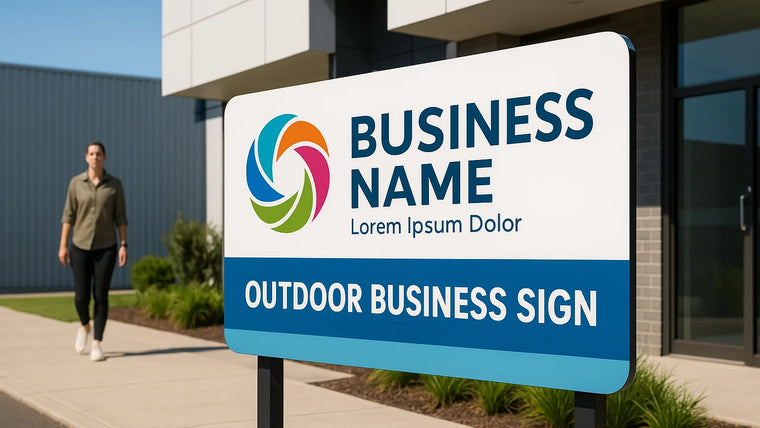
Best Materials for Outdoor Business Signs
For long‑term exterior signage, the best materials for outdoor business signs are often aluminium composite panel or solid aluminium with a suitable printed face...
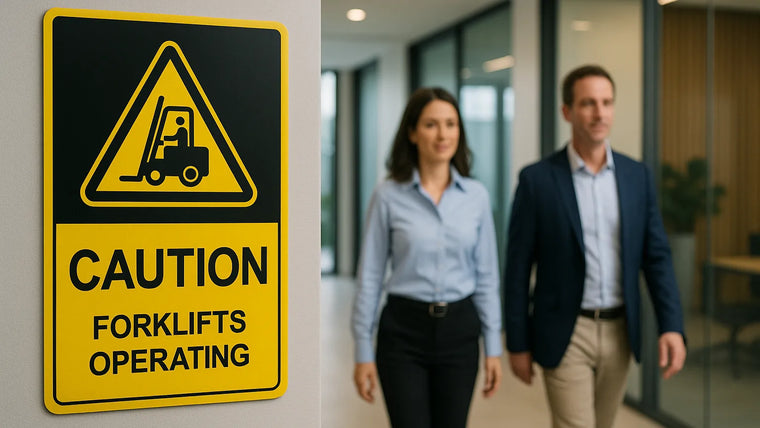
What Does a Yellow Safety Sign Mean in Australia?
In Australia, a yellow safety sign is a warning sign. It alerts people to a potential hazard or unsafe condition so they can proceed...
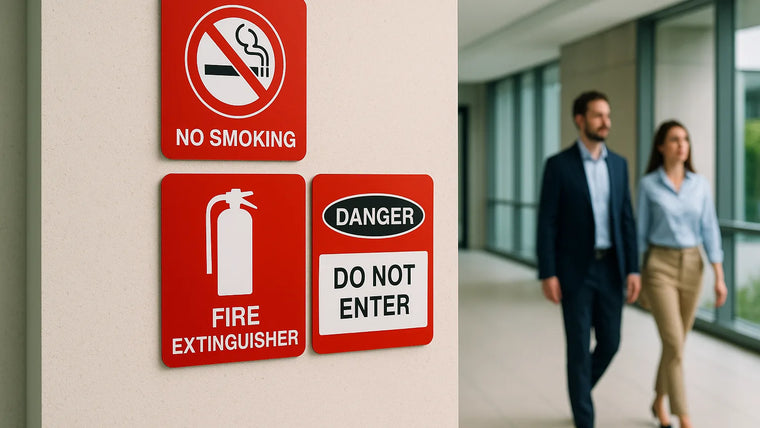
What Does a Red Safety Sign Mean in Australia?
In Australian workplaces, under AS 1319:1994 Safety signs for the occupational environment, red is used to: (1) denote prohibition via a red annulus and...
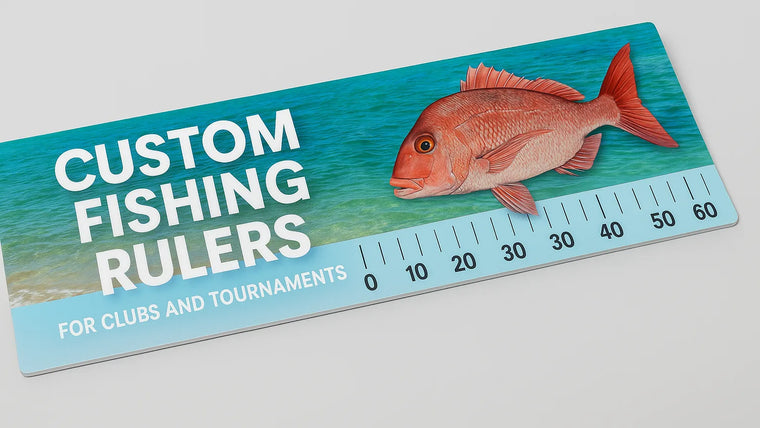
Custom Fishing Rulers for Clubs and Tournaments
Custom fishing rulers—including brag mats, deck decals and rigid bump boards—let clubs record lengths that are fair, repeatable and audit‑ready, while carrying club and...
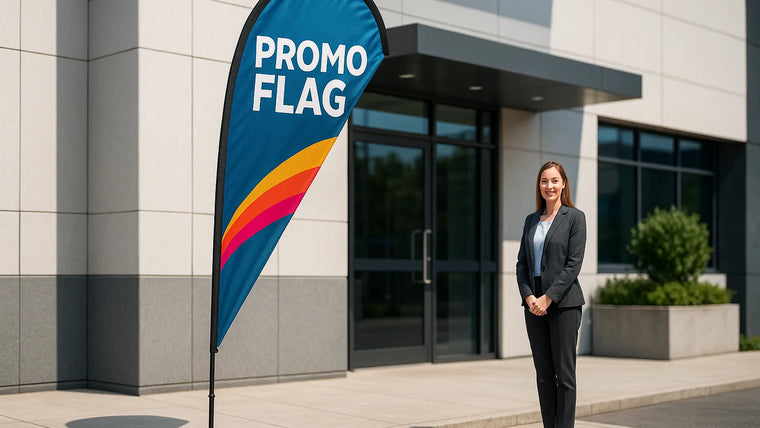
Custom Flags Australia: Complete Buyer’s Guide
- Select the flag shape and size to suit the message and site: teardrop (stable in wind, compact copy), feather (tall, good visibility), or...
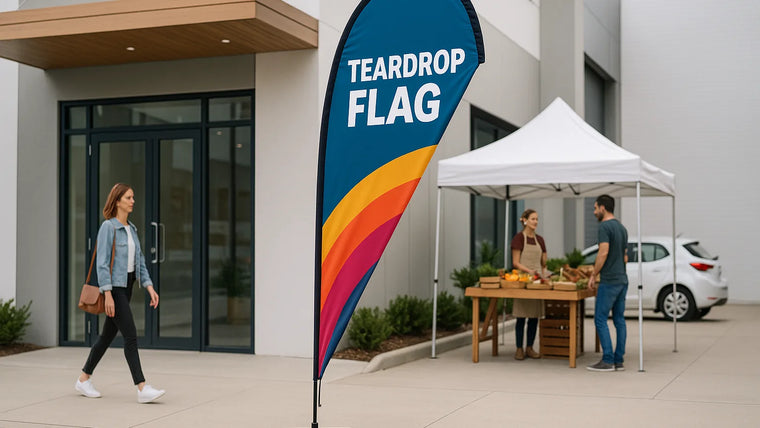
Best Uses for Teardrop Flags
Teardrop flags suit outdoor promotions, event entries and kerbside visibility when conditions and space can change through the day. Keep artwork short with strong...

Outdoor Vinyl Banners for Events and Promotions
Outdoor vinyl banners are flexible printable media finished with hems, eyelets or pockets for rapid, economical event and promotional branding. Solid PVC can provide...
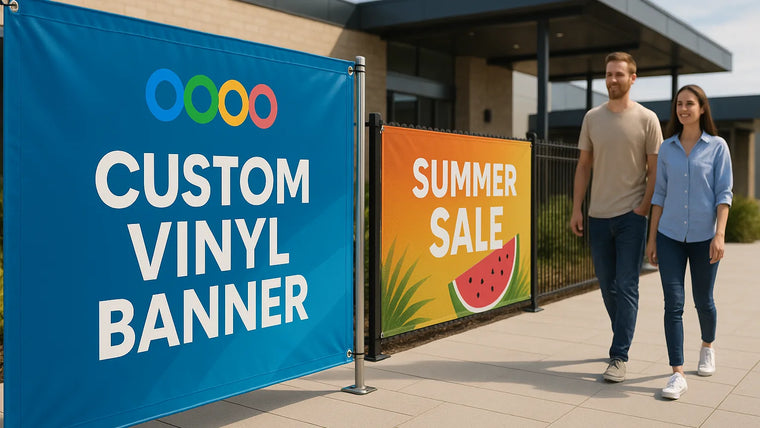
Best Uses for Custom Vinyl Banners
Custom vinyl banners are a cost‑effective choice for short‑ to medium‑term promotions, events, fence/site branding and temporary wayfinding when large, lightweight graphics are needed....
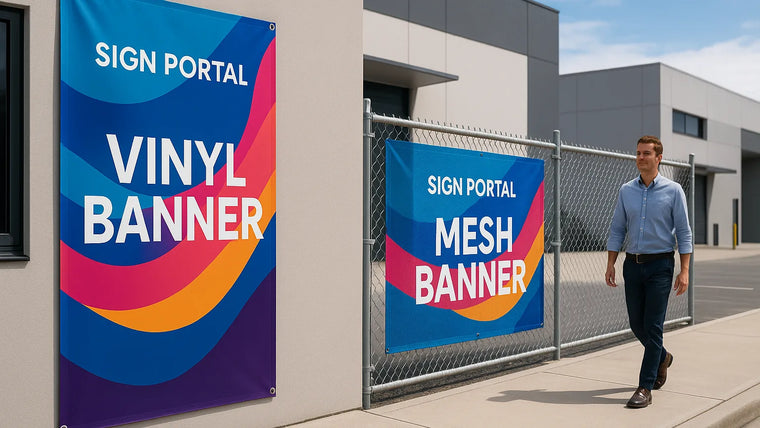
Vinyl Banner vs Mesh Banner: Which Should You Choose?
- Choose vinyl banners for rich colour, sharp graphics and higher opacity, especially where the background needs to be hidden and wind exposure is...
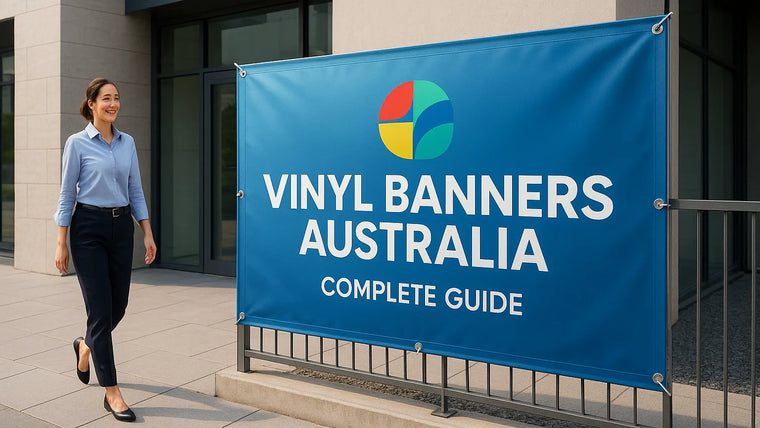
Vinyl Banners Australia: Complete Guide
Vinyl banners are flexible, large‑format prints on banner‑grade PVC—either solid (opaque) 510–610 gsm or perforated mesh 270–370 gsm—finished with welded hems and eyelets, kedar...
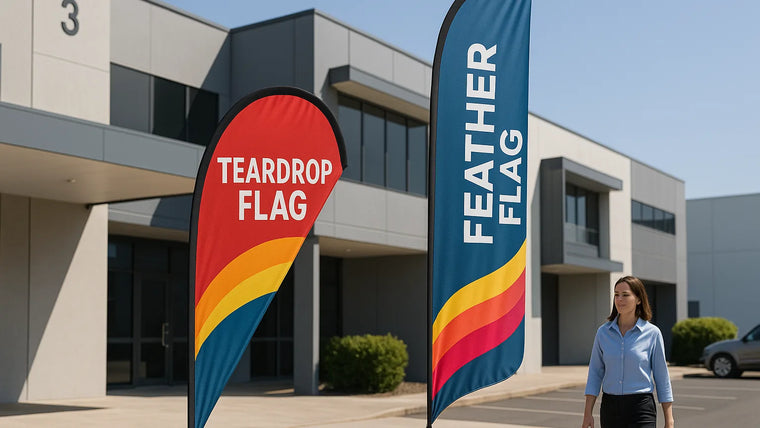
Teardrop Flags vs Feather Flags
Choose a teardrop flag when you need a compact footprint and fabric that stays taut and readable in still or low wind. The curved...
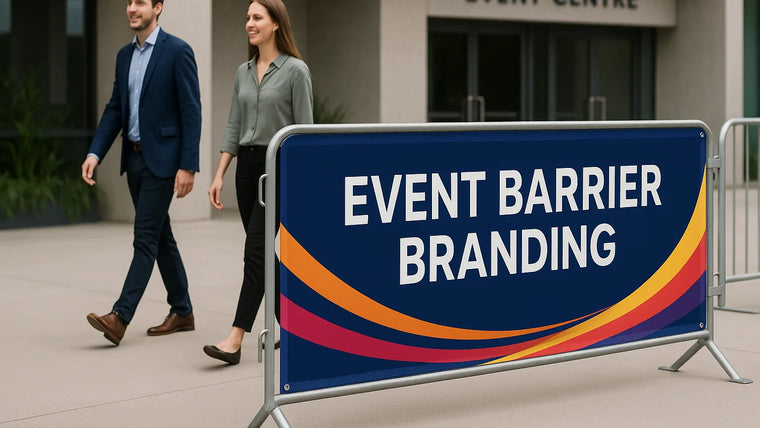
Crowd Control Barrier Branding for Events
Common options for crowd control barrier branding for events are:- Full jackets: double‑sided polyester or PVC skins that wrap the frame for maximum coverage...
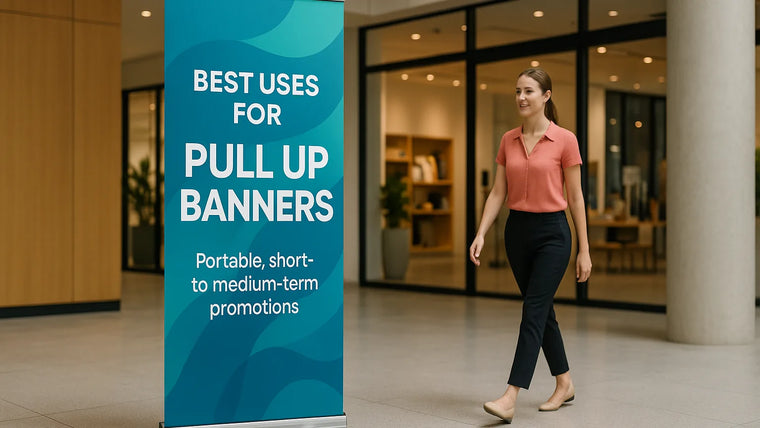
Best Uses for Pull Up Banners
Pull up banners are ideal for portable, short- to medium-term promotions such as trade shows, conferences, retail point-of-sale, pop-ups, foyer signage, reception messages and...
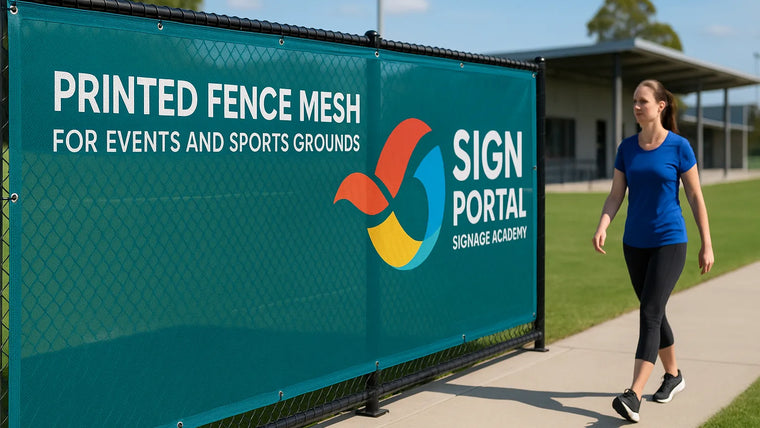
Printed Fence Mesh for Events and Sports Grounds
Printed mesh fixed to temporary or permanent fences delivers branding, wayfinding and light privacy while maintaining airflow. For practical results on Australian sites:- Select...
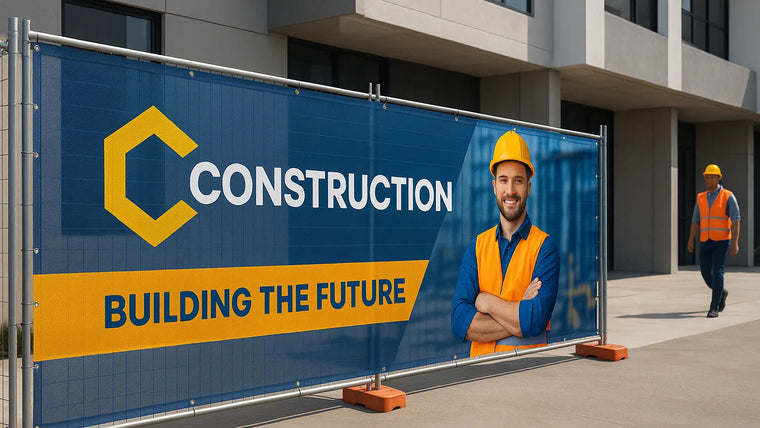
Best Mesh Banner Material for Construction Fencing
For most construction fences and hoardings, specify PVC banner mesh (PVC‑coated polyester scrim, approx. 270–340 gsm) printed with UV‑ or latex‑cured wide‑format inks. Select...
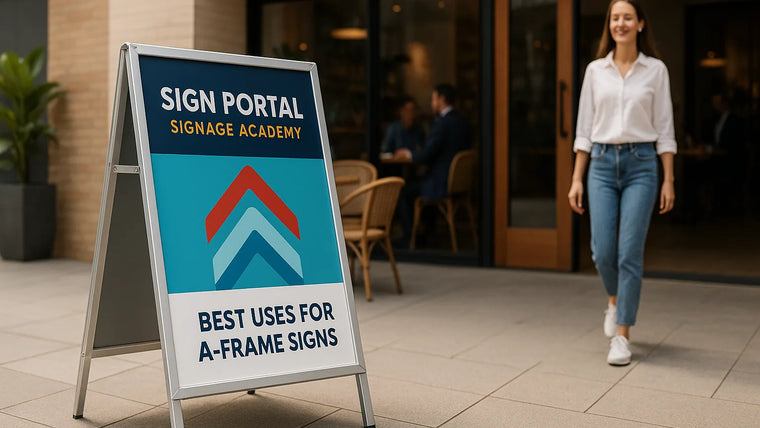
Best Uses for A-Frame Signs
A-frame sandwich boards are ideal for:- kerbside retail and high-street shopfronts- cafés, bars and hospitality specials- markets, events and pop-ups- short-term wayfinding at site...
Outdoor Signs Australia: Complete Buyer’s Guide
Match the site environment, required service life and viewing distance to the substrate, graphic system and fixing/structure, then confirm compliance. In Australia, high UV,...
Weatherproof Signage for Australian Conditions
Weatherproof signage in Australia means matching materials, print methods and fixings to UV, heat, rain, wind and coastal salt. Common durable options include aluminium...
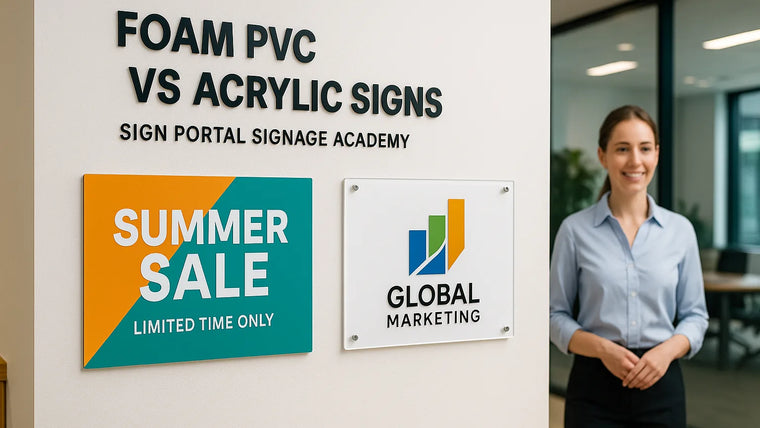
Foam PVC vs Acrylic Signs
Foam PVC (Foamex/Forex) is a lightweight (~1.5 kg/m² at 3 mm), cost‑effective choice for indoor point‑of‑sale, retail displays and event signage. It UV‑prints and...
What Is Foam PVC Sign Board?
Foam PVC (foamed rigid PVC) is a lightweight, closed-cell plastic sheet widely used for indoor signage, POS displays and exhibition panels. Common thicknesses are...
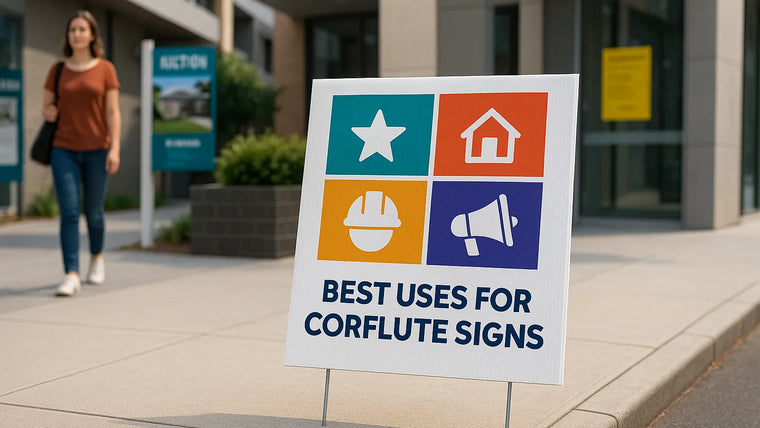
Best Uses for Corflute Signs
Corflute (fluted polypropylene) is suited to temporary and short‑term signage such as event wayfinding, community campaigns, real estate pointers, construction notices and short promotions....
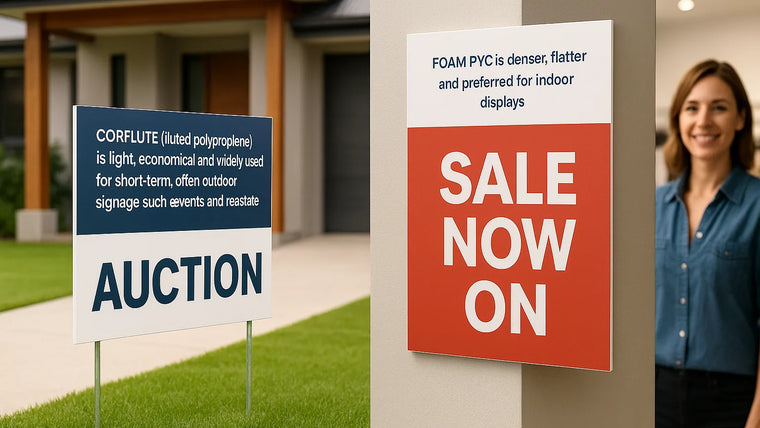
Corflute vs Foam PVC Signs
Choose corflute (fluted polypropylene) when you need the lightest, most economical option for short‑term signage—event wayfinding, election and real‑estate boards, construction notices and market...
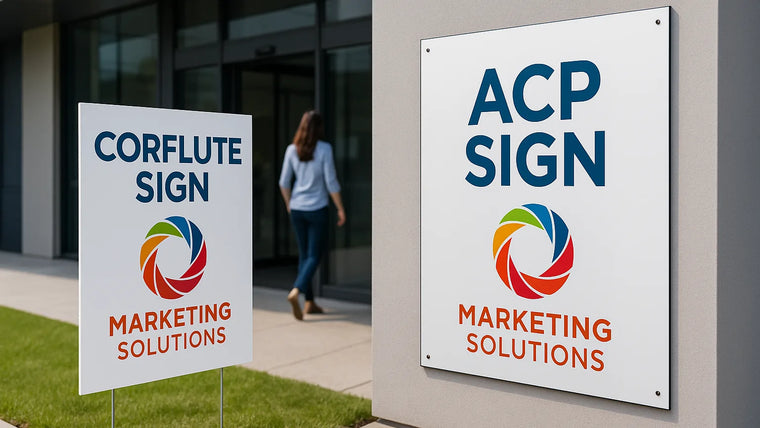
Corflute vs ACP Signs: Which Is Better?
Choose Corflute (fluted polypropylene) for temporary, lightweight and economical signs such as events, promotions and real estate. It’s easy to transport and fix to...

3mm Aluminium Signs: When Extra Thickness Makes Sense
For 3mm aluminium signs—when extra thickness makes sense: Select 3mm solid aluminium when you need maximum panel stiffness, strong edges around fixings, dependable post...
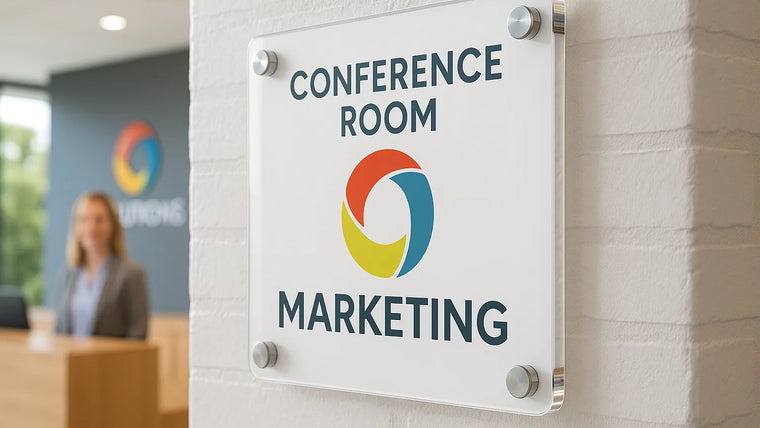
How Thick Should an Acrylic Sign Be?
Choose acrylic thickness based on the panel’s size, how it will be mounted (adhesive, stand-offs or within a frame), and the installation environment. Flush-mounted...
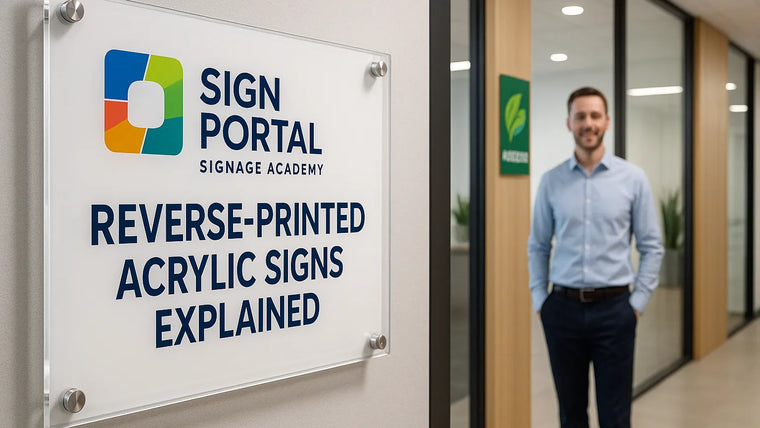
Reverse-Printed Acrylic Signs Explained
Reverse-printed acrylic (second-surface printing) places the artwork on the back of clear acrylic. The image can be printed in reverse where required with UV-cured...
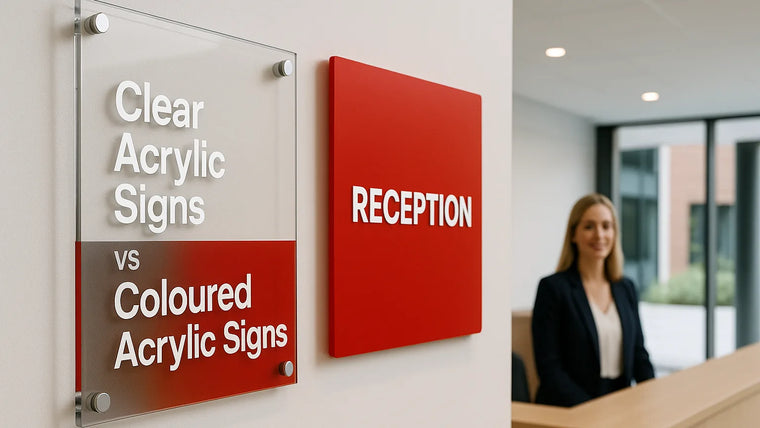
Clear Acrylic Signs vs Coloured Acrylic Signs
Clear acrylic gives a premium, glass-like look and works well with reverse printing and white-ink layers, while coloured acrylic provides solid colour, hides the...
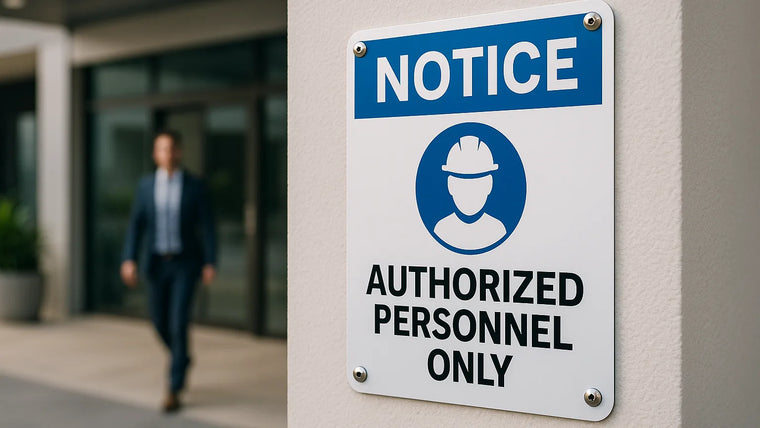
Best Fixings for Aluminium and ACP Safety Signs
• Exterior or high‑load: Use 304/316 stainless mechanical fixings (pan/button‑head screws or sealed rivets) with large‑diameter EPDM/neoprene washers. Select 316 within coastal or industrial...
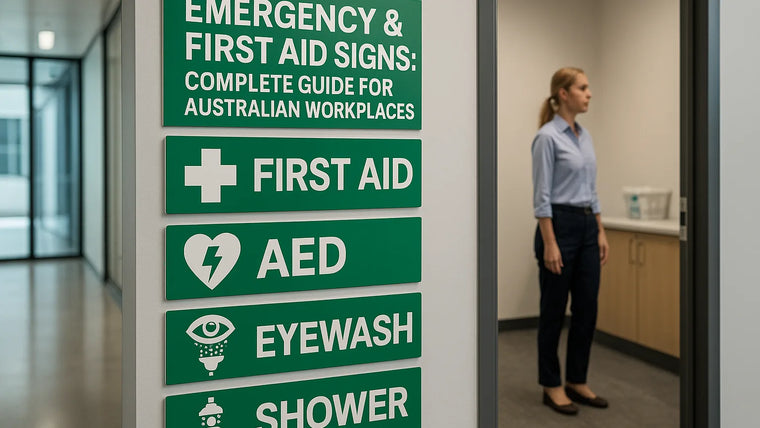
Emergency & First Aid Signs: Complete Guide for Australian Workplaces
Emergency signs clearly mark first aid rooms and kits, AEDs (defibrillators), emergency eyewash and showers, spill kits, emergency phones and fire equipment so people...
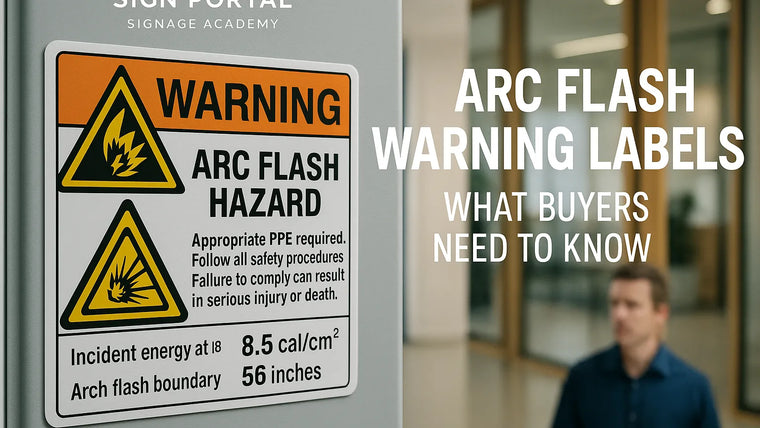
Arc Flash Warning Labels: What Buyers Need to Know
Arc flash warning labels communicate arc‑flash and electric‑shock hazards on switchboards, MCCs and similar enclosures. Content must be derived from a current, documented arc‑flash...
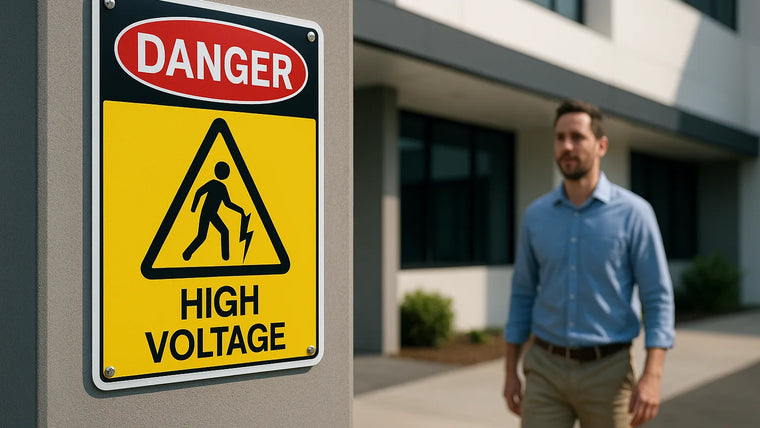
Best Materials for Danger Signs
Best practice by application:- Permanent outdoor danger signs: Use 3 mm aluminium composite panel (ACP) or 1.6–2.0 mm solid aluminium (marine‑grade 5052). Print direct...
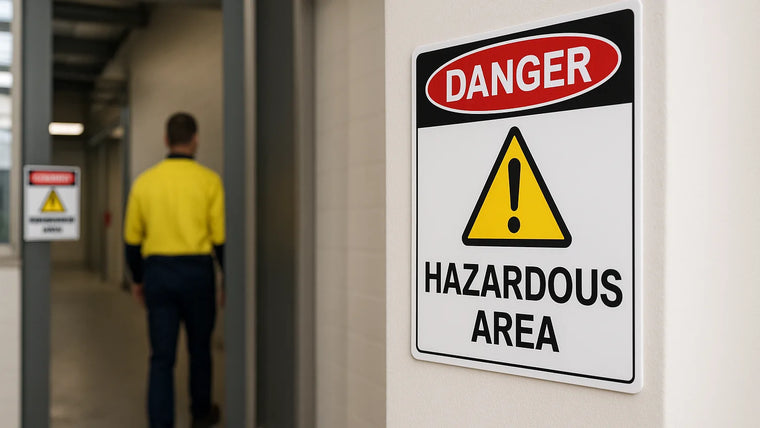
Where Should Danger Signs Be Installed?
Install DANGER signs at every entry to the hazardous area and at the exact hazard location (and at all reasonably foreseeable approaches), mounted in...

How to Write Clear Wording for a Custom Safety Sign
Silica Dust – Cutting ConcretePlant operators must wet‑cut or use on‑tool extraction and wear a fit‑checked P2 respirator whenever cutting, grinding or drilling concrete....
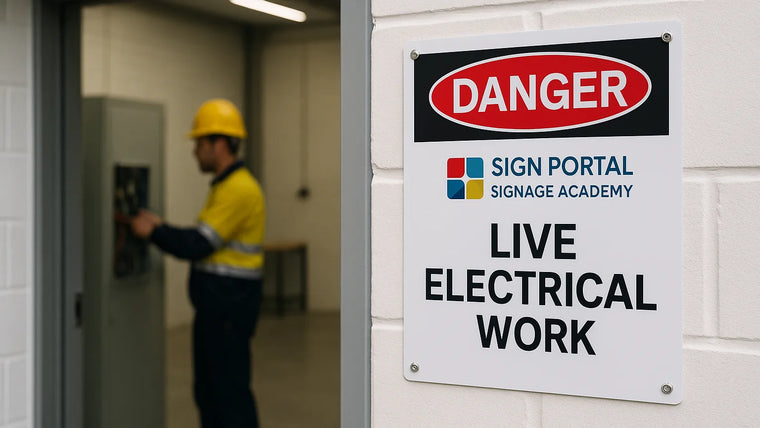
When Are Danger Signs Used?
Use a Danger sign only where the hazard, if not avoided or controlled, is likely to cause death or serious injury. In Australia this...
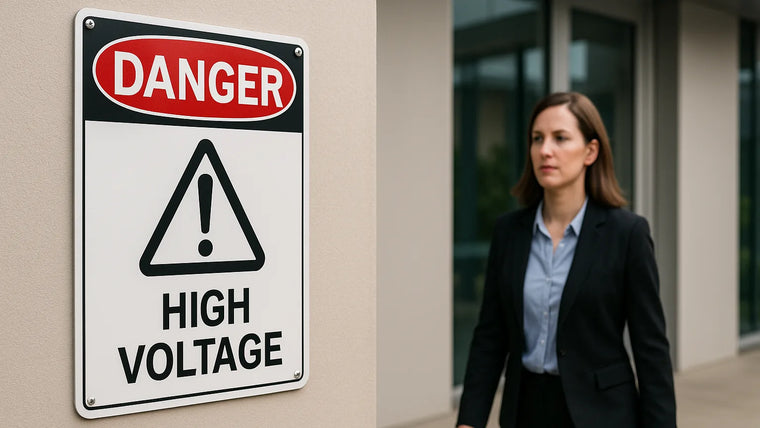
Danger Signs: Colours, Symbols and Meaning Explained
Danger (red‑header) safety signs, as defined in AS 1319:1994, are reserved for hazards likely to cause death or serious injury (e.g. live electrical equipment,...
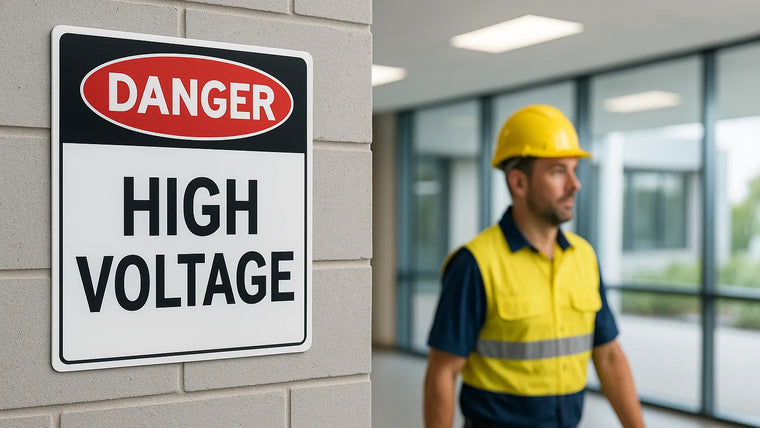
Danger Signs: Complete Guide for Australian Workplaces
Danger signs are used only where a hazard could cause death or serious injury. In line with AS 1319:1994, they display the word DANGER...
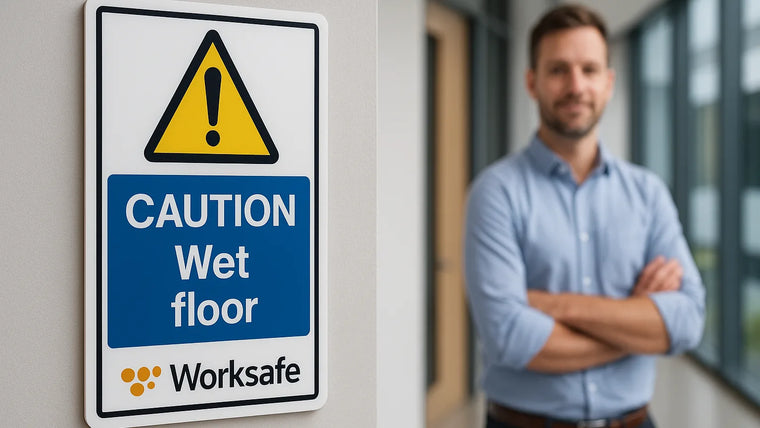
Custom Safety Signs With Logos: Design Best Practices
Yes—include your logo on safety signs, provided you maintain compliance and legibility. Under AS 1319 (Safety signs for the occupational environment) and WHS duties,...
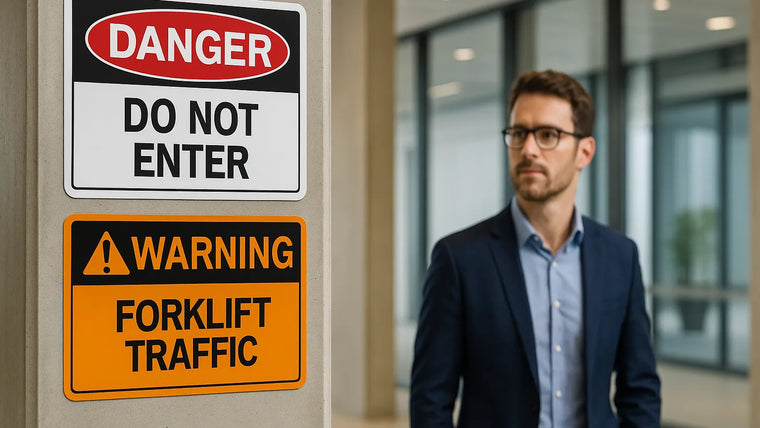
What Is the Difference Between Danger and Warning Signs?
In Australia, select the sign type defined in AS 1319:1994 (Safety signs for the occupational environment):- Danger signs: For a specific hazard or situation...
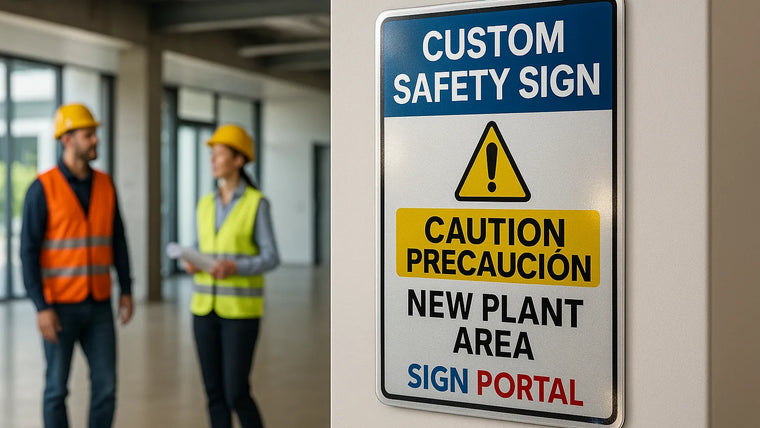
When Should You Order a Custom Safety Sign?
Order a custom safety sign as soon as a site-specific risk, rule or layout appears that a standard sign cannot address. Typical triggers include...
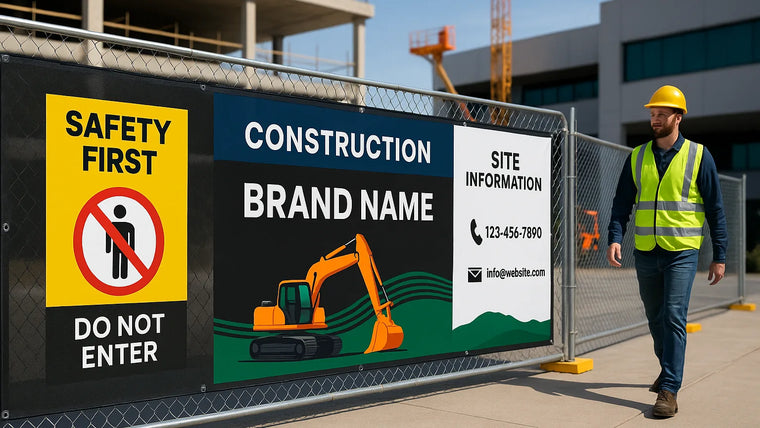
Construction Fence Signage: Safety, Branding and Site Information
Use temporary fencing as the primary display for compliant site signage. At every public entry, post mandatory WHS safety signs and clearly show the...
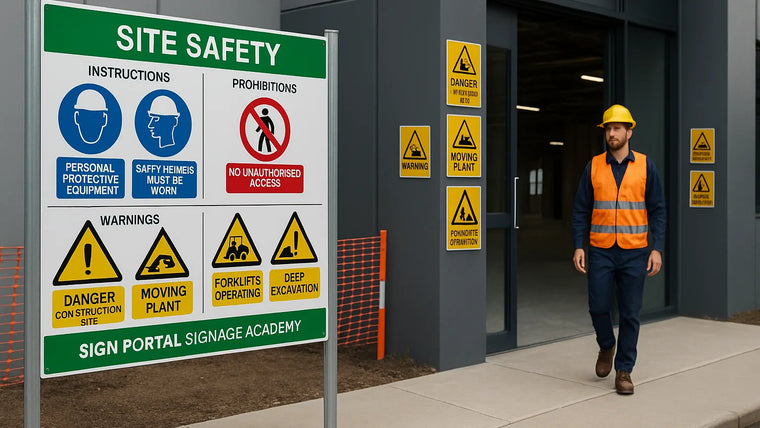
Site Safety Boards vs Individual Safety Signs: Which Is Better?
Use a consolidated site safety board when you need one clear, highly visible point of truth at site entry—supporting WHS communication duties and AS...
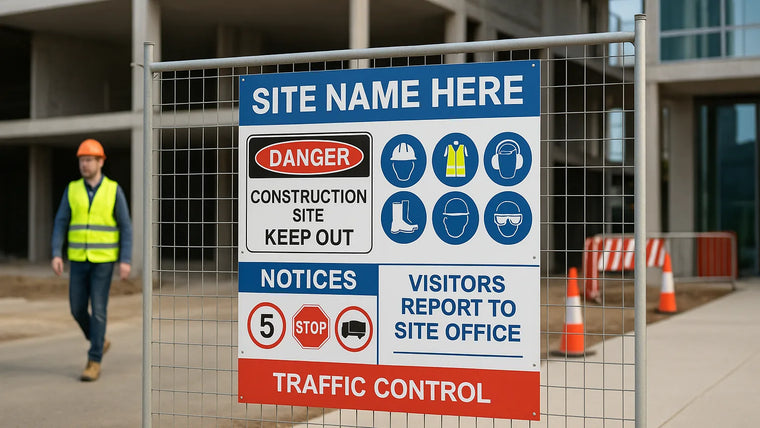
What Signs Are Commonly Used at Construction Site Entrances?
A compliant Australian construction site entrance typically displays, at a minimum, the following signage and information:- Project/site identification board: principal contractor’s legal name, ABN,...
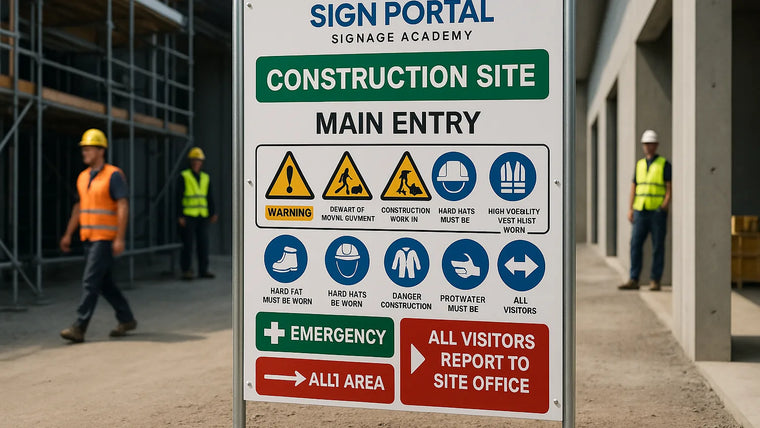
Construction Site Signage Checklist for Australian Projects
For Australian sites, display compliant entry/legal, PPE, hazard, emergency, traffic and electrical signs, with updates and durable materials.Need a construction site signage checklist for...
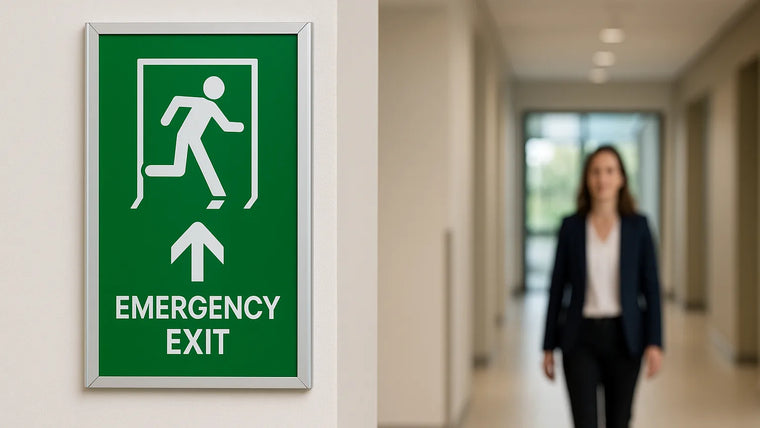
What Does a Green Safety Sign Mean in Australia?
In Australia, green safety signs are Emergency Information signs under AS 1319. They identify safe conditions and the location or direction of assistance—such as...
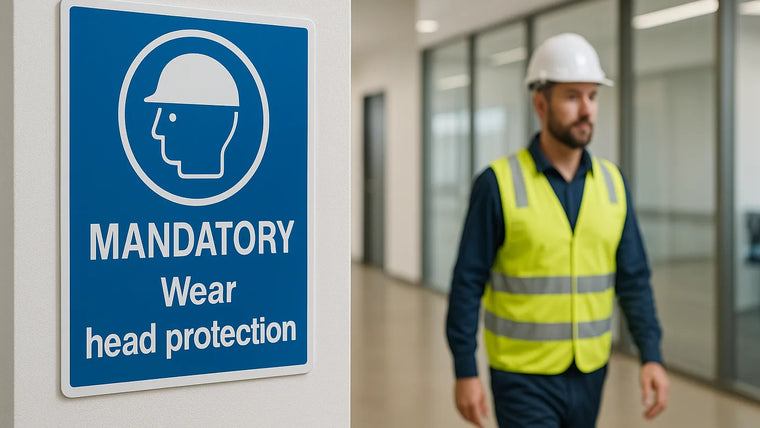
What Does a Blue Safety Sign Mean in Australia?
In Australia, a blue safety sign is a Mandatory sign under AS 1319:1994. It directs an action you must take to control risk—such as...
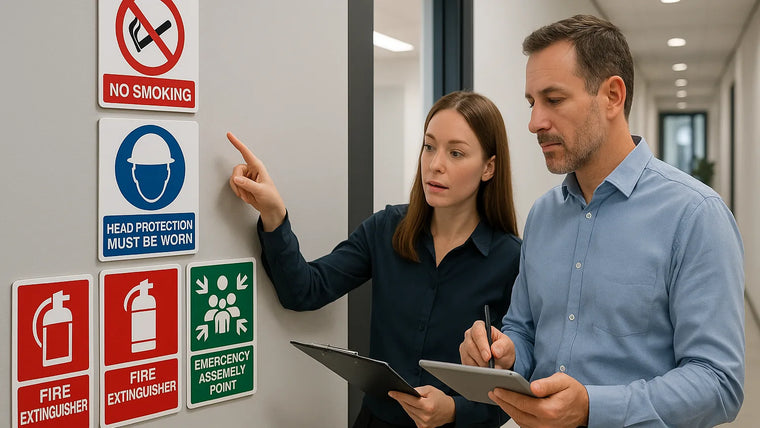
What Businesses Should Review During a Safety Signage Audit
Assess four areas to keep WHS signage compliant and effective: 1) Categories and content—Map each hazard to the correct AS 1319 sign type (Danger—immediate...
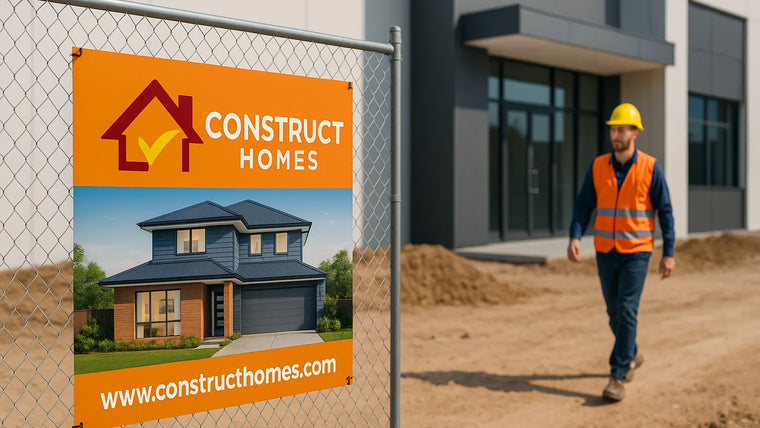
Temporary Construction Signage: Corflute, Aluminium or ACP?
Choose by application:- Corflute (3–5 mm fluted polypropylene): the light, low-cost option for short‑term fence signs, sales messages and fast site updates. Cable‑tie to...
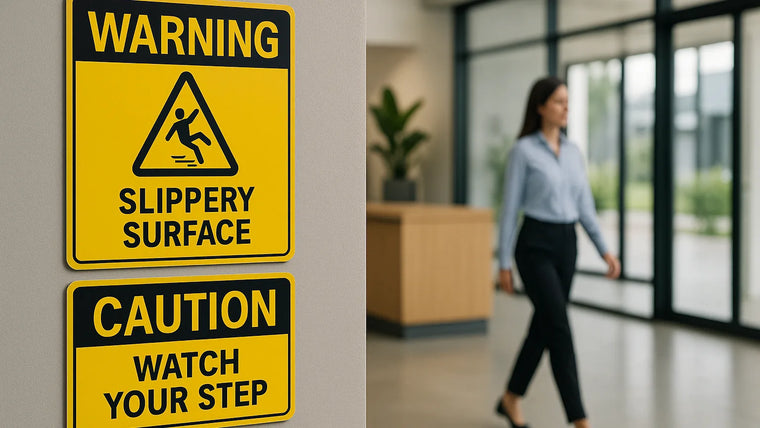
Warning & Caution Signs: Complete Guide for Australian Workplaces
Use warning and caution signs to alert people to hazards and housekeeping risks. Warning typically signals a notable hazard that could cause injury if...
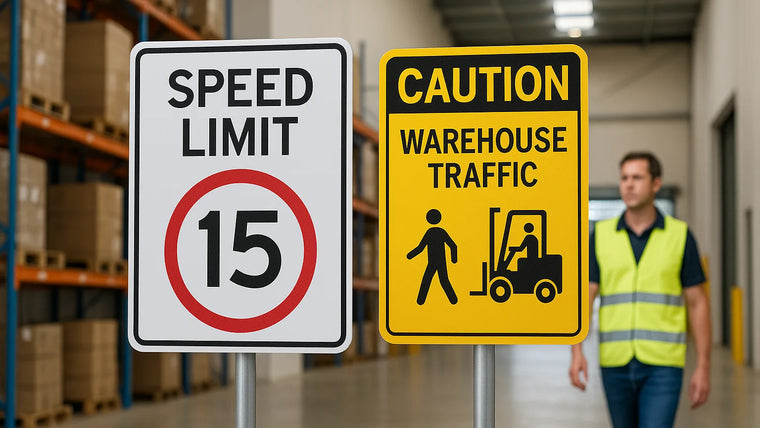
Warehouse Speed Limit and Traffic Signs
Warehouse speed limit and traffic signs set clear, site‑wide rules for vehicle and pedestrian movement by communicating speed, right‑of‑way, routes and crossings. Set site‑specific...
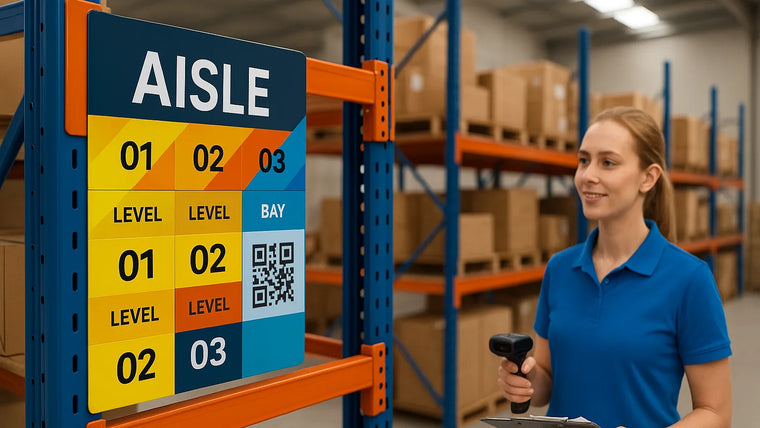
Racking and Aisle Identification Signs
Racking and aisle identification signs create a consistent location schema (aisle–bay–level–bin) so staff and scanners can find, pick and audit stock quickly and accurately....
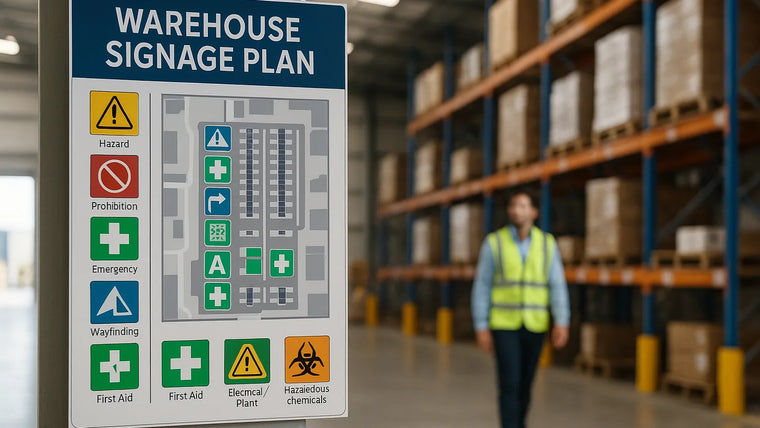
Warehouse Signage Plan: What to Include
Cover hazard, PPE, prohibition, emergency, traffic, racking, first aid, electrical and chemical signs. Add floor markings, map, schedule and reviews.A clear, consistent signage system...
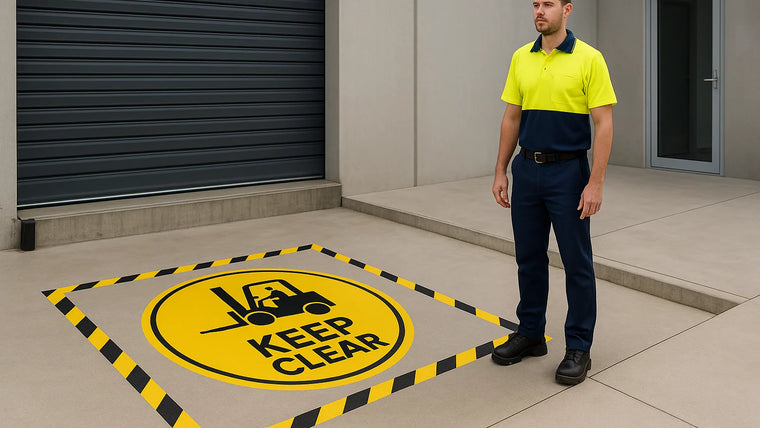
Keep Clear Floor Signs for Loading and Access Areas
Keep clear floor signs are high-visibility floor graphics that designate no‑obstruction zones at loading docks, roller doors and access points, supporting safe traffic flow...
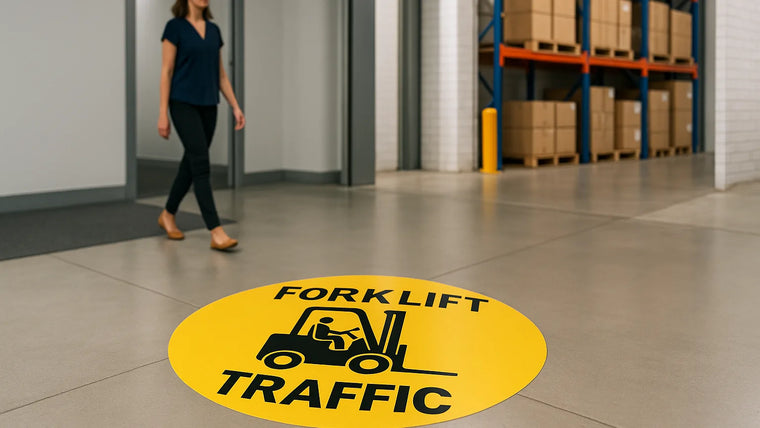
Forklift Traffic Floor Signs: Placement and Visibility
Install forklift floor signs where decisions are made and risk changes: before and at intersections, pedestrian crossings, blind corners, aisle merges, ramps, loading docks,...
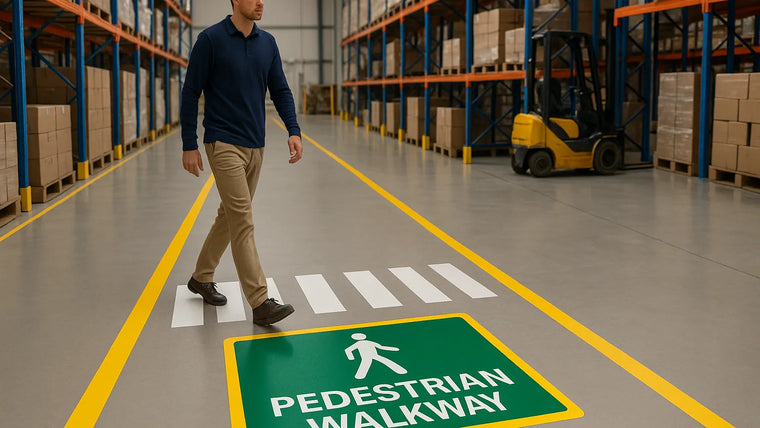
Pedestrian Walkway Floor Markings for Warehouses
Pedestrian walkway floor markings in warehouses use continuous edge lines, zebra crossings, arrows and hazard hatchings to separate people from mobile plant, define safe...
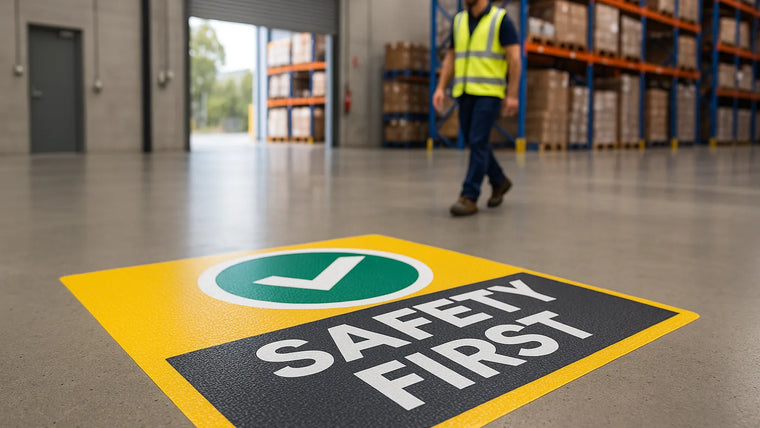
Best Floor Decal Materials for Warehouses
For most Australian warehouses, the most dependable option is a 70–100 micron polymeric or cast PVC print film paired with a 150–200 micron textured...
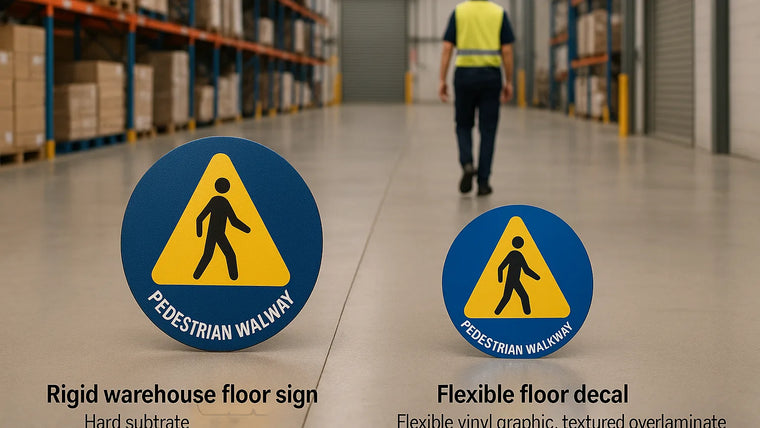
Warehouse Floor Signs vs Floor Decals: What Is the Difference?
Rigid warehouse floor signs are durable plates fixed to the slab; decals are flexible graphics bonded to the surface with a textured, anti-slip laminate.Rigid...
Best Materials for Traffic & Parking Signs
Choose 1.6–2.0 mm marine‑grade aluminium or 3 mm ACP/ACM for long‑term parking signs; add AS/NZS 1906.1 reflective and anti‑graffiti as required.Choosing the right substrate...
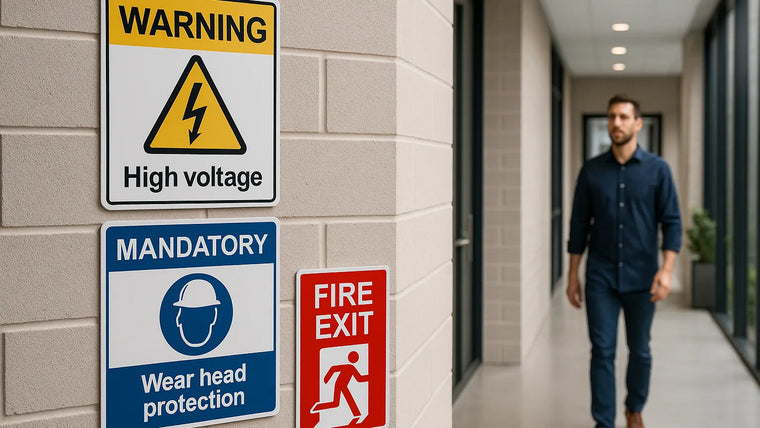
How Safety Signs Communicate Hazards and Instructions
Safety signs communicate through standardised colour, shape, symbols, plain language, hierarchy and strategic placement. In Australia, design and use should comply with AS 1319...
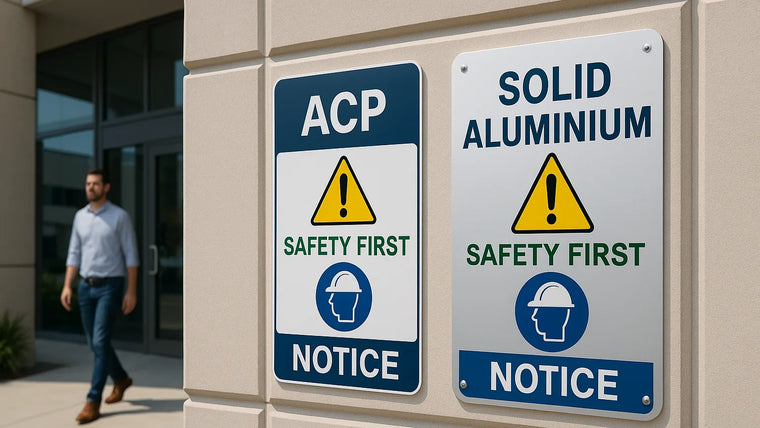
What Is the Difference Between ACP and Solid Aluminium Signs?
ACP (aluminium composite panel) is a sandwich panel with two 0.3–0.5 mm aluminium skins bonded to a 2–5 mm plastic or mineral core (overall...
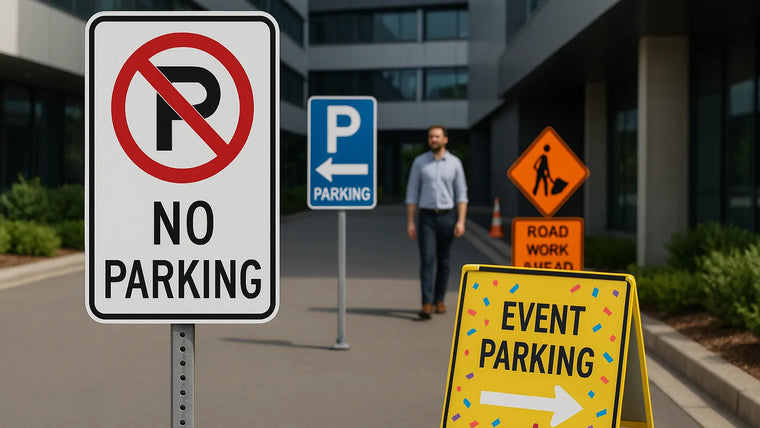
When Are Traffic & Parking Signs Used?
Traffic and parking signs are installed wherever vehicle movement and parking must be controlled or guided: on public roads and streets (including council and...
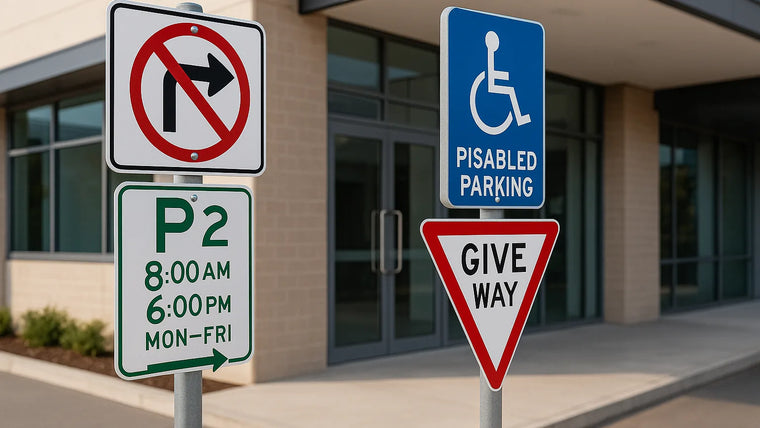
Traffic & Parking Signs: Colours, Symbols and Meaning Explained
Australia uses a standardised colour and shape code for traffic and parking signs: red = stop/prohibition (STOP, NO STOPPING, NO PARKING, NO U‑TURN; a...
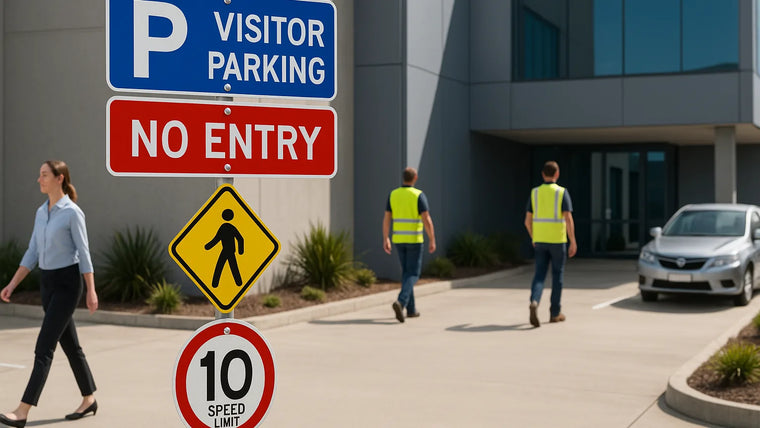
Traffic & Parking Signs: Complete Guide for Australian Workplaces
Specify aluminium or ACP signs to AS 1742/1743 with AS/NZS 1906.1 reflectivity; install to maintain sightlines and inspect regularly.Clear traffic and parking signage keeps...
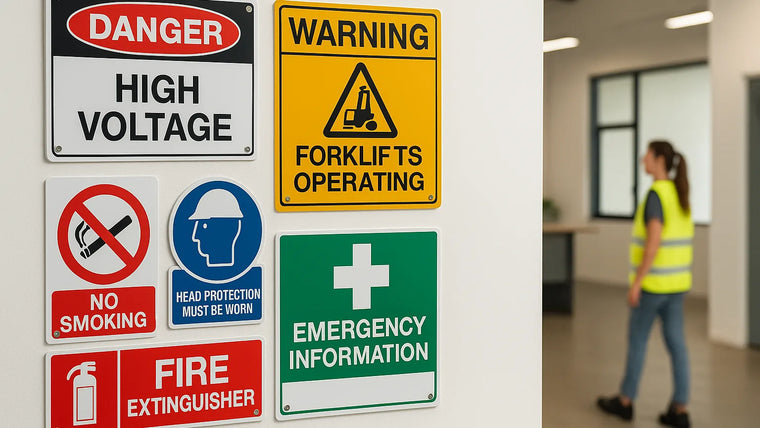
Safety Sign Categories Explained With Real-World Examples
In Australia, safety signage should comply with AS 1319:1994 Safety signs for the occupational environment. The main categories, their colours, shapes and typical uses...
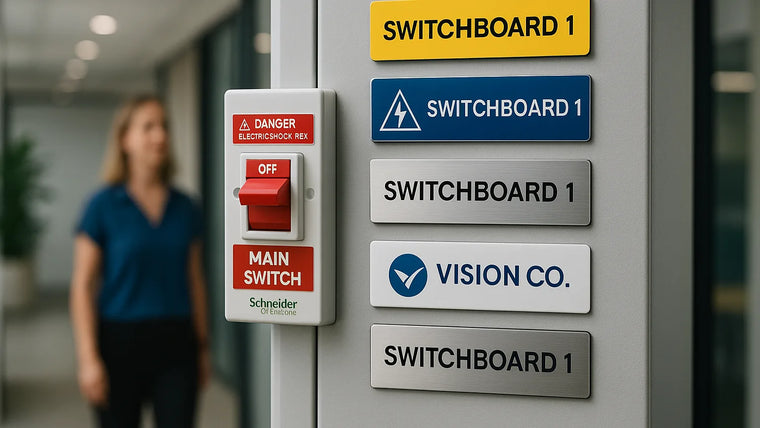
Electrical Switchboard Labels: Materials and Durability
For long‑lasting switchboard labels, match the substrate, environment and duty cycle to materials and marking methods proven in industry. The goal is permanent, legible...
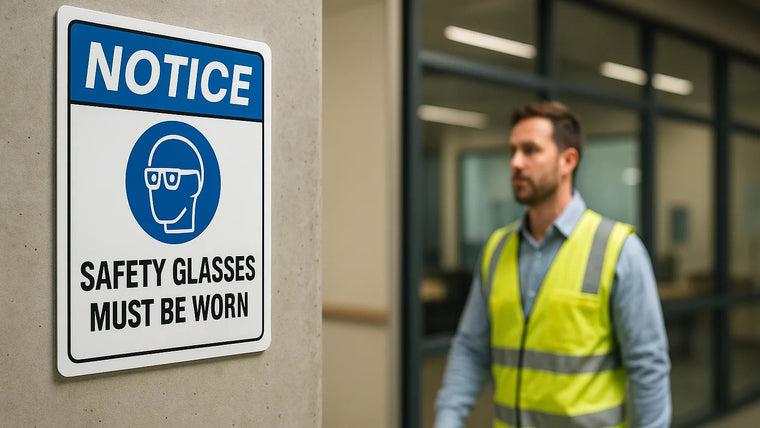
Polypropylene Safety Signs: Benefits and Applications
Polypropylene (PP) is a lightweight, tough, shatter‑resistant thermoplastic for safety signs where portability, moisture resistance and value matter. Available in 1–2 mm solid sheet...
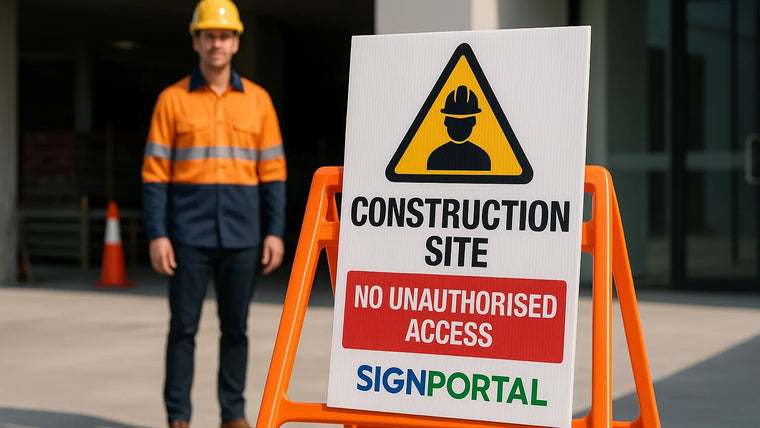
Corflute for Temporary Safety Signs: Complete Guide
Corflute (corrugated polypropylene, PP5) is a rigid, twin‑wall sheet ideal for short‑term safety signage on construction sites, maintenance works and events. It is lightweight,...
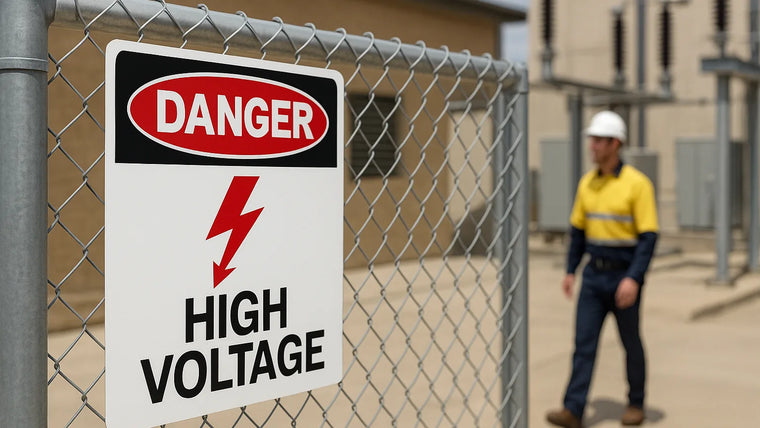
Solid Aluminium for Safety Signs: When to Choose It
Choose solid aluminium when you need a rigid, impact‑ and vandal‑resistant safety sign that withstands heat, harsh UV, chemicals and salt spray for long...
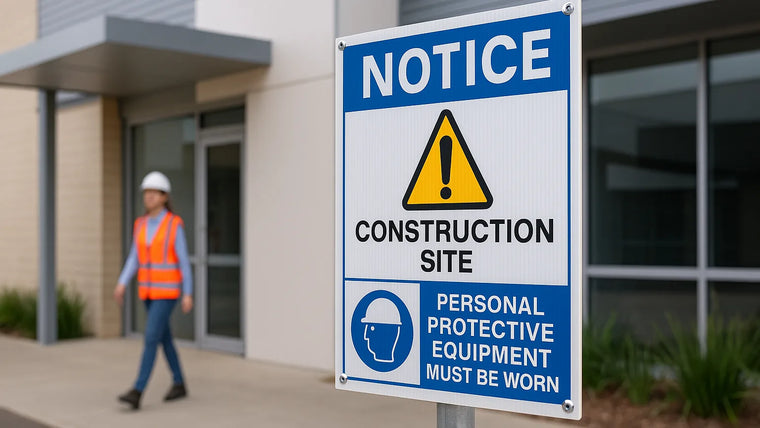
Are Corflute Safety Signs Suitable Outdoors?
Yes, corflute suits short-term outdoor use (about 3-6 months in sun, up to 12 months sheltered). For long-term or harsh sites, use ACP.Corflute safety...
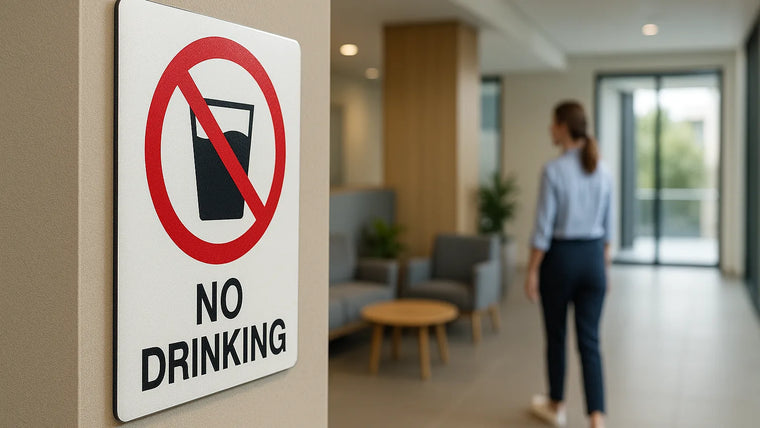
Best Materials for Prohibition Signs
• Permanent outdoor: 3 mm aluminium composite panel (ACP; 0.3 mm aluminium skins with PE core) with direct-to-substrate UV print and anti-graffiti/UV overlaminate. Radius...
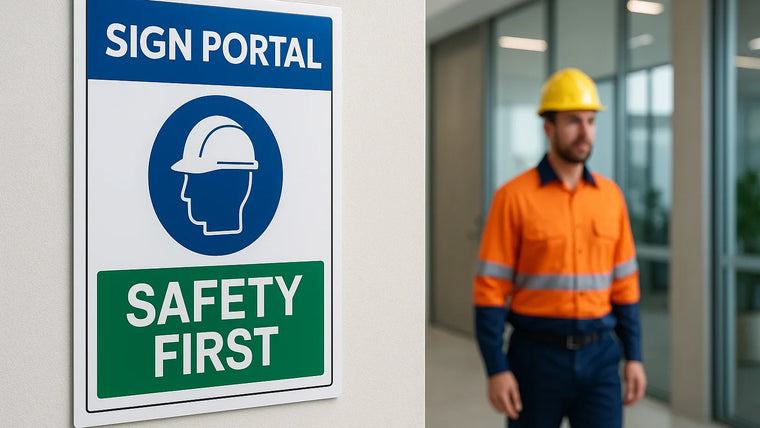
What File Types Are Best for Custom Safety Sign Artwork?
Supply a vector‑first, print‑ready PDF (PDF/X‑1a:2001 or PDF/X‑4) at final size. Outline all fonts. Use CMYK colours or nominated Pantone spot colours—no RGB. Include...

Can Safety Signs Be Made in Custom Colours?
Yes—apply brand colour to borders, headers or backboards. Keep AS 1319 colours/shapes and contrast unchanged.Many Australian workplaces want consistent branding across every touchpoint—including safety...
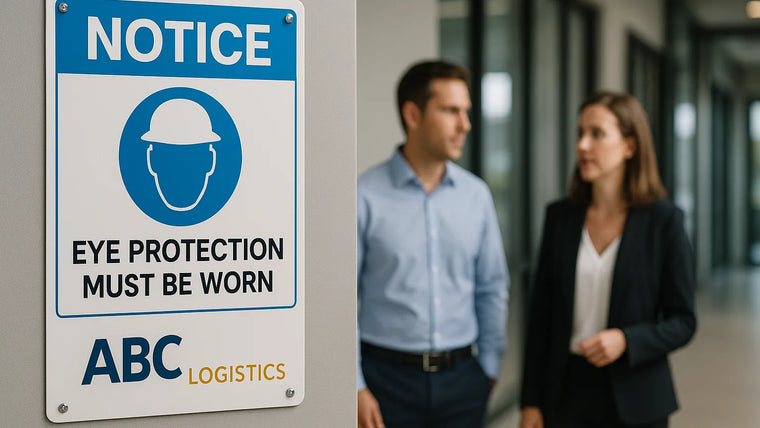
Can I Put My Company Logo on a Safety Sign?
Many businesses want consistent branding across their sites, including on mandatory workplace safety signage. The good news: a discreet company logo is usually acceptable....
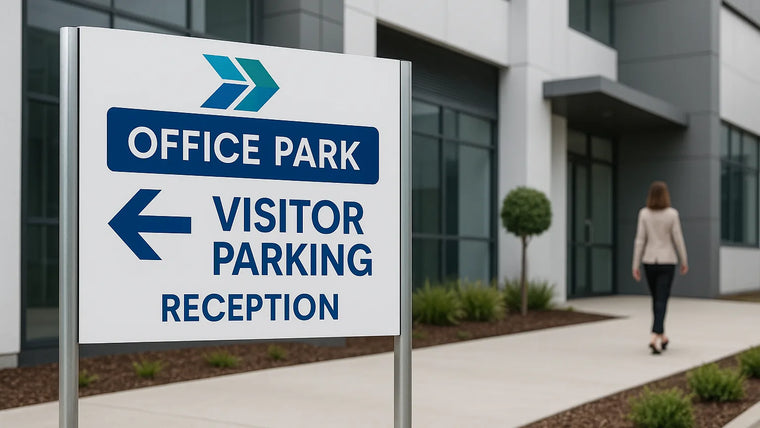
Best Materials for Public Area & Property Signs
For most outdoor public‑area and property signs, 3 mm aluminium composite panel (ACP) printed direct with UV‑stable inks and finished with a premium anti‑graffiti...
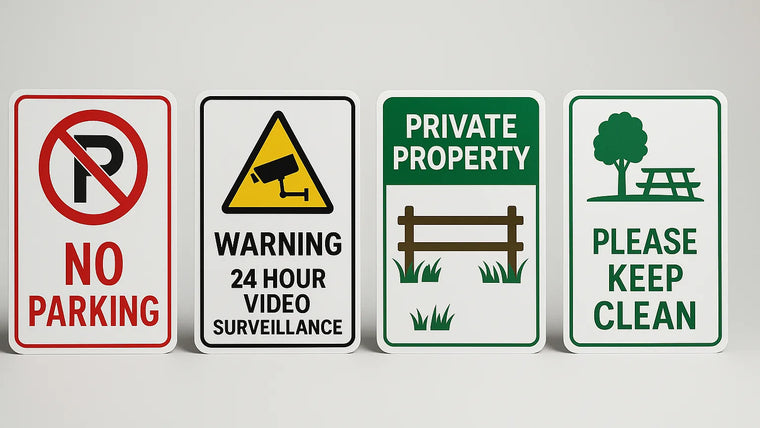
Where Should Public Area & Property Signs Be Installed?
Install public‑area and property signs at decision points—site entries/gates and driveways, boundaries and access points, approach paths/roads and internal intersections, car parks, building entries,...
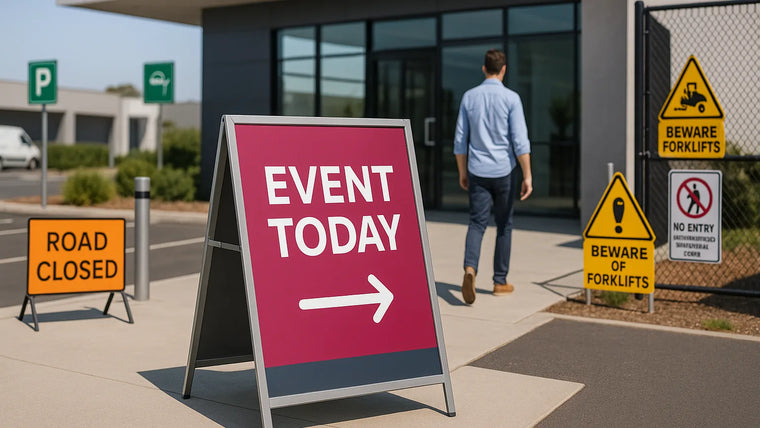
When Are Public Area & Property Signs Used?
Use public area and property signs whenever you need to set rules, guide movement, warn of hazards, control access, or communicate amenities and legal...
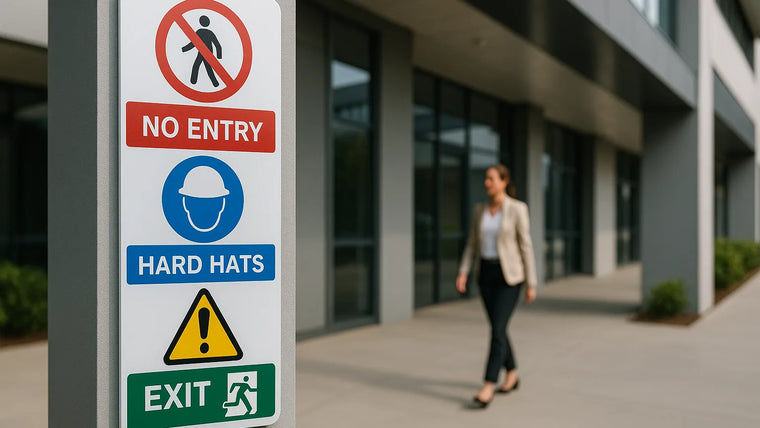
Public Area & Property Signs: Colours, Symbols and Meaning Explained
In public areas and on private property, colours, shapes and pictograms are standardised so people can interpret signs instantly:- Red: prohibition and fire equipment....
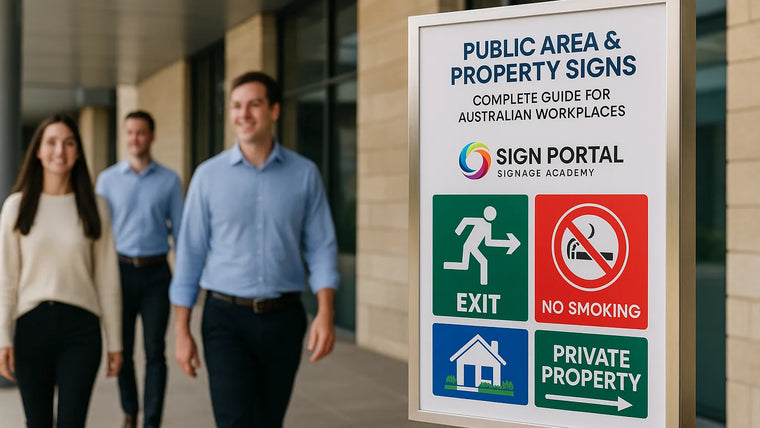
Public Area & Property Signs: Complete Guide for Australian Workplaces
Public area and property signs cover wayfinding, regulatory and information signage used across workplaces, facilities and shared spaces. This guide explains categories, materials, design,...
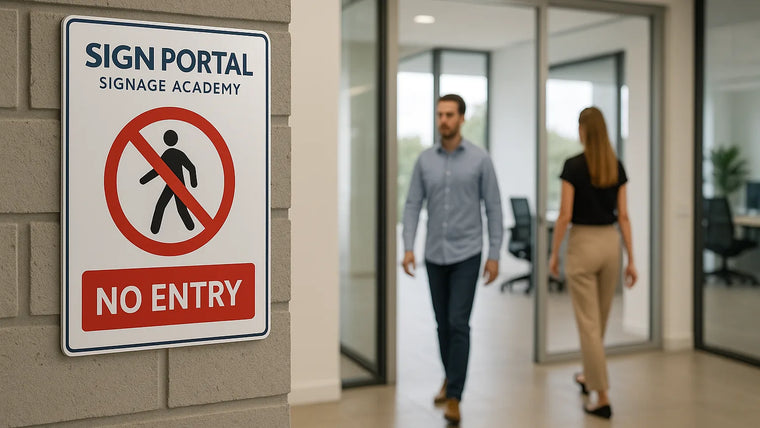
Where Should Prohibition Signs Be Installed?
Prohibition signs must be positioned so they are seen before anyone can begin the banned action: at every entry and access point to the...
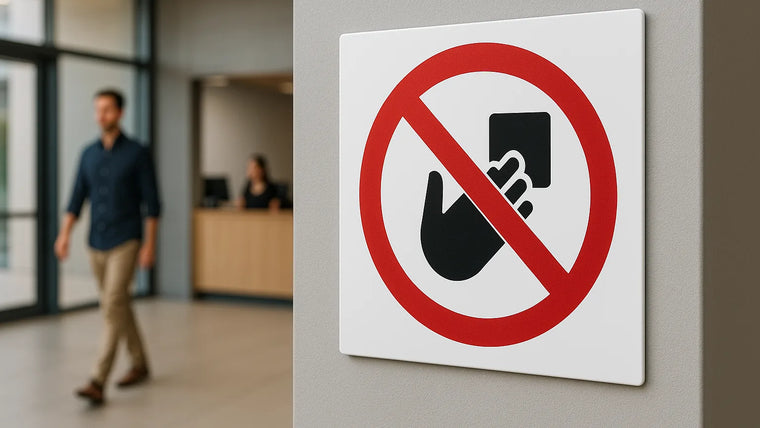
Prohibition Signs: Colours, Symbols and Meaning Explained
A prohibition sign indicates that a specified action is not permitted. Under AS 1319:1994, it features a black pictogram on a white disc, overlaid...
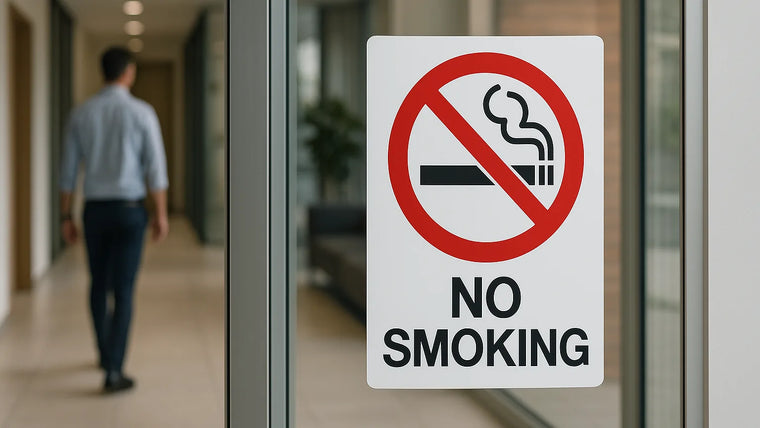
Prohibition Signs: Complete Guide for Australian Workplaces
Prohibition signs indicate behaviours that are not permitted because they would create or increase risk. In Australia, specify signs to AS 1319: a red...
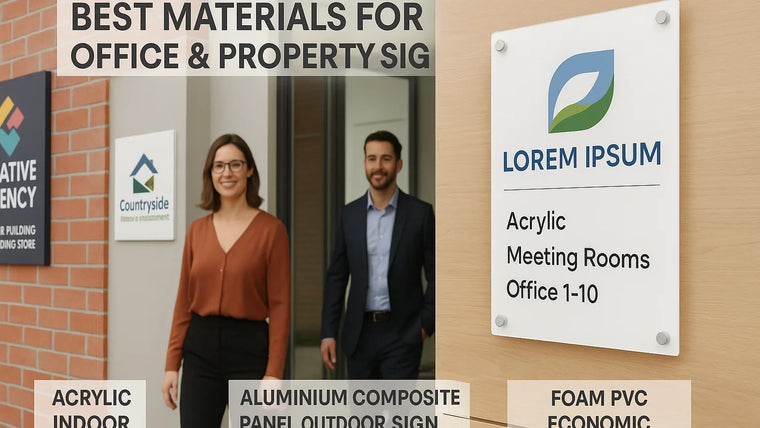
Best Materials for Office & Property Signs
Indoors, acrylic (cast, 3–6 mm) gives a premium, rigid finish; foam PVC (3–10 mm) is a cost‑effective workhorse. Apply UV-direct print or cut vinyl;...
When Are Office & Property Signs Used?
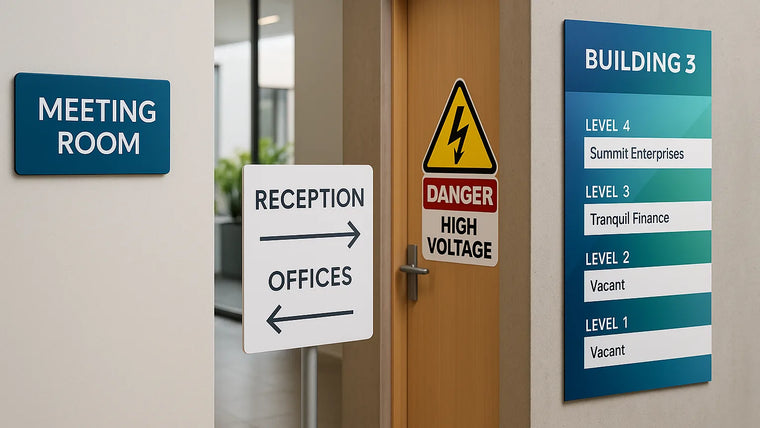
Office and property signage directs people, identifies spaces and controls risk across workplaces, commercial buildings, strata properties and car parks. It covers wayfinding (site...
Office & Property Signs: Colours, Symbols and Meaning Explained
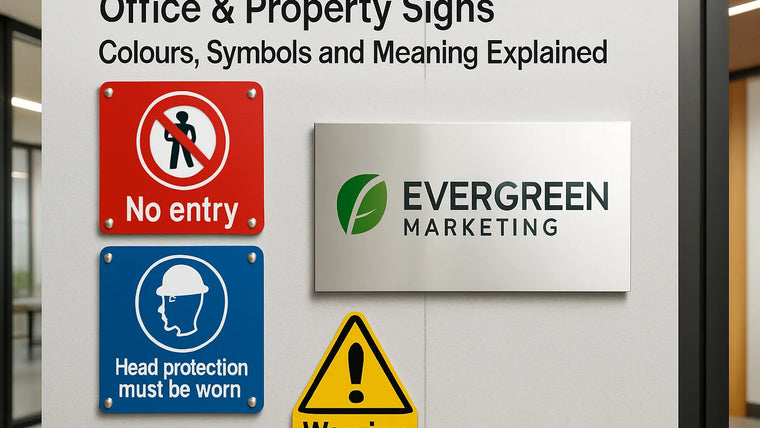
In Australia, safety sign colours and formats are defined by AS 1319:1994 (with exit signage and emergency lighting governed by the NCC and AS/NZS...
Office & Property Signs: Complete Guide for Australian Workplaces
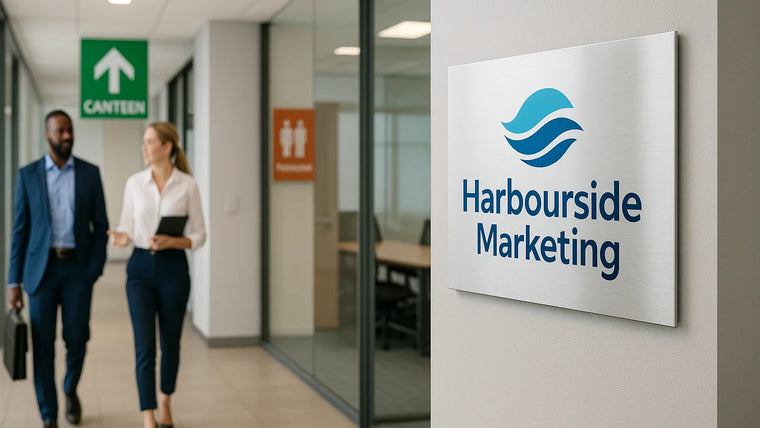
Office and property signage identifies rooms and assets, guides occupants and visitors, and fulfils legal obligations. This guide covers the core categories—wayfinding, statutory/safety (AS...
Best Materials for Multilingual Signs
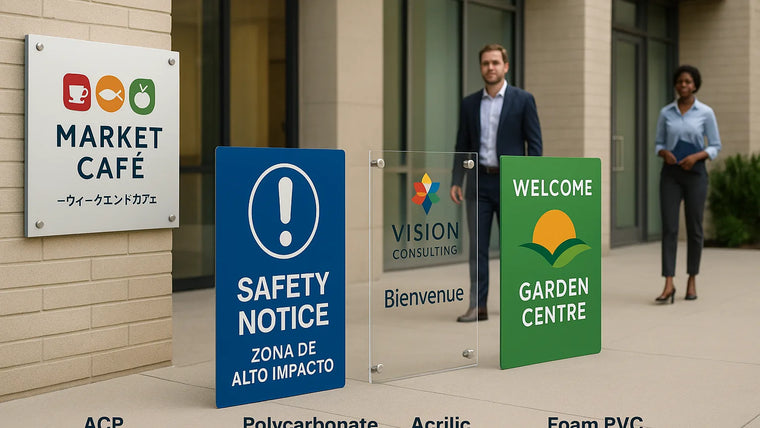
There’s no single best material. Match the substrate to environment, impact risk, presentation, lifespan and compliance.Choosing the right substrate for multilingual signage matters more...
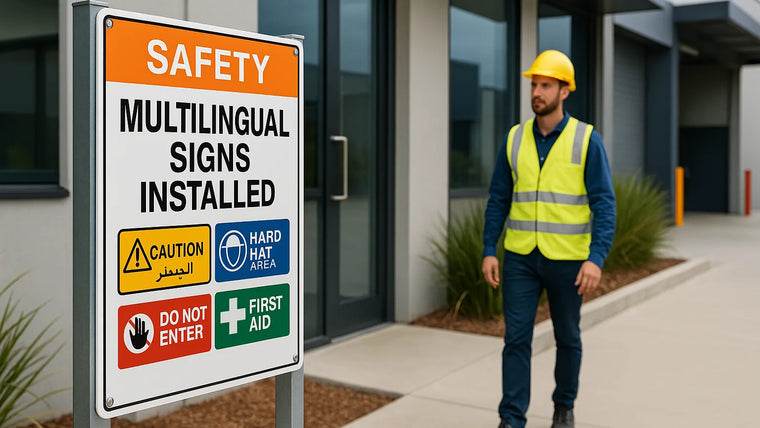
Where Should Multilingual Signs Be Installed?
Install multilingual safety communication wherever people make decisions or can be harmed. Cover, at a minimum:- Site entries, access control and inductions (reception, gatehouses,...
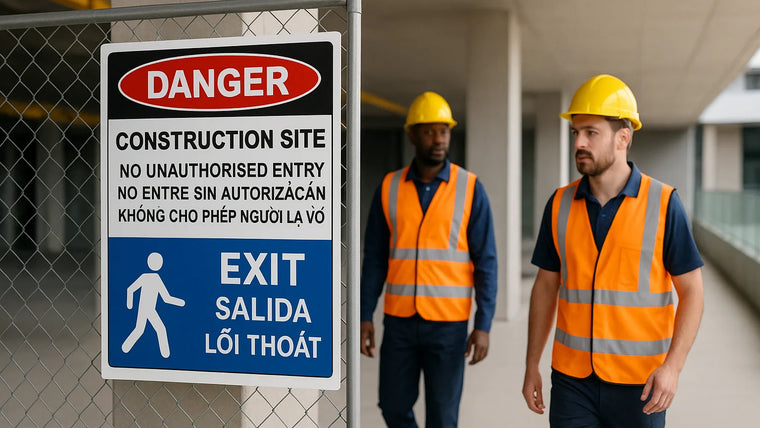
When Are Multilingual Signs Used?
Use multilingual signage whenever misunderstanding could cause harm, delays or complaints. Prioritise it when:- People on site may not read English confidently (including CALD...
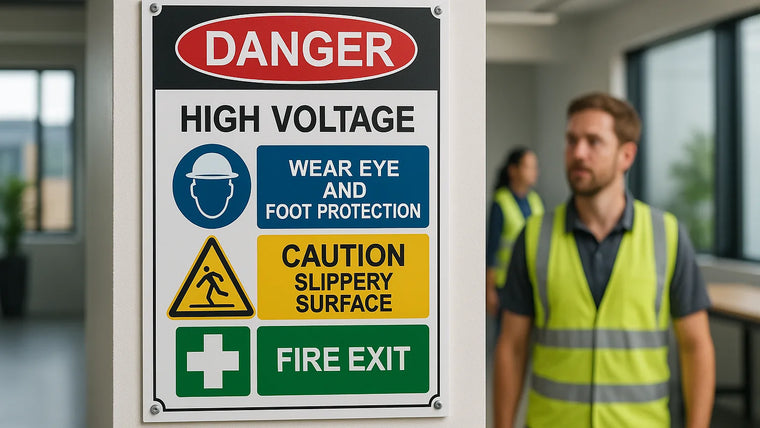
Multilingual Signs: Colours, Symbols and Meaning Explained
Multilingual safety signage should comply with AS/NZS 1319 (message types, colours and layouts) and, where appropriate for diverse workforces, pair those requirements with ISO...
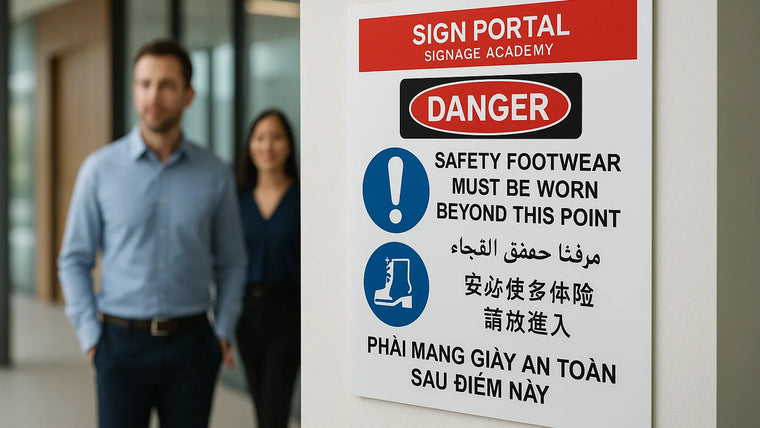
Multilingual Signs: Complete Guide for Australian Workplaces
Use ISO pictograms, AS 1319 colours and NAATI‑checked translations. Choose languages from site data; size and place signs to suit risk.Australia’s workplaces are multilingual....
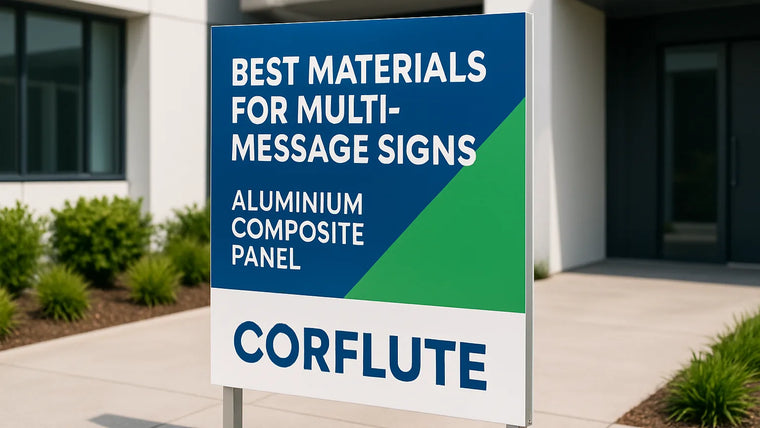
Best Materials for Multi Message Signs
For long‑term outdoor multi‑message signs, specify 3 mm exterior‑grade aluminium composite panel (ACP) with 5005 aluminium skins; it remains flat and stable, accepts vinyl...
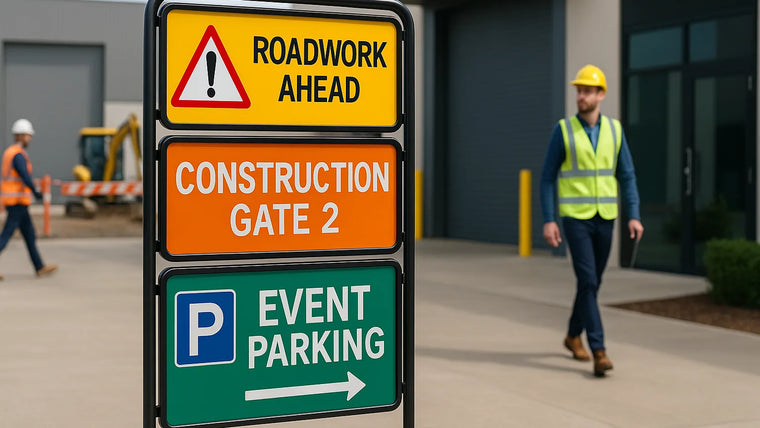
When Are Multi Message Signs Used?
Multi‑message signs (MMS) are modular frames that hold interchangeable, standard‑size sign inserts. They’re used wherever temporary traffic and safety messages change during the day...
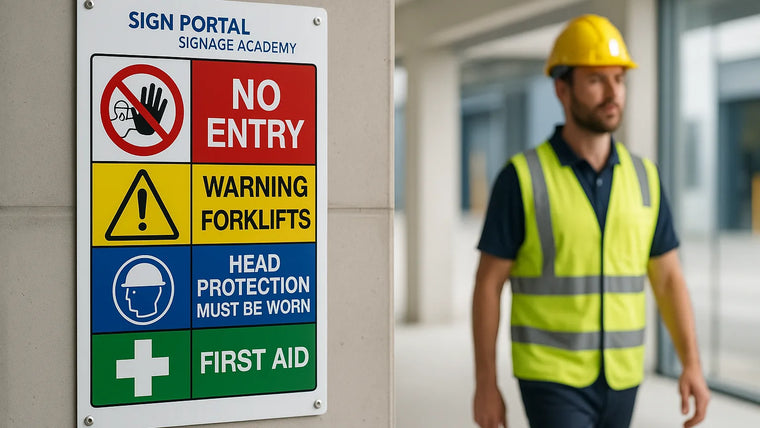
Multi Message Signs: Colours, Symbols and Meaning Explained
Multi‑message signs (also called combination signs) consolidate several critical safety instructions onto a single board or frame so workers see key hazards, prohibitions and...
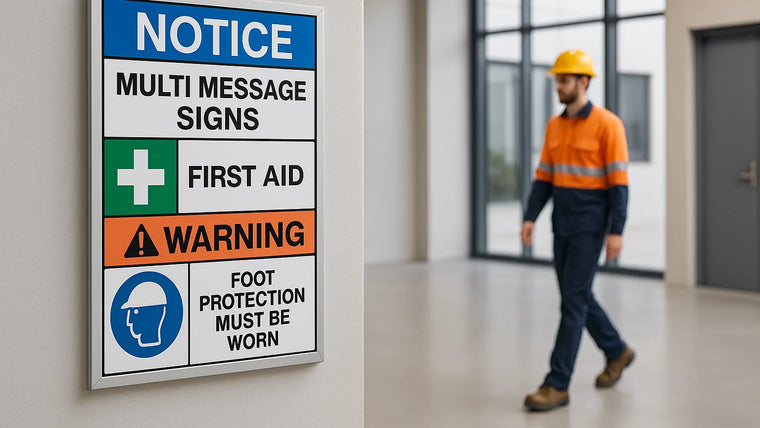
Multi Message Signs: Complete Guide for Australian Workplaces
Multi‑message signs (MMS) are modular signboards that stack two or more interchangeable panels in one frame to present related safety and information messages clearly...
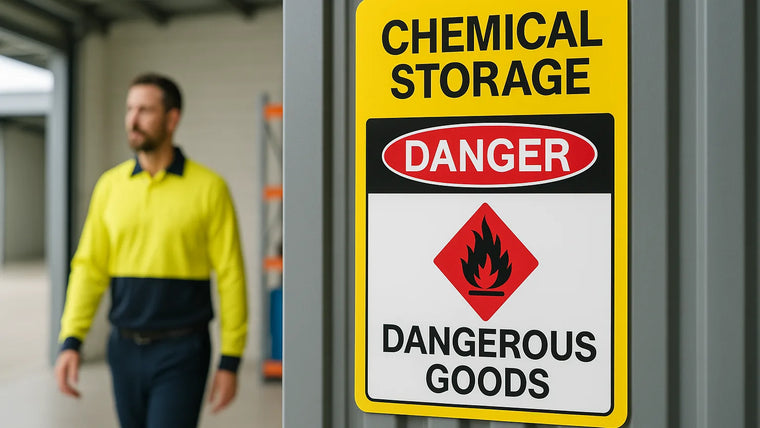
Chemical Storage and Dangerous Goods Signage: Buyer Considerations
Select materials matched to the environment and duty cycle. For outdoors, specify 1.6 to 3 mm marine-grade aluminium with UV-stable inks and an anti-graffiti...
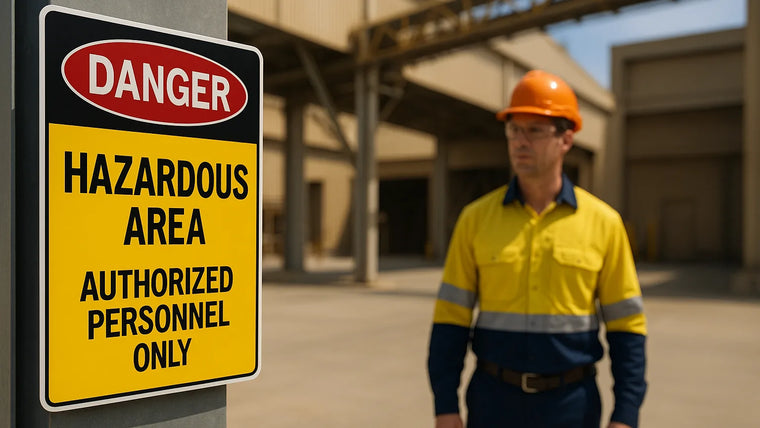
Hazardous Area Signage for Industrial Workplaces
Hazardous area signage must comply with AS 1319 and relevant WHS and dangerous goods requirements. Use the correct sign types (Danger, Warning, Prohibition, Mandatory,...
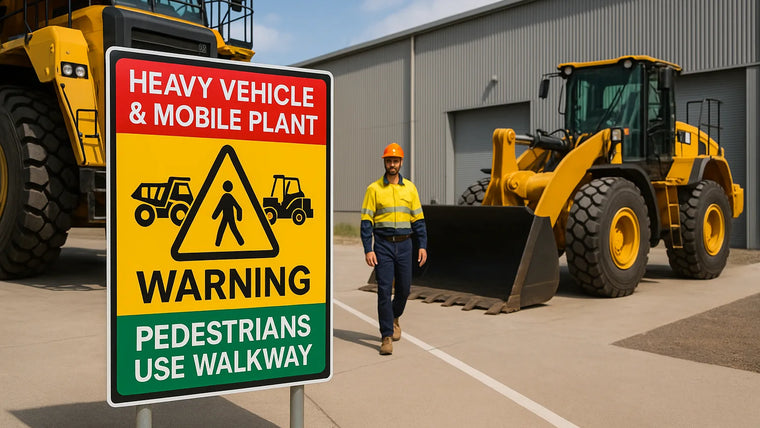
Heavy Vehicle and Mobile Plant Signs for Industrial Sites
Use Class 1/1W reflective on aluminium or ACP with AS 1319/1742 designs; keep messages large and clear, and place for long sightlines.When haul trucks,...
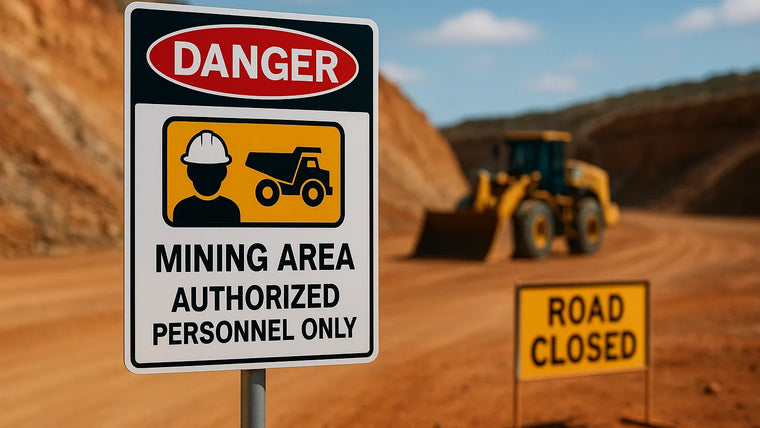
Mining Site Signage: Common Sign Types and Materials
On Australian mine sites, signage is typically specified to AS 1319 (Safety signs) and grouped as: mandatory PPE, prohibition, hazard (Warning and Danger), emergency...
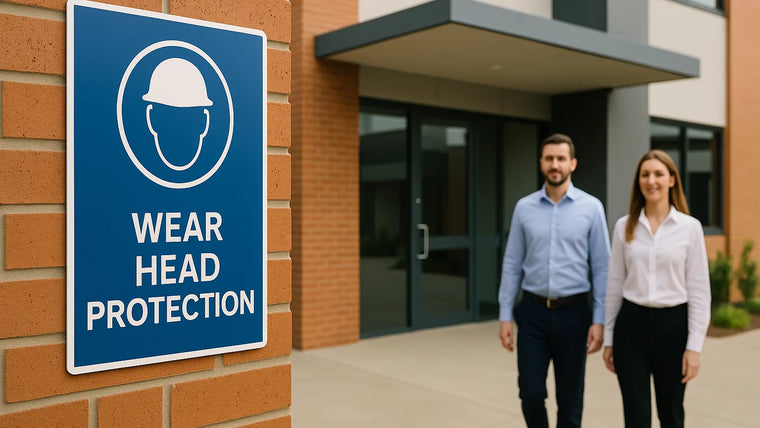
Best Materials for Mandatory Signs
For most outdoor workplaces, specify 3 mm aluminium composite panel (ACP) with UV‑stable print and an anti‑graffiti overlaminate; it provides rigidity, weather resistance and...
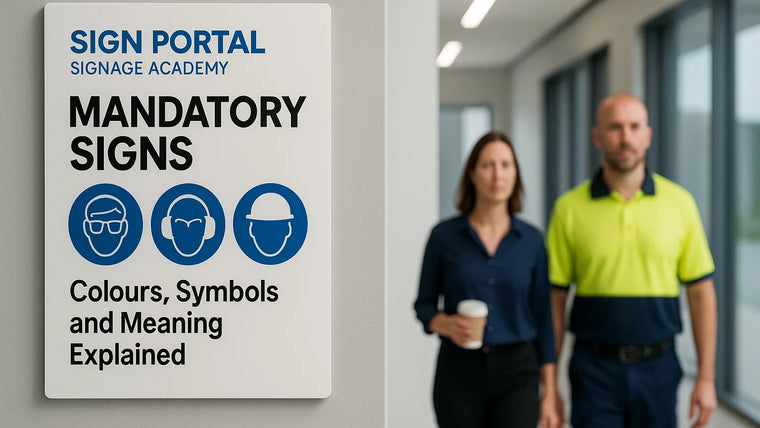
Mandatory Signs: Colours, Symbols and Meaning Explained
Mandatory signs (AS 1319) instruct people to carry out a required action. They show a white pictogram inside a solid blue circle, with a...
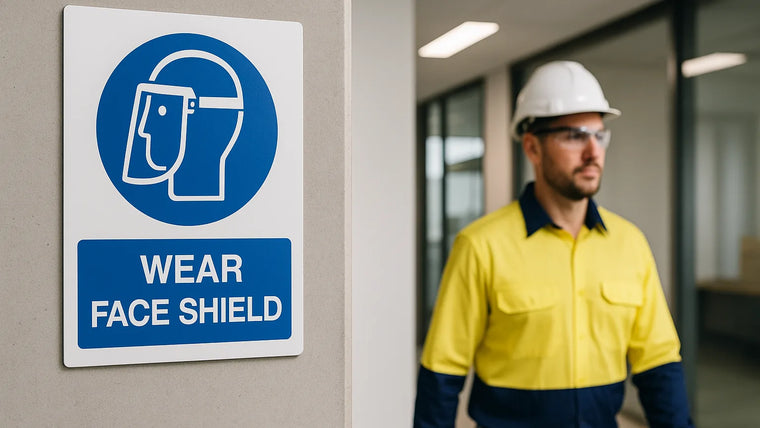
Mandatory Signs: Complete Guide for Australian Workplaces
Mandatory signs state actions that must be taken to reduce risk. In Australia they should comply with AS 1319 (Safety signs for the occupational...
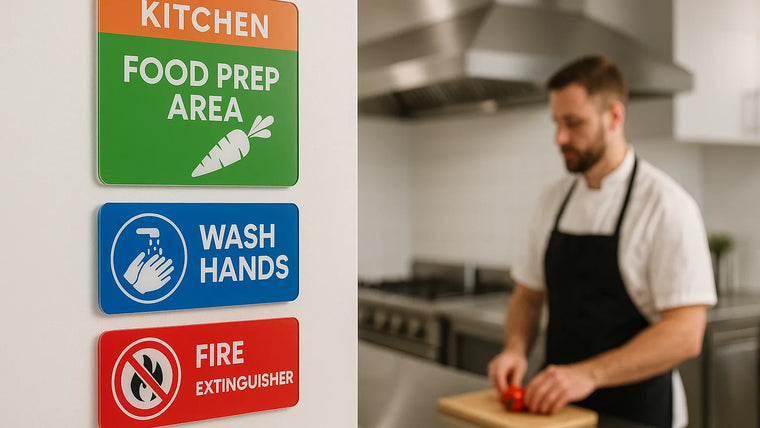
Best Materials for Kitchen & Food Safety Signs
For commercial kitchens, follow Food Standards Code 3.2.3 and AS 4674: use smooth, impervious, non‑porous, easy‑to‑sanitise substrates. Best choices by application:- Laminated self‑adhesive vinyl...
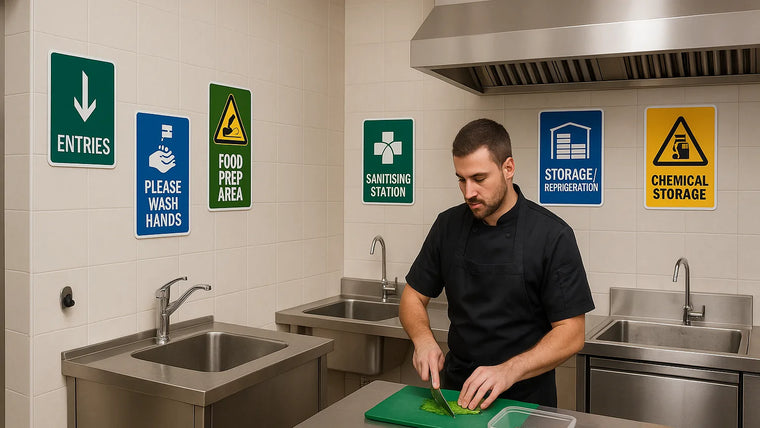
Where Should Kitchen & Food Safety Signs Be Installed?
Place kitchen and food-safety signage at the point of action and in the direct line of sight so staff see it exactly when and...

When Are Kitchen & Food Safety Signs Used?
Used across all food premises wherever food is prepared, handled, stored or served, these signs support compliance with the Food Standards Code (Standards 3.2.2,...
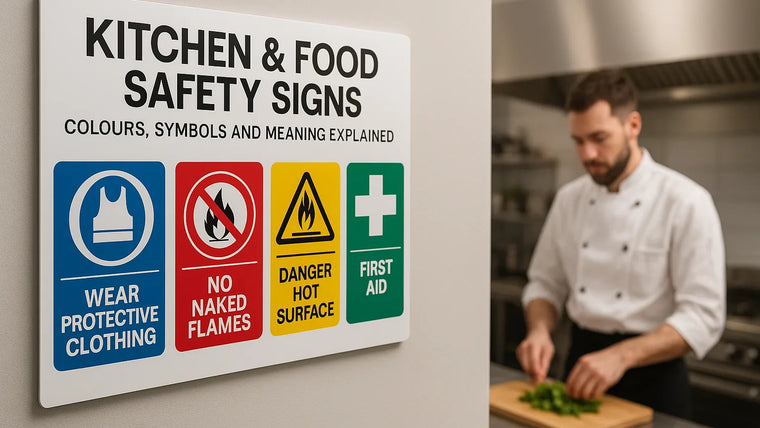
Kitchen & Food Safety Signs: Colours, Symbols and Meaning Explained
Australian commercial kitchens follow AS 1319 safety sign conventions so intent is unmistakable at a glance: blue circular signs (mandatory actions, e.g. Wash Hands,...
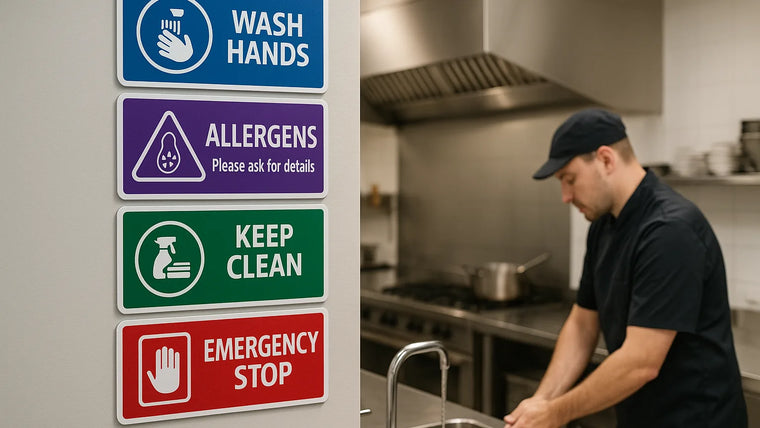
Kitchen & Food Safety Signs: Complete Guide for Australian Workplaces
Kitchen and food safety signage underpins compliance with FSANZ requirements and WHS laws, reinforcing safe food handling, hygiene and emergency procedures for staff and...
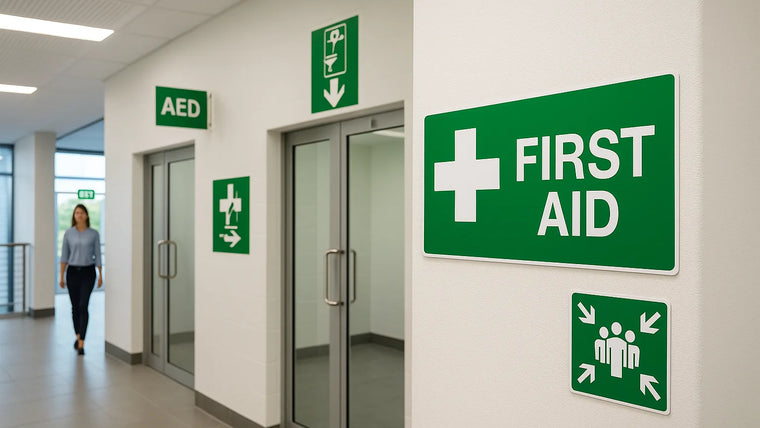
When Are Emergency & First Aid Signs Used?
Emergency and first aid signs identify where to obtain help, life‑saving equipment and safe egress routes. In Australia they should comply with AS 1319...
How Viewing Distance Affects Safety Sign Size
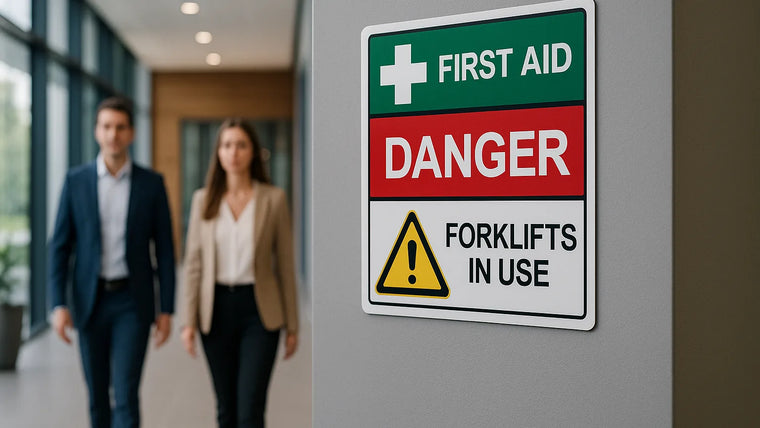
The further the viewing distance, the larger the text and symbols must be for rapid recognition. Size signs for the maximum distance and the...
Safety Sign Placement: How to Choose the Best Location
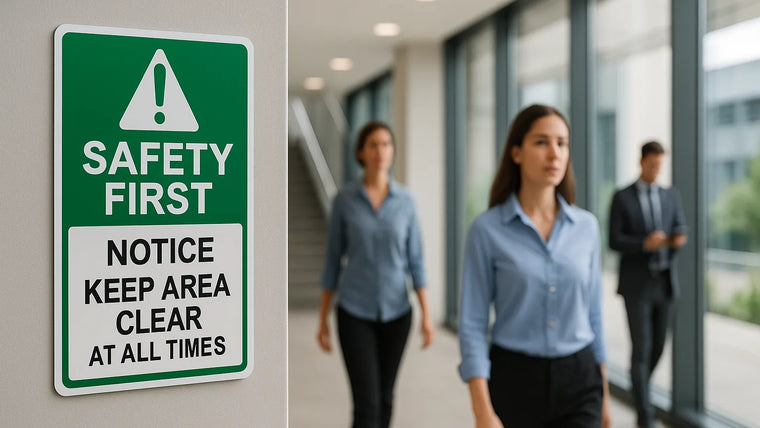
Locate safety signs where the decision or action must be taken, on the primary approach line, with enough sight distance for a person to...
Best Materials for General Information Signs
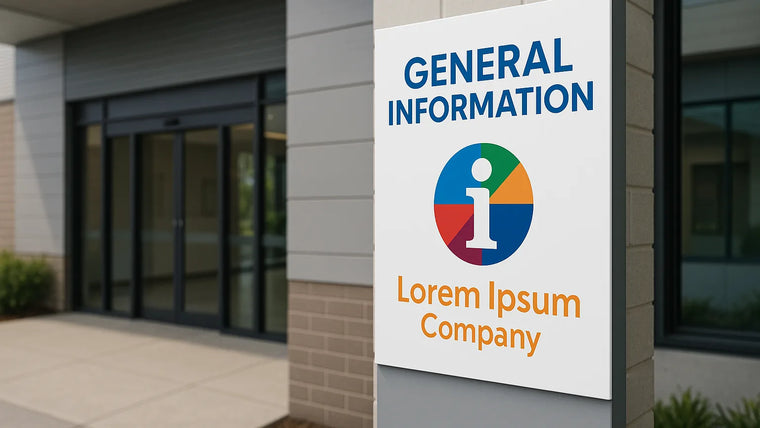
• Outdoors, long‑term (5–10+ years): 3 mm aluminium composite panel (ACP) or 1.6–3 mm solid aluminium, UV‑printed and overlaminated (gloss, matte or anti‑graffiti). ACP...
Where Should General Information Signs Be Installed?
Install general information signs at true decision and confirmation points so users can act without backtracking:- Location: site/building entries, lobbies, lift and stair landings,...

When Are General Information Signs Used?
General information signs provide clear, non‑safety guidance that helps people navigate places and use facilities. Typical uses include amenities (toilets, parents’ rooms), wayfinding and...
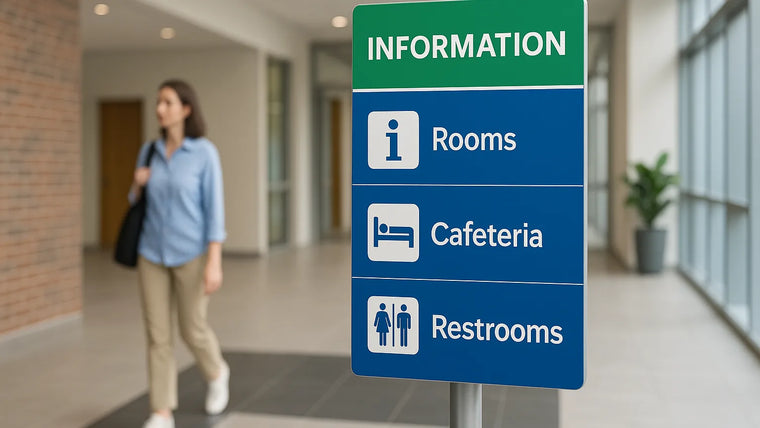
General Information Signs: Colours, Symbols and Meaning Explained
General information signs provide clear wayfinding and amenity guidance using familiar colour schemes (e.g. white on blue for facilities, white on green for directions...
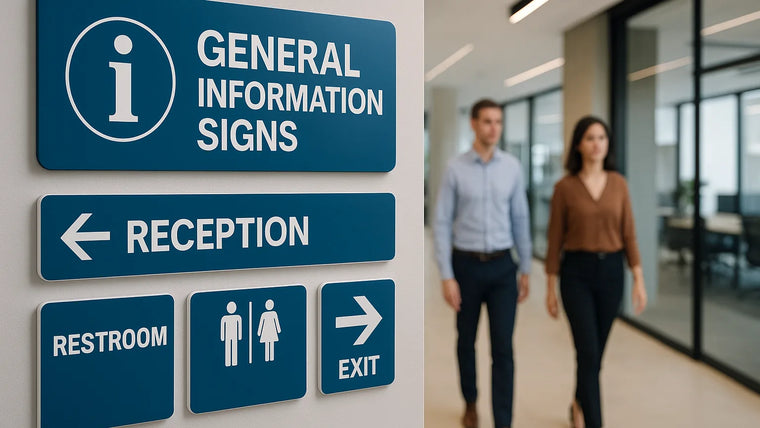
General Information Signs: Complete Guide for Australian Workplaces
General information signs communicate non‑hazard details in workplaces—such as directions, amenities, room identification, reception and delivery points, operating hours, and site policies. They are...
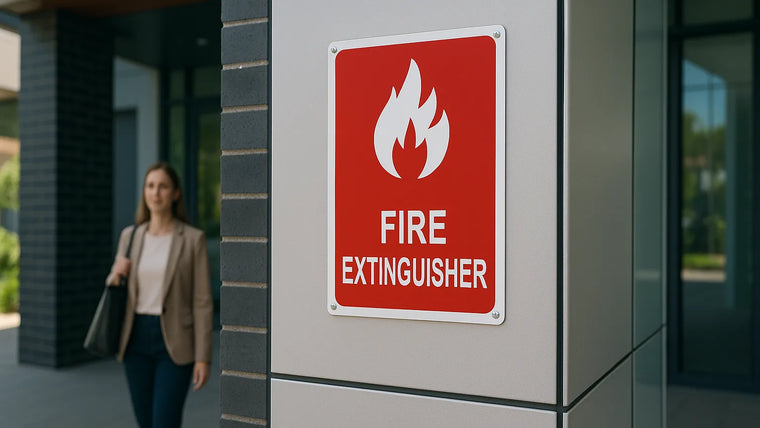
Best Materials for Fire Safety Signs
For permanent, code‑sensitive fire safety signage (e.g. extinguisher, hydrant, hose reel and fire door signs), specify 1.6–2.0 mm marine‑grade aluminium (5005/5052) or 3 mm...
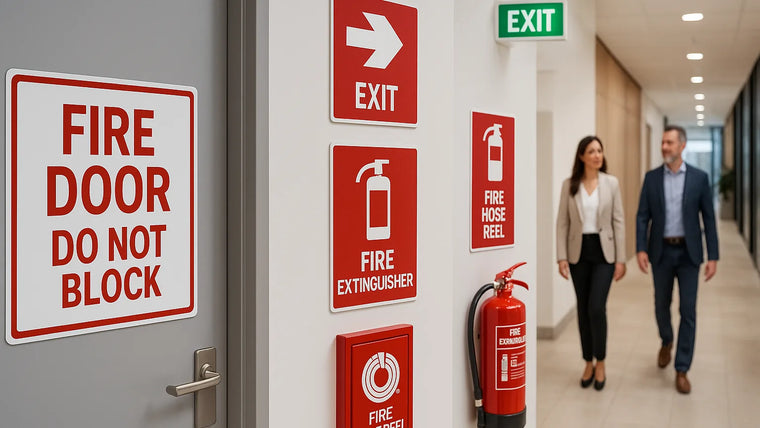
Where Should Fire Safety Signs Be Installed?
Install fire safety signage in accordance with the NCC and relevant Australian Standards (AS 1319, AS 2293 series, AS 2444/AS 2441, AS 3745). Provide...
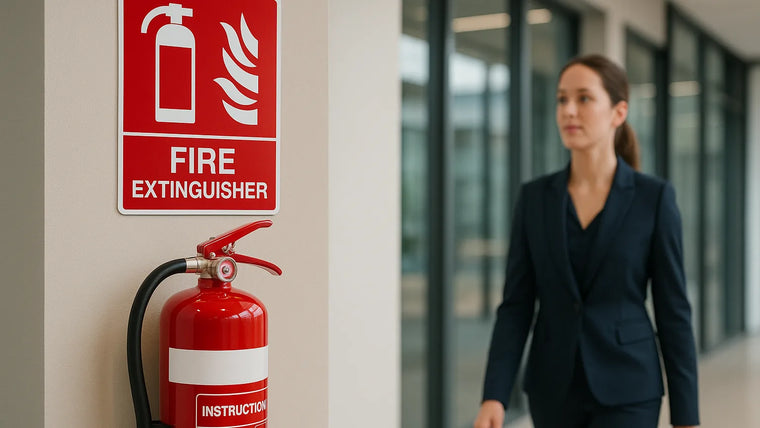
When Are Fire Safety Signs Used?
Fire safety signs must be installed wherever fire protection equipment, emergency controls or fire‑related prohibitions need clear identification, in accordance with the NCC and...
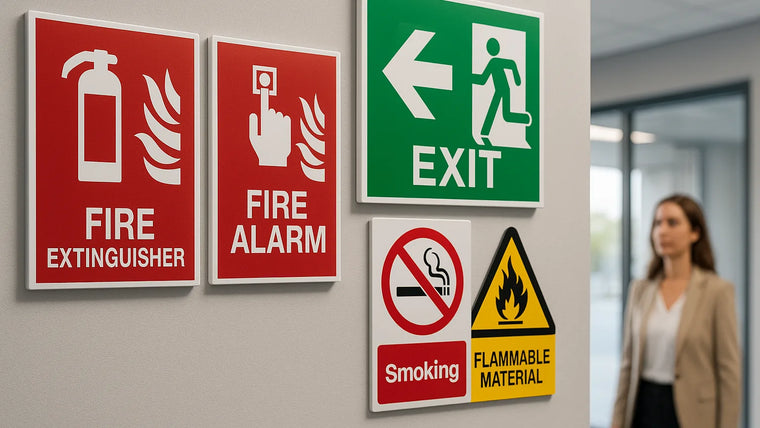
Fire Safety Signs: Colours, Symbols and Meaning Explained
In Australian workplaces, safety signage should comply with AS 1319 (safety signs), AS 2444 (portable fire equipment) and, for exit signs, AS 2293 (emergency...
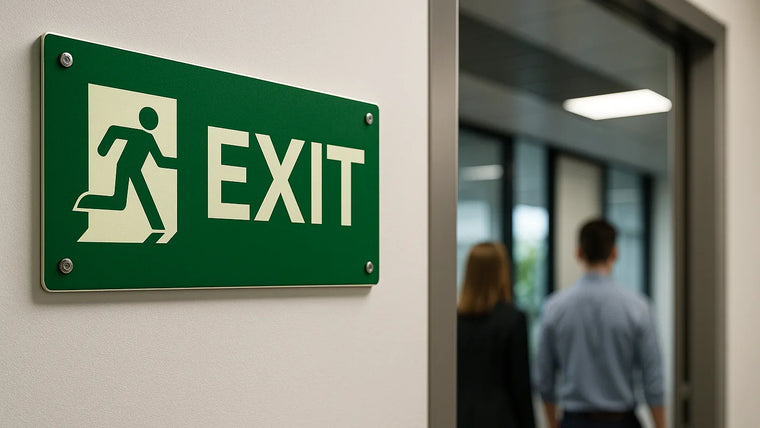
Best Materials for Exit & Evacuation Signs
For non‑illuminated emergency and safety signs (e.g. evacuation diagrams, equipment ID, assembly points and wayfinding—note: illuminated exit signs are regulated under AS/NZS 2293 and...
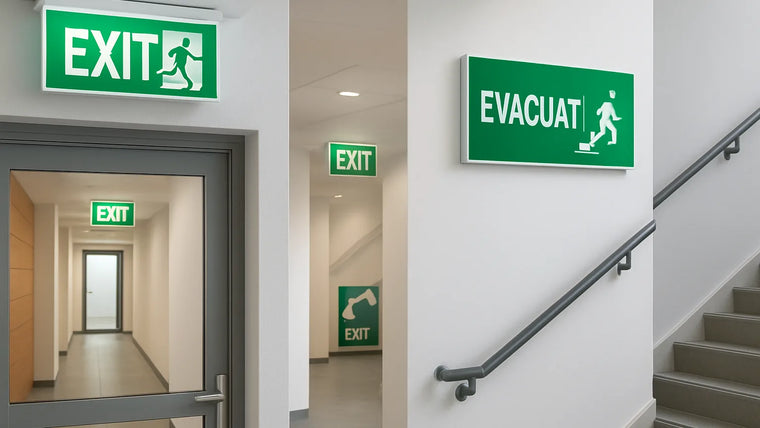
Where Should Exit & Evacuation Signs Be Installed?
Install compliant exit signage along every path of egress so occupants can always see the next direction to a final exit to a road...
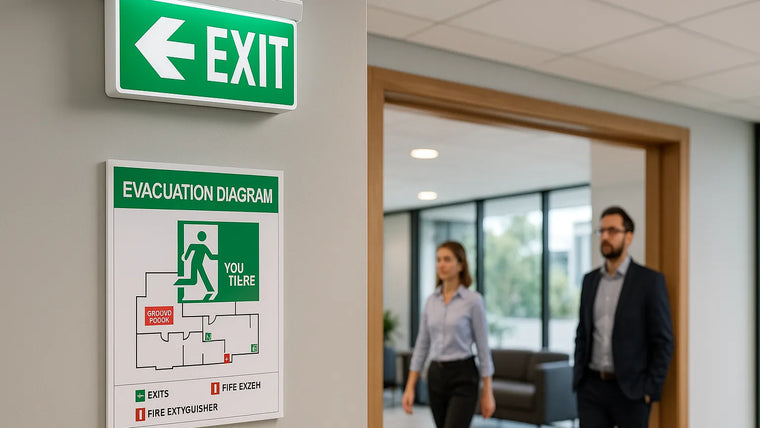
When Are Exit & Evacuation Signs Used?
Exit signs and evacuation diagrams are mandatory life‑safety features wherever people may need clear, unambiguous directions to leave a building or site in an...
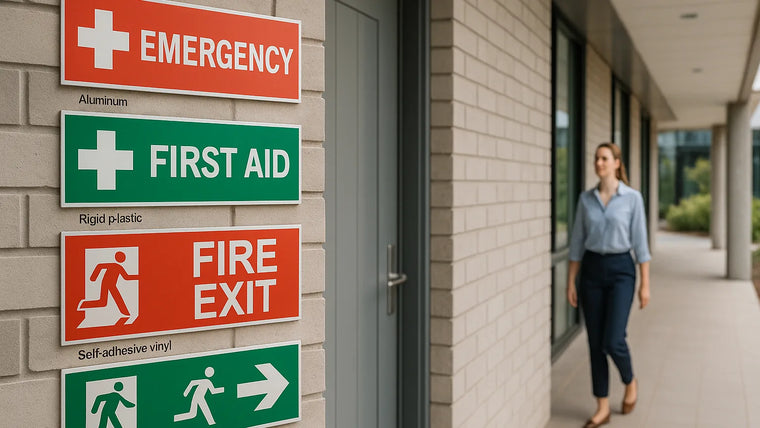
Best Materials for Emergency & First Aid Signs
Outdoors, specify 1.6 mm aluminium or 3 mm aluminium composite panel (ACP) with UV‑stable print and an anti‑graffiti overlaminate; these provide long‑term resistance to...
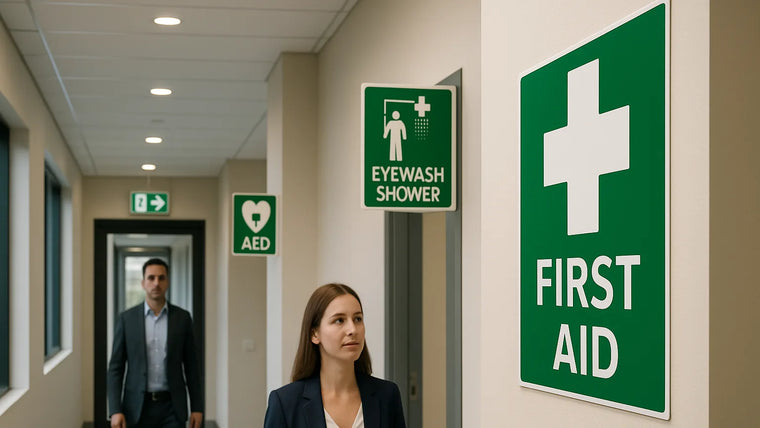
Where Should Emergency & First Aid Signs Be Installed?
Install emergency information and first aid signage where people make wayfinding decisions during an incident, in line with AS 1319 (and AS/NZS 2293 for...
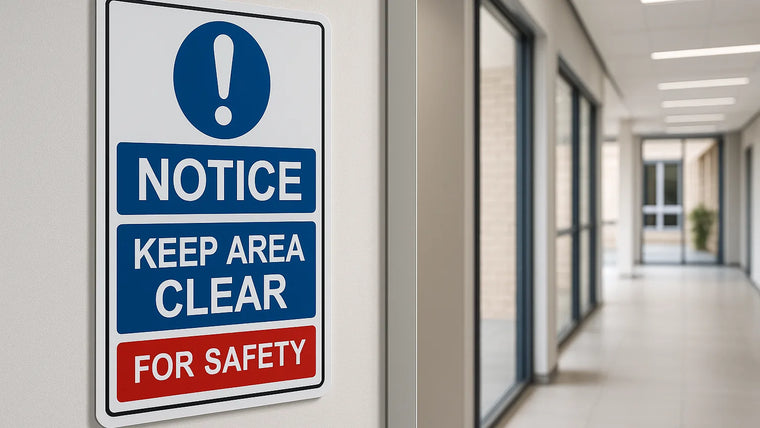
How to Check Whether a Workplace Safety Sign Is Fit for Purpose
Assess each sign against WHS Regulations and AS 1319 (and, where relevant, GHS for hazardous chemicals and AS/NZS 1906.1 for retroreflective materials):- Correct type,...
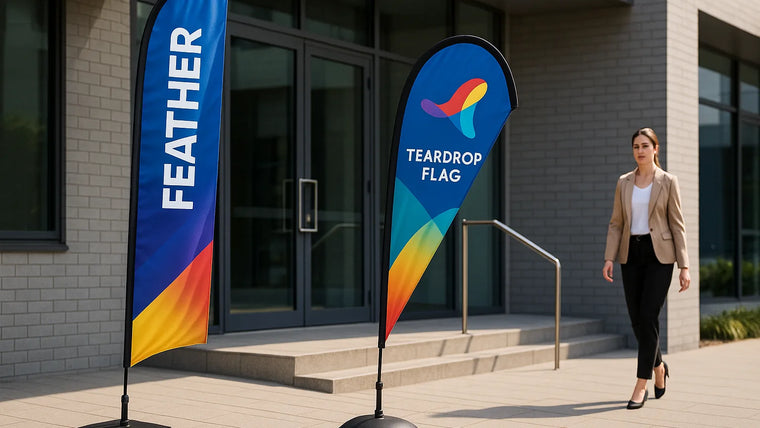
Feather Flags vs Teardrop Flags
Choose feather flags when you need maximum visual reach: taller options (about 2.5–5.5 metres), more fabric movement and a long vertical print area that...

Pull Up Banners for Retail Promotions
Premium pull up banners are durable, portable display systems for promoting offers, product launches and seasonal campaigns in high‑traffic zones such as store entrances,...
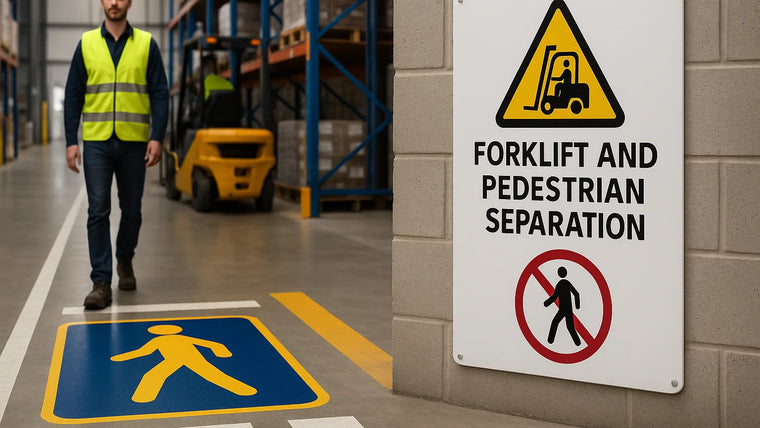
Forklift and Pedestrian Separation Signage
Forklift and pedestrian separation signage uses clear floor graphics, rigid safety signs and markings to define walkways, crossings and forklift traffic areas. Choose durable...
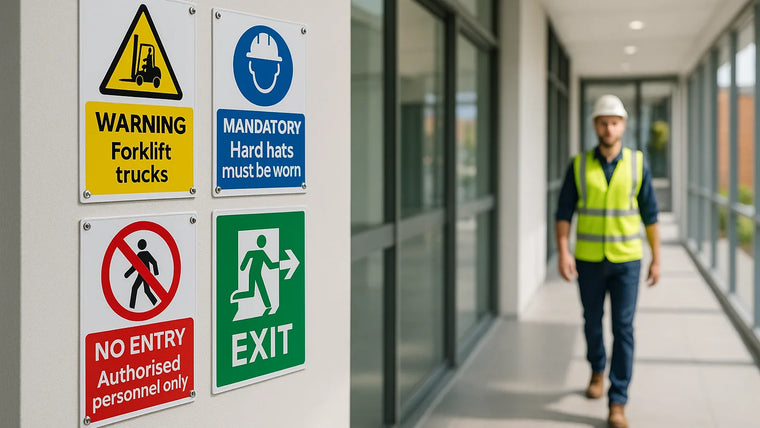
Why Consistent Safety Signage Matters Across a Site
Consistent, AS 1319–compliant safety signage turns scattered notices into a coherent, site‑wide communication system. Standard colours, symbols and wording across sign categories (prohibition, mandatory,...
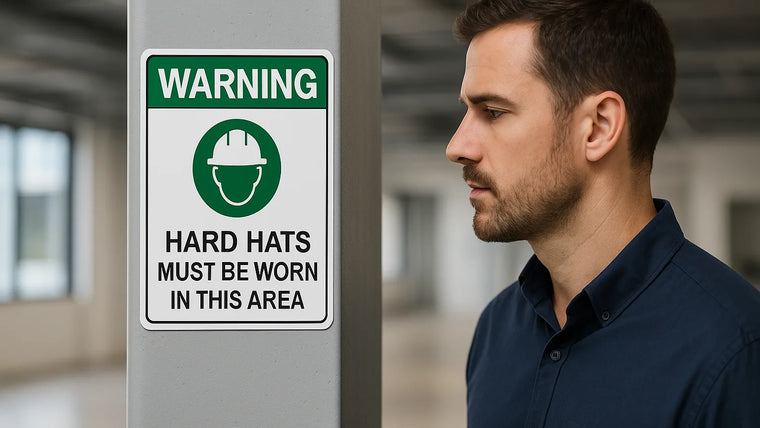
How to Read a Workplace Safety Sign
Look first at the colour and shape to identify the sign category, then read the signal word (e.g. Danger, Warning, Mandatory), interpret the pictogram,...
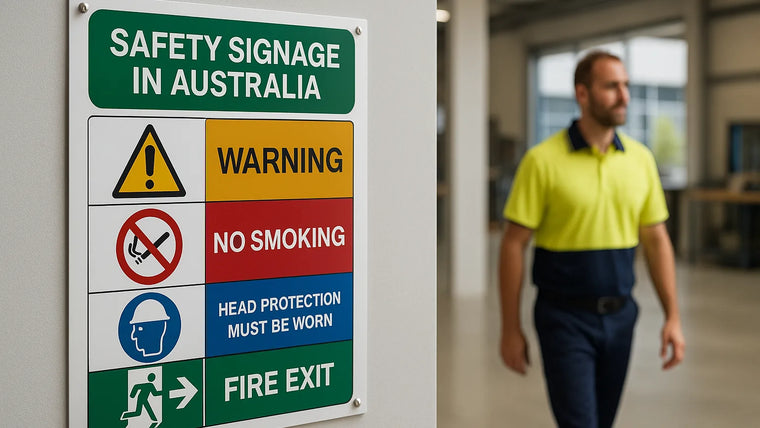
Safety Signage in Australia: Complete Beginner's Guide
Start with a WHS risk assessment. Use AS 1319‑aligned signs for hazards, actions, bans, emergency and fire; then size, place and maintain.If you are...
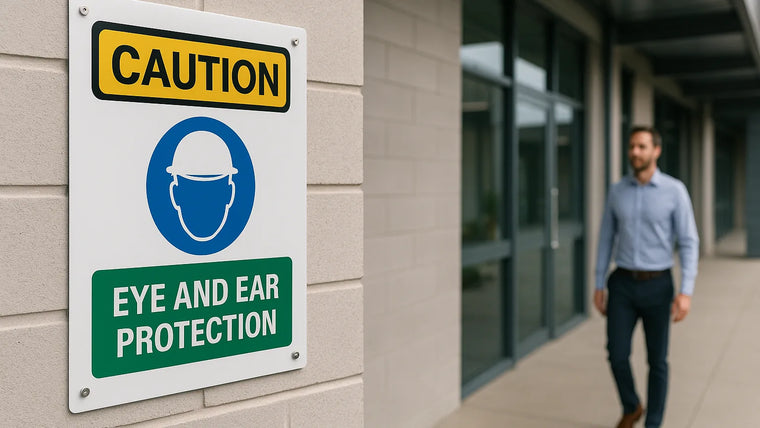
ACP for Safety Signs: Benefits, Limitations and Best Uses
Aluminium composite panel (ACP) is a sandwich panel with two thin aluminium skins bonded to a polyethylene (PE) or mineral‑filled FR core. For signage,...
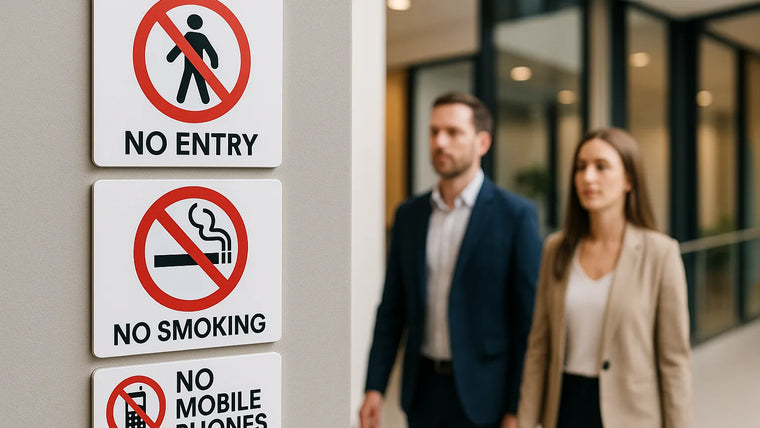
When Are Prohibition Signs Used?
Prohibition signs are used wherever a specific action is not allowed and must be clearly communicated for safety, security or policy reasons — for...
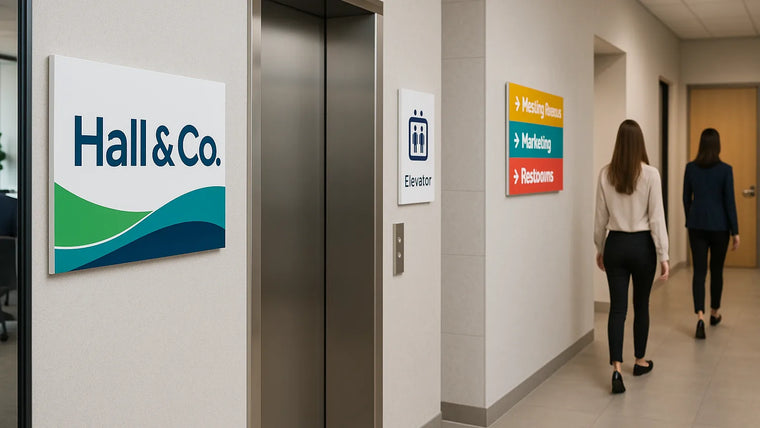
Where Should Office & Property Signs Be Installed?
Install signage at key decision and reassurance points: site entries and receptions; lift lobbies; corridor intersections and turns; doors to tenancies, amenities, plant/restricted areas;...
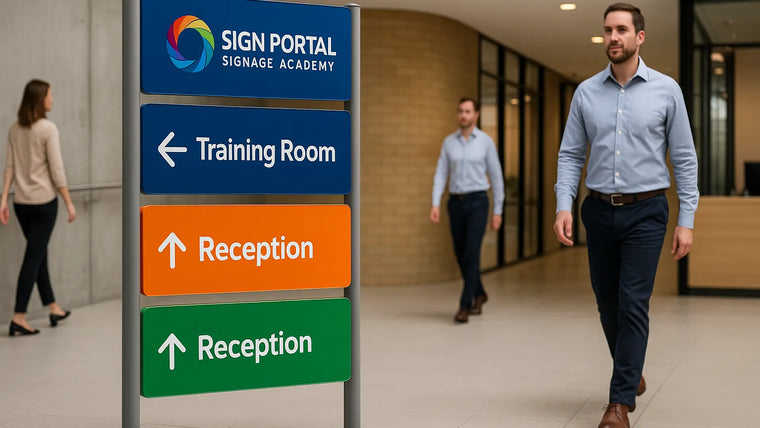
Where Should Multi Message Signs Be Installed?
Install multi‑message signs (MMS) at each decision point: an advance warning sign upstream of the work area or hazard (use Austroads ATTM Part 3...
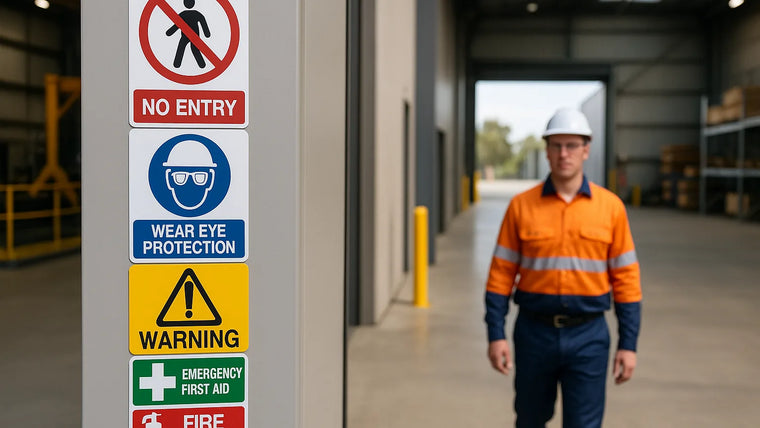
Industrial Safety Signage: Complete Guide for Australian Facilities
Industrial safety signage identifies hazards, states mandatory actions, prohibits unsafe behaviour, and directs people to emergency equipment and exits. In Australia, signage should align...
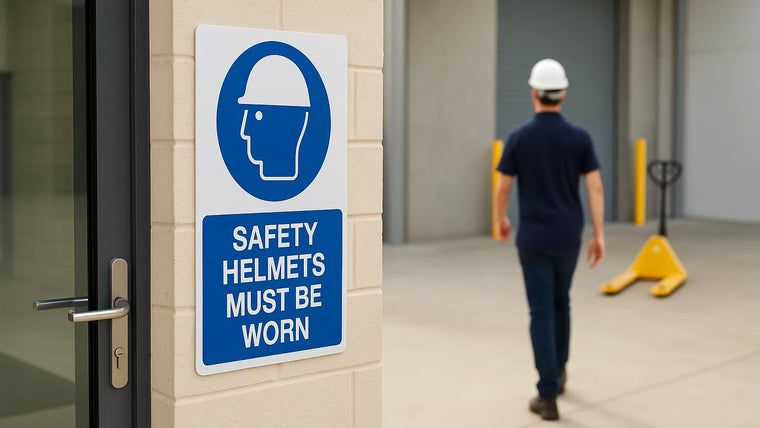
Where Should Mandatory Signs Be Installed?
Install mandatory signs exactly where the instruction must be carried out—at entries to controlled areas, the start of PPE/task zones, on or immediately adjacent...
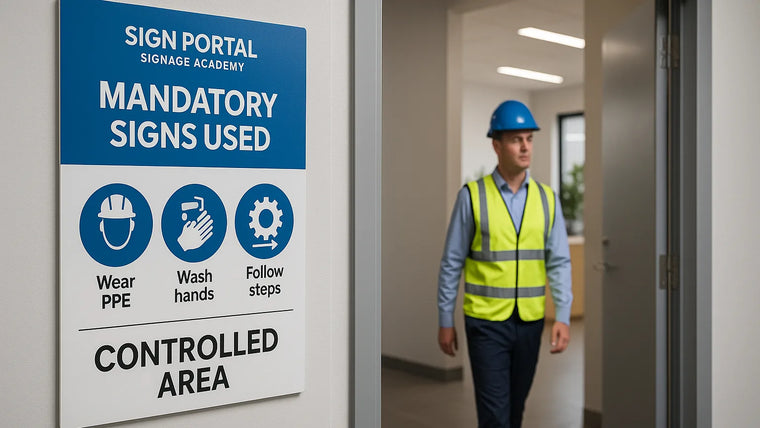
When Are Mandatory Signs Used?
Use mandatory signs whenever a specific action is required to control risk and work safely, as identified by a risk assessment and in line...
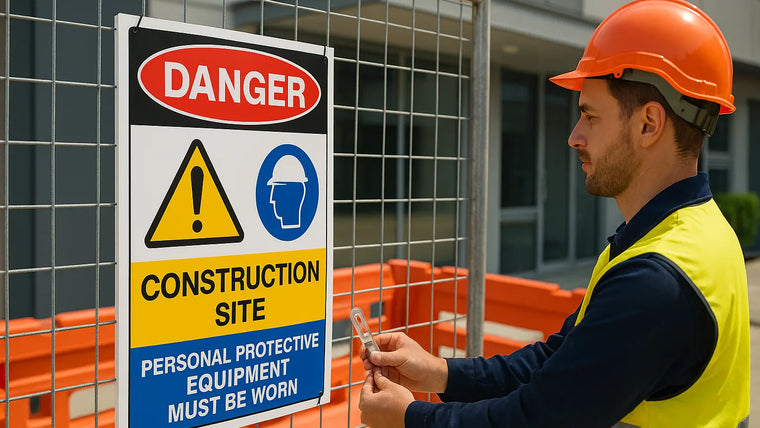
Installing Safety Signs on Fences and Temporary Barriers
Fix safety signs to fences and temporary barriers using UV‑stable cable ties, reusable fence clips, tie wire or eyelets/bungees at all corners and mid‑edges...
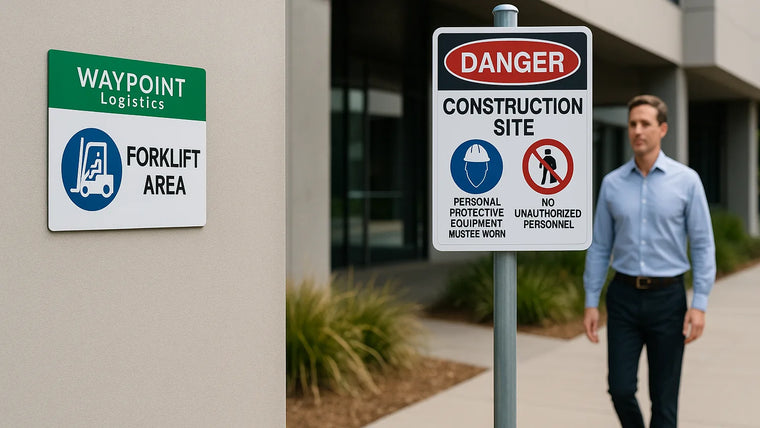
Wall-Mounted vs Post-Mounted Safety Signs
Wall‑mounting: Choose when you have a sound, visible masonry, concrete or steel surface along the approach path. It’s the fastest, lowest‑cost option (no posts...
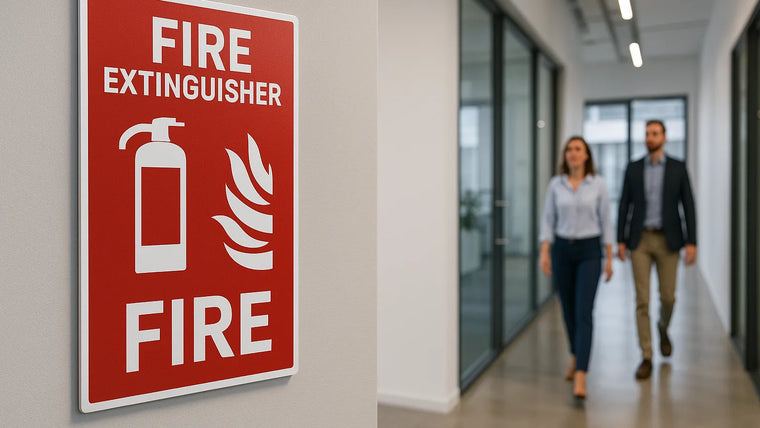
Fire Safety Signs: Complete Guide for Australian Workplaces
Fire safety signs help people locate fire equipment and exits and understand what action to take. In Australia, specify signs that comply with: •...
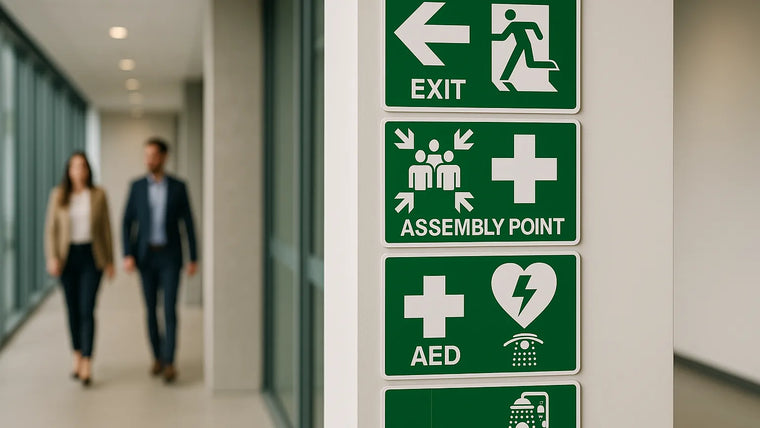
Emergency & First Aid Signs: Colours, Symbols and Meaning Explained
In Australia, emergency information and first aid signs are typically green with white symbols and text. They indicate the location of life‑saving equipment, facilities...
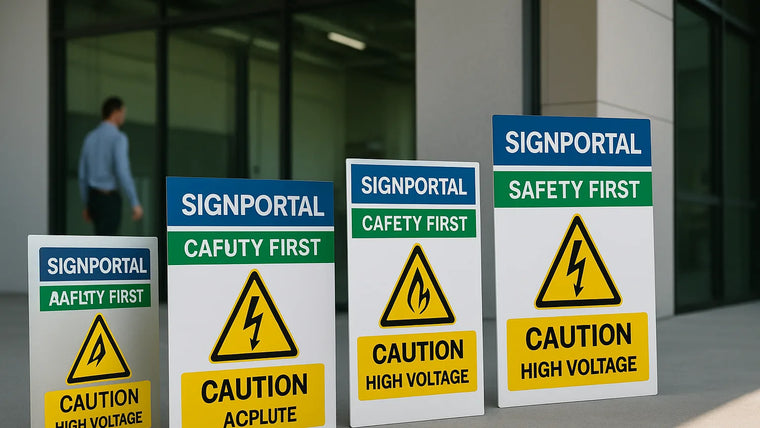
Custom Safety Sign Materials: Aluminium, ACP, Corflute and Adhesive Vinyl
Use aluminium or ACP when you need rigid, durable safety signs outdoors; choose Corflute for temporary on-site notices; and use adhesive vinyl for applying...
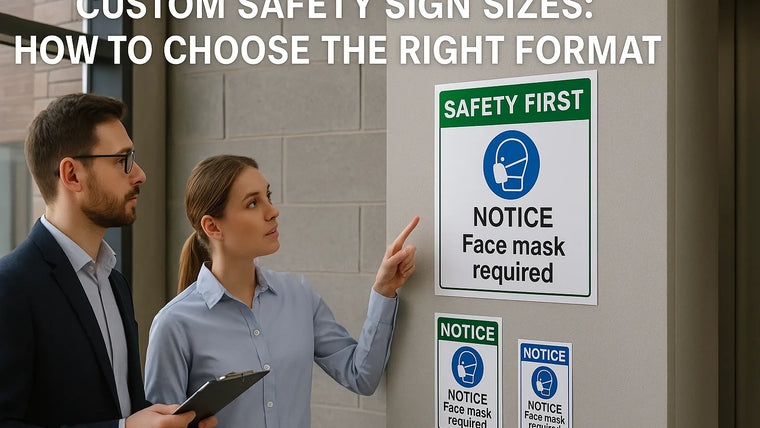
Custom Safety Sign Sizes: How to Choose the Right Format
Size a safety sign to the viewing distance and the amount of content. As a rule of thumb, specify minimum uppercase letter height ≈...
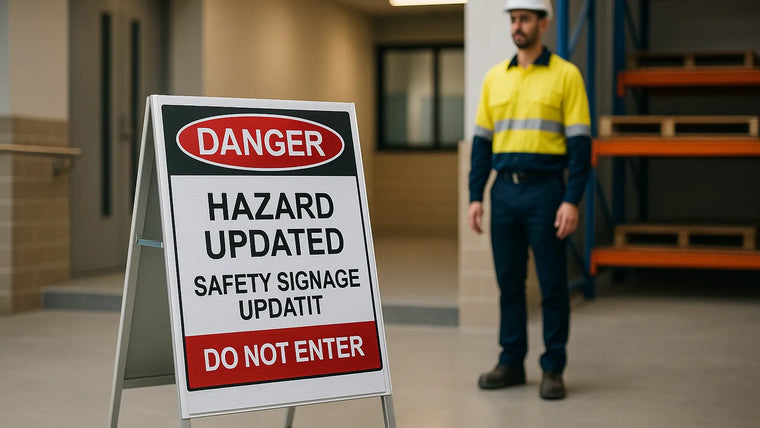
When Should Safety Signage Be Updated After a Workplace Change?
Update safety signage immediately whenever a change affects hazards or risk controls, site layout or access/egress, traffic routes, plant or processes, hazardous chemicals, PPE...
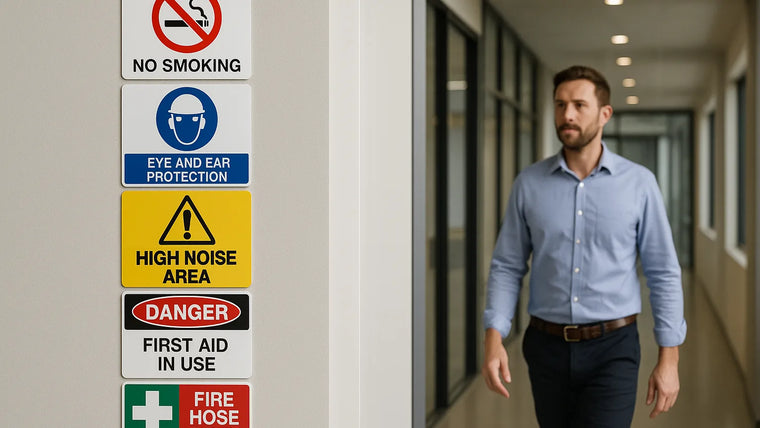
Safety Sign Colours and Shapes in Australian Workplaces Explained
In Australia, workplace safety signs must comply with AS 1319:1994. Use the correct category, colour and shape, and position signs so the message is...
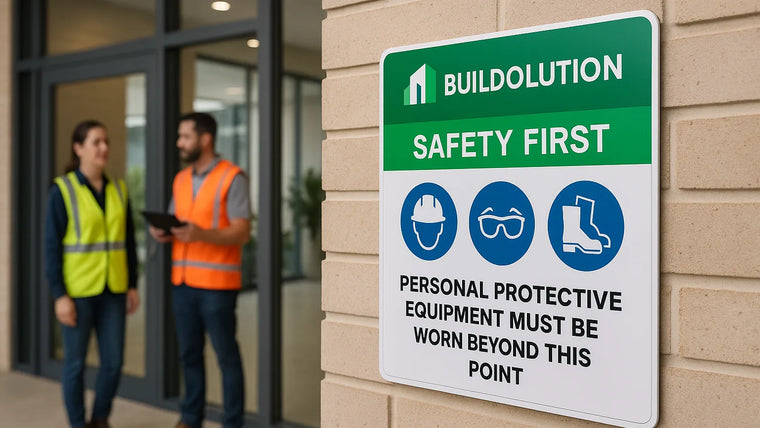
How In-House Printing, Laser Cutting and CNC Routing Work Together
UV printing, laser cutting and CNC routing operate as an integrated, in‑house print‑to‑cut workflow. We print direct to ACM, acrylic, polycarbonate, PVC and timber...
What Local Buy Supplier Status Means for Signage Procurement
Local Buy supplier status confirms a supplier has been prequalified under Local Buy’s procurement panels (managed by LGAQ), including checks on insurance, WHS, capability...
Veteran-Owned Businesses in Government and Corporate Supply Chains
Veteran‑owned Australian suppliers strengthen government and corporate supply chains by building sovereign capability, shortening lead times through local manufacturing, and delivering disciplined, reliable performance....
Australian-Made Signage for Councils and Government Procurement
Local manufacture enables public buyers to procure documented, standards-aware signage with controlled quality, rapid design changes and reliable Australia-wide delivery. Sign Portal manufactures in...
Why Material Knowledge Matters When Choosing a Sign Manufacturer
Deep material knowledge underpins compliance, longevity, legibility and whole‑of‑life value. A competent sign manufacturer selects substrates (aluminium, ACM, stainless, polycarbonate), print chemistries (solvent, latex,...
How Sign Portal Manufactures Safety and Custom Signs In-House
Sign Portal manufactures safety and custom signage end-to-end in our Brisbane facility. We print direct-to-substrate on UV flatbed and wide‑format equipment, and cut/finish in‑house...
Benefits of Buying Signage Direct From the Manufacturer
Buying signage direct from an Australian manufacturer delivers shorter, reliable lead times, rigorous quality assurance, and a single point of accountability from artwork proof...
What to Look for When Choosing an Australian Signage Supplier
Selecting a signage partner affects project risk, brand quality, safety compliance and total cost over the life of your signs. This guide explains how...
Why Local Sign Manufacturing Can Reduce Project Lead Times
Local manufacturing typically shortens project programs by one to three weeks by removing international freight, customs and biosecurity risks, enabling real-time communication in the...

Australian Sign Manufacturer vs Sign Reseller: What Is the Difference?
A sign manufacturer designs, fabricates and installs signage in‑house using its own equipment—UV/latex/solvent printers, CNC routers/lasers, metalwork and paint shops—and directly employed crews. This...

How In-House Sign Manufacturing Improves Quality Control
Keeping production in‑house strengthens quality control end to end. Devices run to a single ICC colour profile, verified with a spectrophotometer to Delta E00...
Why Australian-Made Signage Matters for Commercial and Government Buyers
Locally manufactured signage reduces risk (no import delays, currency exposure or biosecurity holds), shortens lead times, and improves quality control and traceability via ISO...
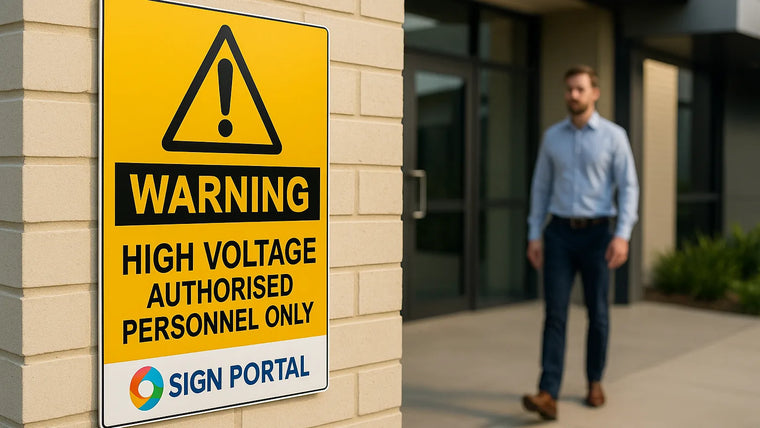
Best Materials for Warning & Caution Signs
For long‑term outdoor warning/caution signs: use signage‑grade aluminium composite panel (ACP/ACM) 3–4 mm or solid aluminium 1.6–3 mm (5005/5052). Print with UV‑stable inks and...
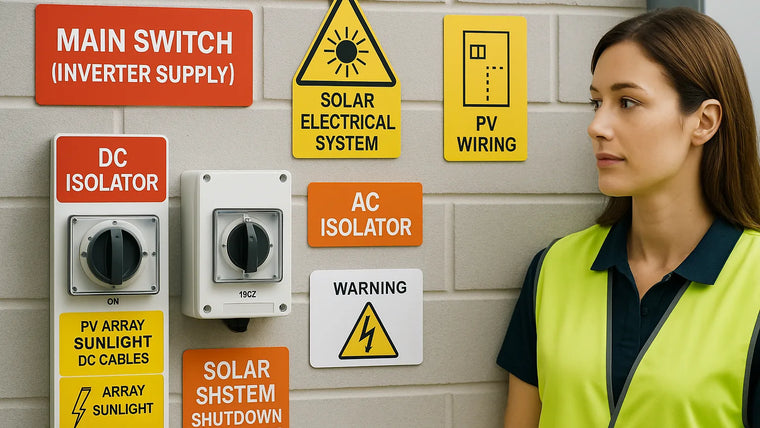
Common Solar PV Labels and What They Identify
Understand the key labels used on Australian solar PV systems, from PV arrays to inverters and switchboards, and what each one identifies.
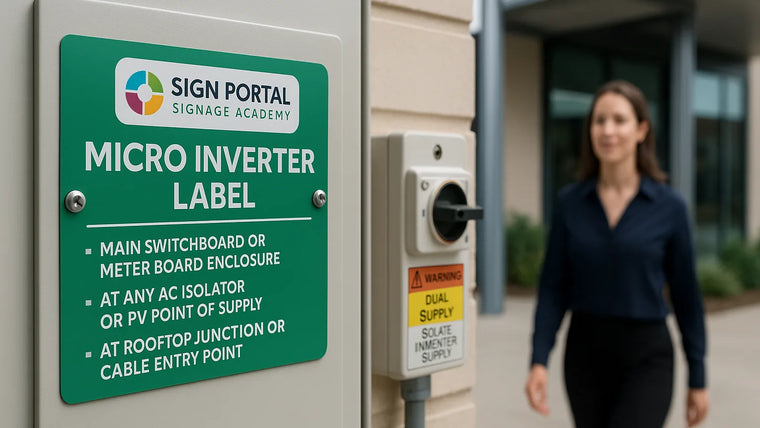
Where Are Micro Inverter Labels Typically Installed?
Learn where micro inverter labels are typically installed and what clear, consistent labelling should show on a solar PV system.
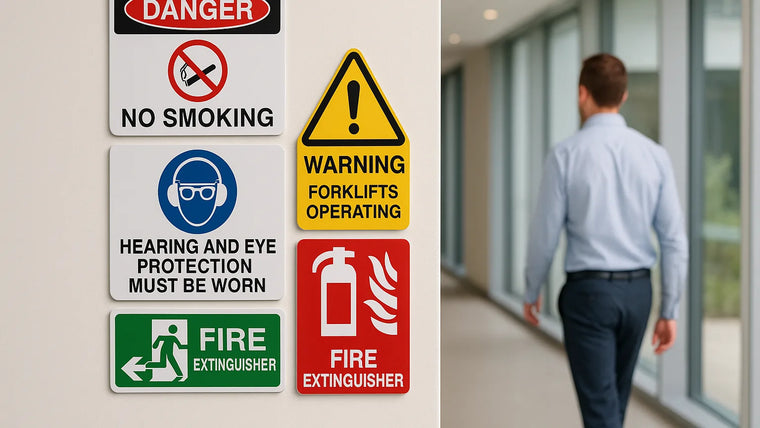
AS 1319 Safety Signs: A Practical Guide for Australian Workplaces
A practical guide to AS 1319 safety signs, including what each sign type means and how to use them in Australian workplaces.

Meet Jason Hennah: Qualified Signwriter and Director of Sign Portal
Jason Hennah is a qualified signwriter, military veteran and Director of Sign Portal, with hands-on experience in signage manufacturing, installation, laser cutting, engraving and...
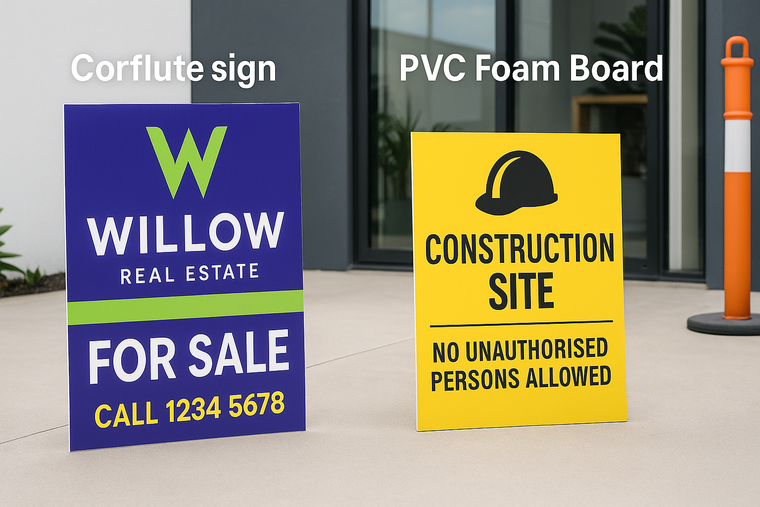
Corflute Signs vs PVC Foam Board
Compare corflute and PVC foam board to choose a practical sign material for temporary displays, events and short-term outdoor use.
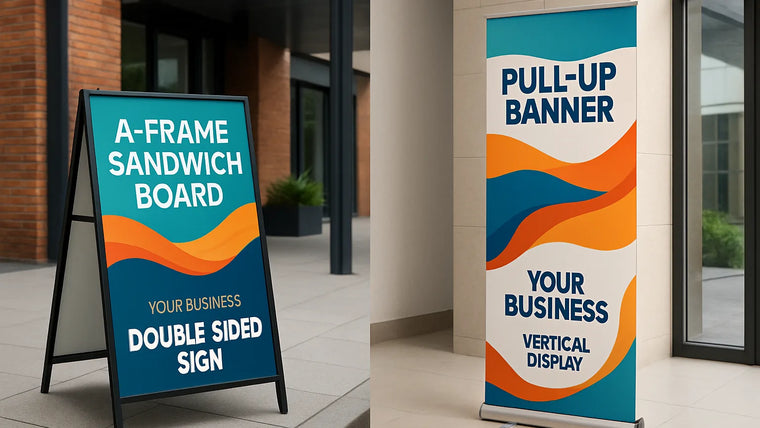
A-Frame Sandwich Boards vs Pull Up Banners
Compare A-frame sandwich boards and pull-up banners to choose the right display for footpaths, events, retail spaces and indoor promotions.