In Australia, blue safety signs are Mandatory (AS 1319) and instruct required actions—e.g. wear PPE, use a guard, or follow procedure.
In Australia, a blue safety sign is a mandatory sign — it tells you what you must do. If you’re wondering what does a blue safety sign mean in Australia, the answer is simple: follow the required action shown by the white pictogram in a blue circle, often reinforced with short wording like Wear eye protection or Use handrail. Think of the icon as the instruction and the words as the prompt — fast to read, hard to misinterpret. This guide explains where to use blue safety signs, how they differ from other colours, and how to specify, install and maintain them correctly on site.
Quick definition: what does a blue safety sign mean in Australia?
Blue safety signs in Australian workplaces are mandatory signs. They tell people what they must do to reduce risk — for example, Wear eye protection, Keep gate closed, or Use handrail. The core visual cue is a white pictogram inside a blue circle, usually paired with short, clear wording. On mixed crews and with visitors, the icon does the heavy lifting.
At Sign Portal, our mandatory sign artwork follows AS 1319 conventions using our maintained vector icon library, so your blue discs and pictograms are consistent across new orders and reorders.

Where you'll see blue safety signs in Australia
Blue mandatory signs appear wherever a specific behaviour or protective measure is required. They are common at site entries, inside workshops, near machinery, and in plant rooms where PPE or a defined action is essential before proceeding.
- Site entry gates requiring PPE before access
- Machine bays mandating hearing or eye protection
- Stairwells and platforms instructing Use handrail
- Laboratories and healthcare zones requiring masks or gowns
- Electrical or plant rooms requiring authorised access procedures
- Food preparation areas mandating hygiene steps
- A civil contractor mounts a gateboard with four blue discs (vest, hard hat, glasses, boots) so PPE is confirmed at the checkpoint before induction.
- A warehouse places Use handrail at the first and last flights of stairs, visible from the approach and not blocked by pallet racking.
- A food manufacturer installs Wash hands blue signs directly above dispensers, using matte laminate so the icon reads under stainless-steel glare.
Typical blue mandatory sign messages and symbols (Australia)
Most blue signs are short, action-focused and paired with a simple icon so the message is understood instantly at a distance. Messages often cover PPE and safe behaviours that must be followed every time.
- PPE requirements: Wear safety glasses, Wear hearing protection, Wear hard hat, Wear gloves, Wear mask
- Behavioural requirements: Use handrail, Keep aisle clear, Keep gate closed, Keep door locked
- Process requirements: Wash hands, Isolate before entry, Follow permit procedure

How blue safety signs differ from other colours in Australia
Colour distinguishes message types at a glance. Blue means do this, which is different from colours that signal do not, warn of a hazard, or identify emergency equipment. See the comparison below for how mandatory (blue) differs from prohibition (red).
| Feature | Blue mandatory | Red prohibition |
|---|---|---|
| Purpose | Indicates an action you must take | Indicates an action you must not take |
| Symbol shape | White pictogram inside a blue circle | Black pictogram with a red circle and diagonal bar |
| Typical wording | Wear, Use, Keep, Follow | No, Do not, Prohibited |
| Examples | Wear eye protection; Use handrail | No smoking; Do not enter |
| Consequence of ignoring | Required safety step not followed | Breach of a ban or restriction |
Other common colours serve different roles:
- Yellow/amber: highlights a hazard or caution
- Green: identifies emergency equipment, exits or first aid
- Red: used for prohibitions and to identify fire-related equipment
- Black/white with a red panel: commonly used for high-risk warnings labelled Danger

Blue safety sign design elements that matter (AS 1319)
To work well, a mandatory sign must be recognised instantly. Consistent layout, clear pictograms and good contrast help achieve that. Avoid mixing styles from other countries that can confuse workers or visitors.
- Icon clarity: a simple white symbol on a blue circle communicates faster than text alone.
- Contrast: legible black or dark text on white areas; avoid pale greys or low-contrast backgrounds.
- Hierarchy: the pictogram should lead; concise wording supports it.
- Consistency: use the same icon set and phrasing across your site to reduce confusion.
- Avoid lookalikes: a blue rectangle with the word Notice is not the same as a blue circular mandatory sign.
- Proportions that read well: on our common sizes, we size the blue disc so it fills the available symbol area with a typical margin of 8–12% to the sign edge for a strong, legible silhouette.
- Glare management: choose matte laminate in brightly lit corridors or near reflective plant to keep the pictogram readable from multiple angles.
- Text phrasing: lead with the action (Wear hard hat) — it reads faster and keeps layouts compact.
- Multiple requirements: if you need several must-do actions at one point, use a board with individual blue discs. We generally cap it at three per panel to keep recognition fast.
Australian WHS context and site standards for blue safety signs
Most Australian workplaces follow AS 1319 colour and symbol conventions so people act correctly without reading long instructions. Site-specific WHS procedures and client requirements may also dictate wording, placement and quantity of signs.
If you work under a principal contractor or in a regulated facility (e.g. healthcare, food processing, energy), confirm any project or facility signage requirements before ordering so your blue mandatory signs match the site standard and pass inductions or audits.
Some clients require dual-language wording or specific phrasing. Keep the standard pictogram unchanged and adjust text to suit the audience.
Blue safety sign materials and durability in Australia
Mandatory signs come in both label and rigid panel formats. The best choice depends on exposure, surface type and how permanent the requirement is. Below are common options we manufacture and where they’re typically used.
- Self-adhesive vinyl labels: quick to apply on doors, machines and cabinets. Good for indoor use and short-to-medium term outdoor use when laminated.
- Aluminium composite panel (ACP): rigid, flat and durable outdoors. Suits perimeter fencing, entries and long-term installations.
- Acrylic or poly substrates: clean, professional look for indoors, plant rooms and corridors.
- Magnetic or removable options: useful on temporary barriers or rental equipment.
Australian conditions can be harsh. For high UV, tropical or coastal locations, consider UV-stable inks, protective laminates and corrosion-resistant fixings. In public-facing areas or high-traffic corridors, an anti-graffiti or abrasion-resistant laminate helps the sign stay readable.
Manufacturing blue mandatory safety signs at Sign Portal
We manufacture mandatory signs in-house with calibrated print, cut and QA workflows.
- Rigid panels (ACP): direct UV print on Mimaki JFX EX flatbeds for crisp symbols and durable colour, then register and cut to size or shape — including rounded corners — on our MultiCam SM2412 CNC router.
- Labels and decals: print and contour-cut on our Roland VG-640 wide-format printer/cutter, then laminate for abrasion resistance where required.
- Small tags and specialised plates: precision cutting and engraving on our Trotec Speedy 500 laser and large-format 230 W CO₂ laser.
- Workflow controls: preflight checks against AS 1319 conventions, colour-managed queues targeting a mandatory blue close to PMS 300C, and documented in-process inspections (registration, adhesion, laminate integrity) before packing.
- Finishing options: CNC-drilled hole patterns to customer drawings with ±0.5 mm accuracy, radius corners to 3, 5 or 10 mm, edge sealing for high-corrosion sites, and back-marking with job and batch codes for traceability.
- Credentials and logistics: Veteran-Owned with Local Buy credentials; Australia-wide shipping including regional and remote; Trade Portal and customer-specific catalogues for streamlined repeat orders.
Technical specifications and standards for blue safety signs (Australia)
Mandatory signs in Australia are produced to align with AS 1319 conventions so they are intuitive for workers and visitors moving between sites.
- Symbol and shape: white pictogram within a solid blue circular field; concise wording below or alongside on a white ground.
- Colour targets (production): Sign Portal targets a blue close to PMS 300C for the disc. Typical process builds we use are CMYK ≈ 100/44/0/0 (UV print) with ICC-managed adjustments per substrate.
- Common sizes we supply: 300 × 225 mm, 450 × 300 mm, 600 × 450 mm and 900 × 600 mm (portrait or landscape). Larger formats available for gate and perimeter visibility.
- Material specs (typical): 3 mm ACP (0.2 mm aluminium skins, LDPE core); 0.8–1.0 mm acrylic; polymeric calendered vinyl (70–80 μm) with permanent solvent acrylic adhesive; overlaminates in gloss, matte or anti-graffiti (~70 μm).
- Fixings: pre-drilled holes, stainless steel screws/rivets (316 recommended coastal), cable ties for fencing, or VHB tape for clean, smooth substrates. Adhesion promoters (e.g. 3M Primer 94) can be used on low-energy plastics.
- Legibility rule of thumb: for text elements, aim for minimum character height of 5–7 mm per metre of viewing distance. Prioritise the pictogram for rapid recognition.
Advanced details for blue safety signs: engineering, QA and compliance
For customers who need deeper technical assurance (audits, asset standards, or design reviews), below is a summary of how we engineer and verify our mandatory signs.
- Artwork control: iconography maintained as master vectors (AI/SVG) mapped to our AS 1319 library; job files include a revision code and locked proportions to prevent accidental distortion.
- Colour management: RIP profiles per substrate, measured with an X-Rite spectrophotometer; typical tolerance for the blue disc is ΔE00 ≤ 3 to our PMS 300C aim.
- Adhesion validation: label constructions are spot-checked using cross-hatch adhesion (ISO 2409) and tape pull. We record substrate, primer use and dwell time in the job traveller.
- Durability inputs: we select polymeric films and laminates with supplier-rated outdoor life appropriate to region (e.g. 5–7 year films for QLD sun exposure). Anti-graffiti options resist common cleaners and hand sanitiser.
- Edge integrity: in coastal or chemical washdown zones we can apply edge sealers on labels and specify 316 stainless fixings on panels to slow corrosion.
- Mechanical finishing: CNC hole positions documented to a standard grid unless a drawing is supplied; typical hole size 5–6 mm with 15–20 mm edge offset to balance strength and installation tolerance.
- Documentation: on request we include a conformance note summarising icon set, materials stack, colour targets, and batch codes for inclusion in your O&M manuals.
Choosing the right blue safety sign format and size
The right choice balances visibility, environment and how people interact with the area. A sign seen at a gate from distance needs to be larger than one on a machine guard at arm’s length.
- Viewing distance: the further away the viewer, the larger the pictogram and text should be.
- Traffic speed: faster movement (vehicles, forklifts) demands larger signs and simpler messages.
- Lighting and background: dim corridors or busy backgrounds call for bigger icons and stronger contrast.
- Permanence: long-term requirements suit rigid panels; short-term works may suit labels or magnets.
- Fixings: decide on pre-drilled holes, eyelets, VHB tape or adhesive depending on the mounting surface.
Ordering checklist for blue mandatory signs
Before you place an order for blue mandatory signs, gather these details so production is swift and accurate.
- Exact message and preferred phrasing (e.g. Wear hearing protection vs Hearing protection must be worn)
- Pictogram choice (match existing site icons if possible)
- Material (vinyl label, ACP panel, acrylic, magnetic)
- Size and orientation (portrait/landscape), corner radius, hole positions
- Lamination (anti-graffiti, matte to reduce glare, or gloss)
- Quantity and any sequential labelling needs
- Delivery location and required-by date, including regional/remote considerations
- A contractor standardises Wear eye protection icons across three workshops, ordering ACP panels for outdoors and laminated labels for machines.
- A hospital adds Use handrub here blue signs with matte laminate to reduce glare under strong corridor lighting.
- A food processor replaces mixed Notice/mandatory styles with AS 1319-consistent blue discs at entrances, improving induction pass rates for new starters.
- A utilities provider uses oversized 900 × 600 mm Use handrail signs on elevated platforms with forklift traffic to maintain visibility at speed.
Installation basics for blue safety signs
Correct placement matters as much as correct wording. Keep signs at eye level or aligned with existing signage bands, make sure they are not hidden behind doors or equipment, and ensure fixings suit the substrate.
- Prepare surfaces: clean, dry and free of dust and oils before applying labels or tapes.
- Check sight lines: confirm the sign is visible from approach angles and not blocked by door swings.
- Use appropriate fixings: stainless screws or rivets outdoors; VHB or construction-grade adhesives on smooth surfaces.
- Avoid clutter: don’t crowd multiple messages onto one small panel; split them if needed.
- Heights: for wall-mounted indoor signs, centreline typically 1500–1700 mm above finished floor; align with existing wayfinding where present.
- Doors: mount on the latch/handle side so the message is seen before hands reach the hardware.
- Challenging surfaces: for textured or curved areas, use thinner vinyl or fix a small ACP plate first, then apply the label to the plate.
Maintenance and replacement of blue safety signs
Inspect blue mandatory signs during regular safety walks. Look for fading, abrasion, peeling edges and obstructed views. Replace any sign that can’t be read instantly or has been defaced.
- Cleaning: use mild detergent and soft cloths; avoid harsh solvents unless the laminate is rated for them.
- Fixing checks: tighten loose screws; replace damaged ties; re-roll edges on labels or replace if adhesion is compromised.
- Environment watch: in coastal areas, choose corrosion-resistant fixings and consider more frequent inspections.

Delivery of blue safety signs: packing, lead times and site handover
We pack mandatory signs to arrive ready for install and to survive the bumps of freight networks.
- Protection: rigid panels are corner-protected and wrapped; label rolls are bagged and boxed to prevent edge damage.
- Documentation: boxes are labelled with PO, location codes (if provided) and a packing slip for quick site allocation. Installation notes can be included on request.
- Dispatch: we ship Australia-wide with tracked services. Timeframes depend on quantity and destination; advise critical dates and we’ll confirm production and courier options to suit.
- Staging: for multi-site rollouts, we can carton by site or zone to simplify handover to contractors.
- Lead times (typical): stock messages 1–2 business days; custom layouts 2–4 business days from artwork approval. Same-day and after-hours dispatch available by arrangement.
- Carriers and pickup: regular daily pickups by national carriers (e.g. StarTrack, TNT/FedEx) from our Brisbane facility; local pickup welcome.
- Site handover pack: on request we include a sign schedule (SKU, size, location notes), conformance summary, and QR code linking to digital O&M files.
- Sustainability: we preference recyclable cardboard, paper tapes and minimal plastics without compromising protection.
Repair and refurbishment of blue mandatory signs
Not every damaged sign needs full replacement. Here’s how to assess and repair common issues to extend service life without compromising clarity.
- Graffiti or paint overspray: if laminated with an anti-graffiti film, clean with approved solvents per the laminate data sheet. If the stain remains, replace the face or panel.
- Edge lift on labels: warm gently, remove, clean substrate with isopropyl alcohol, prime low-energy surfaces if needed, and reapply a fresh label. Avoid patching small offcuts over critical icons.
- Faded panels: if the blue disc or text has noticeably shifted in colour, replace the face to maintain uniformity and instant recognition across the site.
- Mechanical damage: for ACP with dents near fixings, replace the panel to ensure it sits flat and remains legible.
Step-by-step re-skinning of an ACP sign face (onsite):
- Photograph the existing sign for message verification and measure overall size and hole pattern.
- Remove the panel and lay flat. Heat the old face film to 50–60°C and peel at a shallow angle.
- Clean adhesive residue with a citrus remover, then wipe with isopropyl alcohol until fully dry.
- Dry-fit the new face, hinge with tape, then apply with a felt squeegee. Use primer where required.
- Roll down edges firmly; allow recommended adhesive dwell time before reinstallation.
Common blue safety sign mistakes to avoid
A few pitfalls can undermine clarity and compliance. Avoid these when ordering or installing:
- Using blue Notice styles from overseas catalogues instead of circular mandatory icons
- Overloading one sign with many messages
- Choosing sizes too small for the distance and lighting
- Mixing icon styles or wording across similar areas
- Skipping lamination where abrasion, graffiti or strong cleaning is expected
- Combining different message types (mandatory, warning, emergency) onto one mixed-colour layout
Quality assurance for blue mandatory signs at Sign Portal
Each order is tracked through our job system with material batch records, artwork approvals and in-process checks. Our team verifies icon style, wording, layout, colour balance, and finishing (holes, corners, laminate) before dispatch. On request, we can supply a production sample for sign-off on larger programs.
For repeat programs, we lock a site standard (artwork, sizes, materials) and apply version control so replenishment orders always match the installed set.
Key takeaways: what a blue safety sign means in Australia
Blue means mandatory: do this to stay safe. Use clear circular icons with concise wording, choose materials that suit Australian conditions, and install signs where they can be seen quickly. Consistency across your site builds instant recognition and better safety behaviour.
Related products — blue mandatory safety signs
- Blue Mandatory Signs (AS 1319 style)
- PPE Mandatory Signs
- Wear Eye Protection — Mandatory
- Use Handrail — Mandatory
- Anti-Graffiti Laminate Options
- Custom Mandatory Signs
- Wear Hearing Protection — Mandatory
- Wear Hard Hat — Mandatory
- Wear Gloves — Mandatory
- Wear Mask — Mandatory
Related Sign Portal resources: Mandatory Safety Vest Sign for Workplace Safety · Mandatory Blind Intersection Sign for Workplace Safety · Safe Manual Handling Sign for Workplace Safety
Frequently Asked Questions
What does a blue safety sign mean in Australia?
It indicates a mandatory action — something you must do for safety — typically shown as a white pictogram inside a blue circle, often with short supporting text.
Is a blue sign a legal requirement on my site?
Where a control measure must always be followed (e.g. PPE in a zone), a mandatory sign is commonly required by site rules or client standards. Confirm site and regulator requirements for your project.
How is a blue mandatory sign different from a red prohibition sign?
Blue tells you what to do (compulsory action). Red prohibition tells you what not to do (ban or restriction) and typically uses a red circle with a diagonal bar.
Can I use text-only blue signs without a pictogram?
Icons are strongly recommended for quick recognition. Text-only signs are slower to interpret and are easier to miss at distance or in low light.
What material should I choose for outdoor mandatory signs?
For long-term outdoor use, rigid ACP panels with UV-stable print and suitable fixings are common. For equipment and doors, laminated self-adhesive vinyl labels are convenient.
Are blue ‘Notice’ header signs acceptable in Australia?
A blue rectangular ‘Notice’ header is not the same as a circular mandatory sign. Use the blue circle pictogram style for mandatory instructions to avoid confusion.
Where should blue signs be installed for best effect?
Place them at decision points — entries to controlled zones, before stairs or machinery, and on access doors — at consistent heights with clear sight lines.
Keep learning
Related Articles
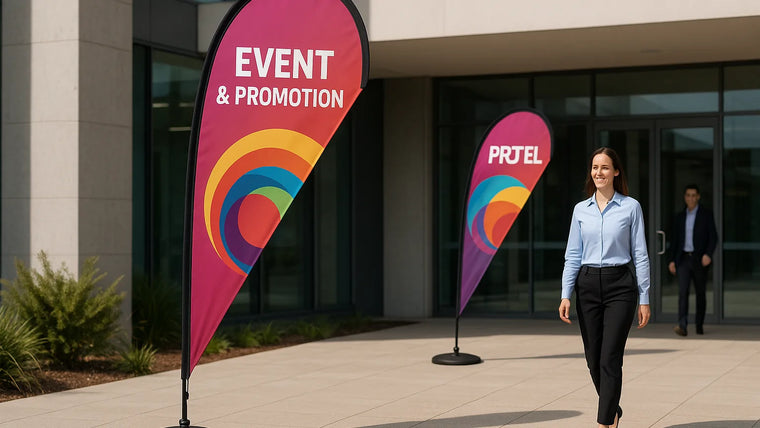
Teardrop Banners for Events and Promotions
Teardrop banners are aerodynamic, curved‑top fabric flags that hold tension to minimise flapping, delivering high visibility for events, retail forecourts and outdoor activations. Systems...
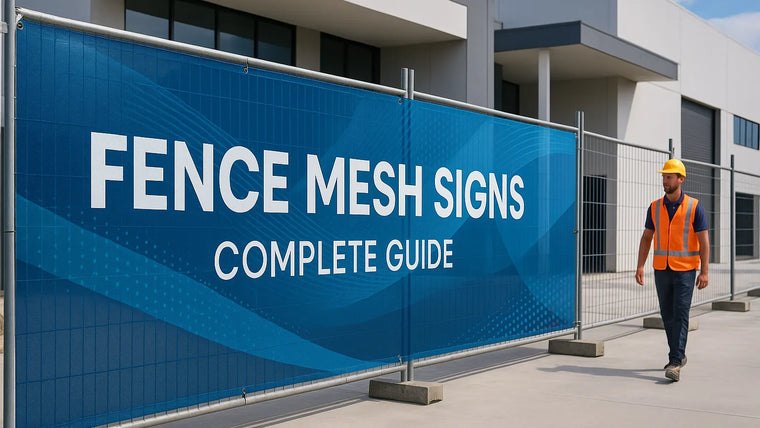
Fence Mesh Signs: Complete Guide
Fence mesh signs are printed mesh banners designed for temporary fencing and hoardings. Mesh allows airflow and can help reduce wind load compared with...
Best Materials for Crowd Control Barrier Graphics
For most outdoor events in Australia, perforated mesh banner is a versatile option because airflow can help reduce wind effects and it’s quick to...