Sign Portal Signage Academy
Installation & Mounting
Find practical signage installation and mounting guidance for safe placement, visibility, suitable fixings, surfaces and long-term performance.
All Installation & Mounting Articles
Clear, practical advice from our Australian signage team.
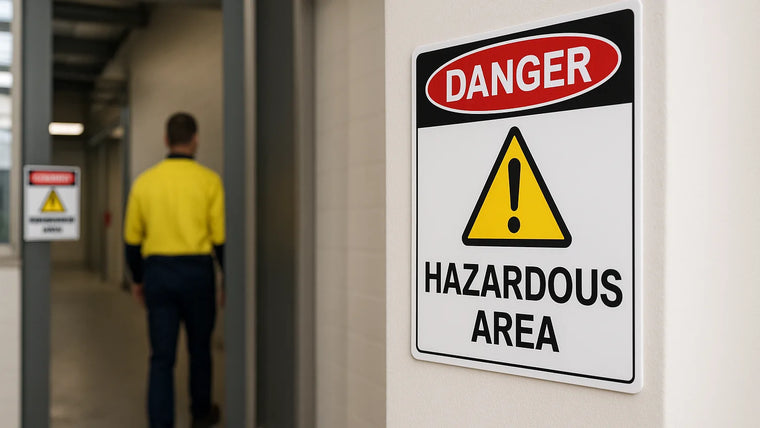
Where Should Danger Signs Be Installed?
Install DANGER signs at every entry to the hazardous area and at the exact hazard location (and at all reasonably foreseeable approaches), mounted in...
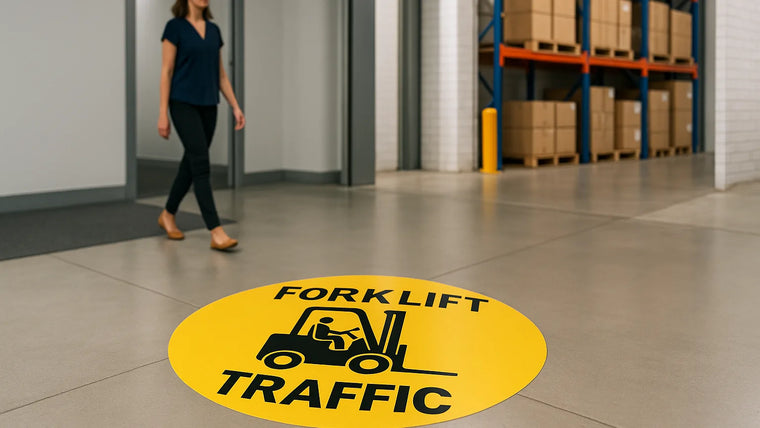
Forklift Traffic Floor Signs: Placement and Visibility
Install forklift floor signs where decisions are made and risk changes: before and at intersections, pedestrian crossings, blind corners, aisle merges, ramps, loading docks,...
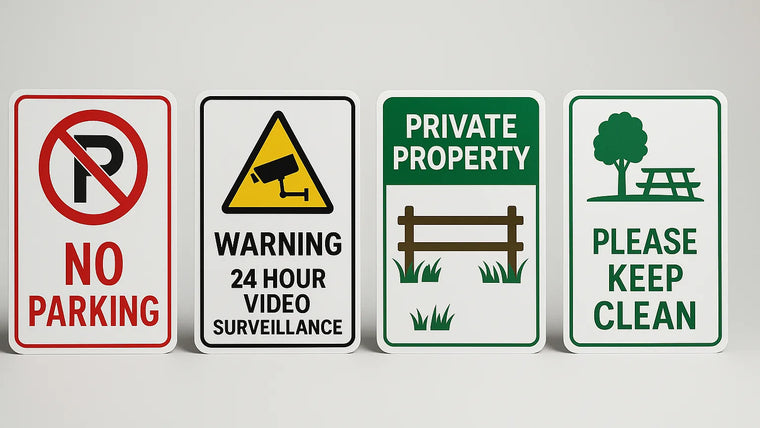
Where Should Public Area & Property Signs Be Installed?
Install public‑area and property signs at decision points—site entries/gates and driveways, boundaries and access points, approach paths/roads and internal intersections, car parks, building entries,...
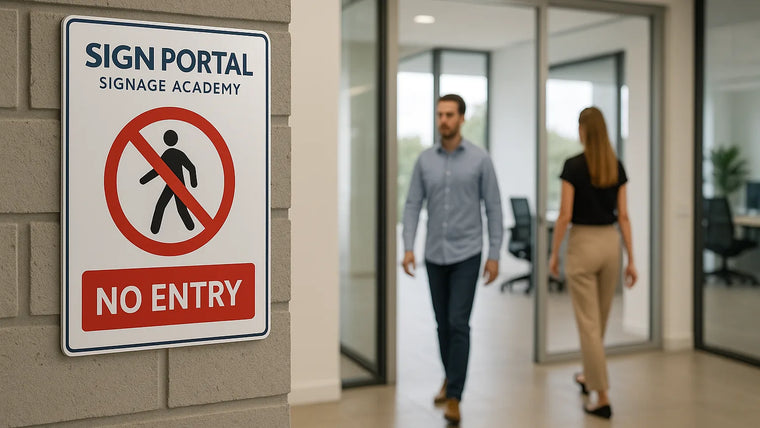
Where Should Prohibition Signs Be Installed?
Prohibition signs must be positioned so they are seen before anyone can begin the banned action: at every entry and access point to the...
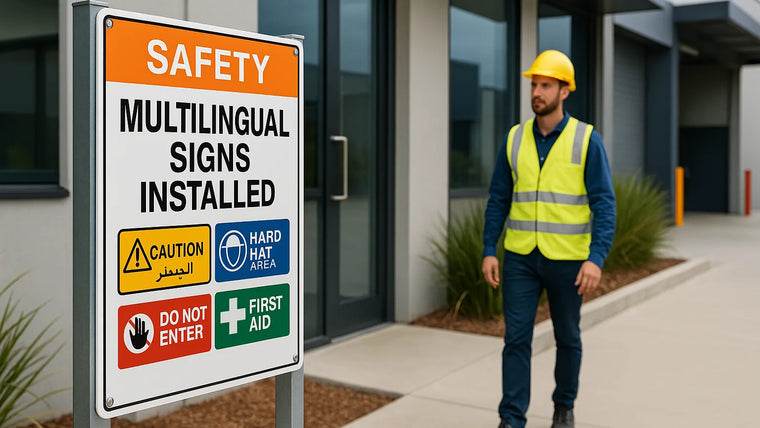
Where Should Multilingual Signs Be Installed?
Install multilingual safety communication wherever people make decisions or can be harmed. Cover, at a minimum:- Site entries, access control and inductions (reception, gatehouses,...
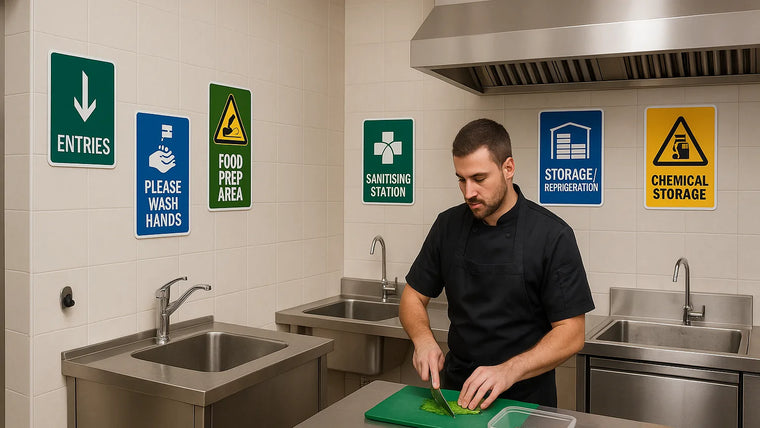
Where Should Kitchen & Food Safety Signs Be Installed?
Place kitchen and food-safety signage at the point of action and in the direct line of sight so staff see it exactly when and...

Safety Sign Placement: How to Choose the Best Location
Locate safety signs where the decision or action must be taken, on the primary approach line, with enough sight distance for a person to...
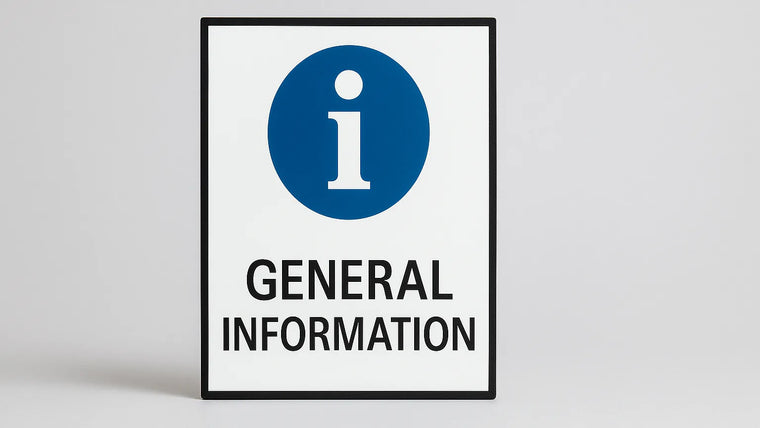
Where Should General Information Signs Be Installed?
Install general information signs at true decision and confirmation points so users can act without backtracking:- Location: site/building entries, lobbies, lift and stair landings,...
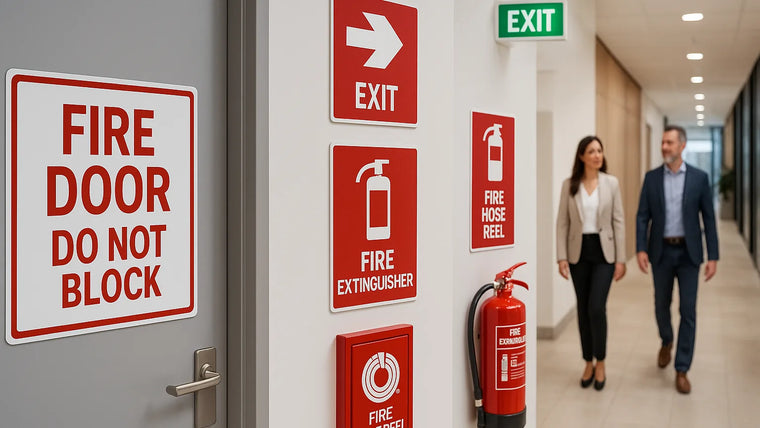
Where Should Fire Safety Signs Be Installed?
Install fire safety signage in accordance with the NCC and relevant Australian Standards (AS 1319, AS 2293 series, AS 2444/AS 2441, AS 3745). Provide...
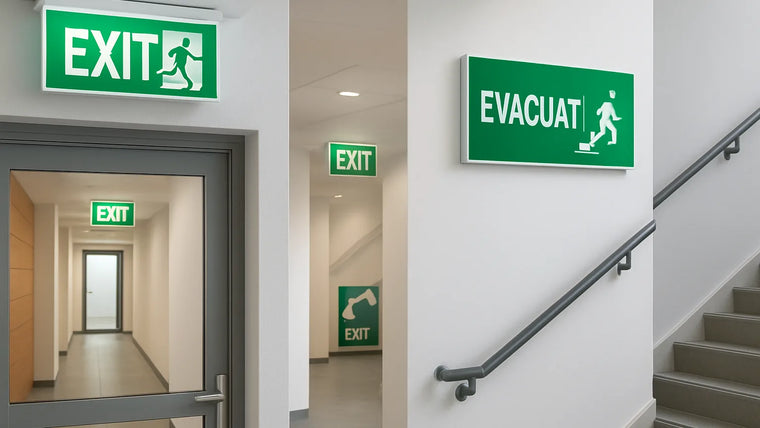
Where Should Exit & Evacuation Signs Be Installed?
Install compliant exit signage along every path of egress so occupants can always see the next direction to a final exit to a road...
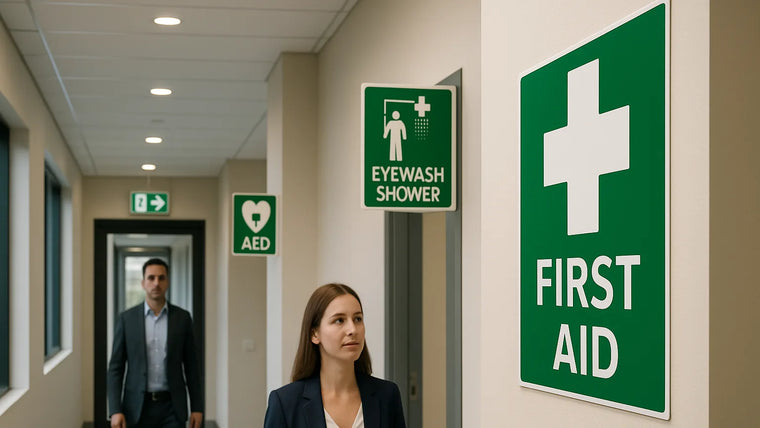
Where Should Emergency & First Aid Signs Be Installed?
Install emergency information and first aid signage where people make wayfinding decisions during an incident, in line with AS 1319 (and AS/NZS 2293 for...
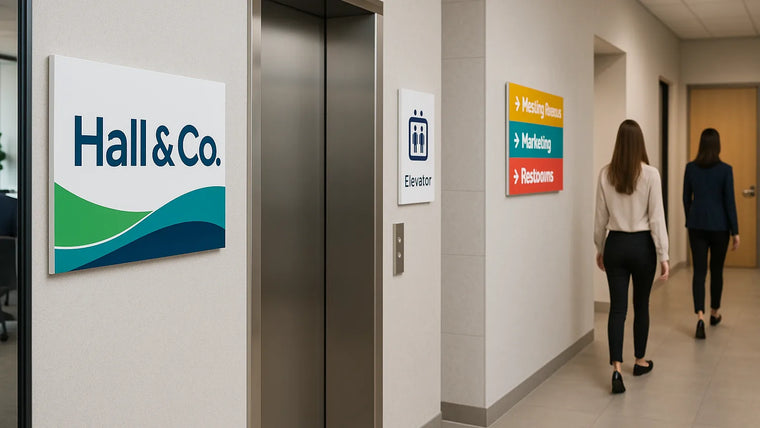
Where Should Office & Property Signs Be Installed?
Install signage at key decision and reassurance points: site entries and receptions; lift lobbies; corridor intersections and turns; doors to tenancies, amenities, plant/restricted areas;...
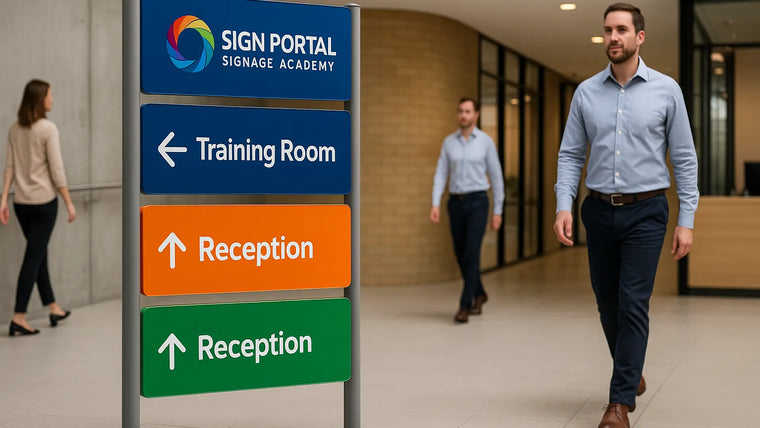
Where Should Multi Message Signs Be Installed?
Install multi‑message signs (MMS) at each decision point: an advance warning sign upstream of the work area or hazard (use Austroads ATTM Part 3...
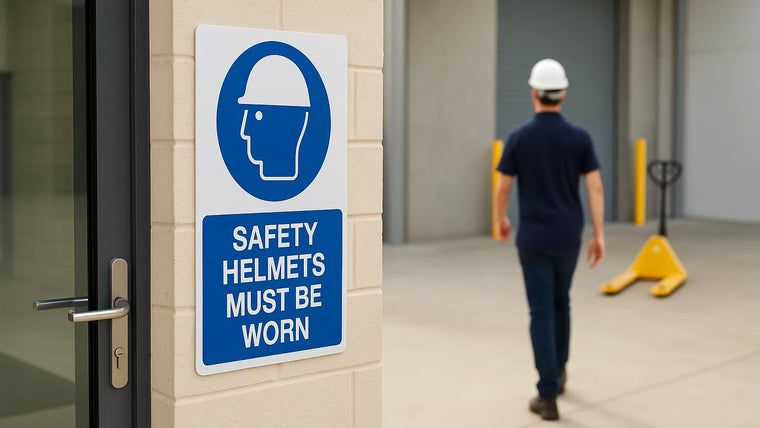
Where Should Mandatory Signs Be Installed?
Install mandatory signs exactly where the instruction must be carried out—at entries to controlled areas, the start of PPE/task zones, on or immediately adjacent...
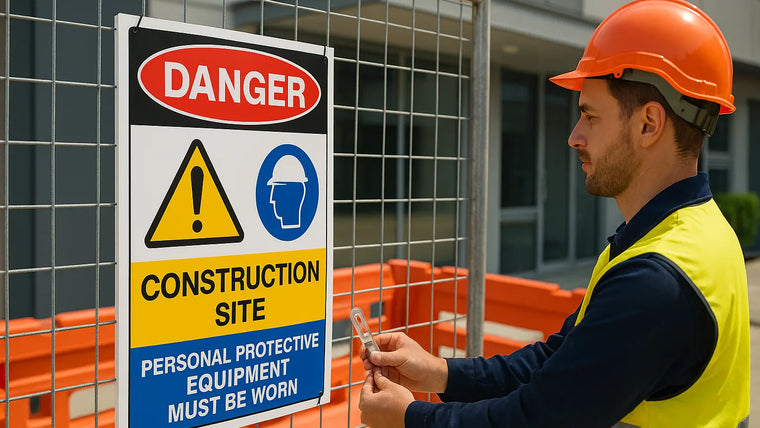
Installing Safety Signs on Fences and Temporary Barriers
Fix safety signs to fences and temporary barriers using UV‑stable cable ties, reusable fence clips, tie wire or eyelets/bungees at all corners and mid‑edges...
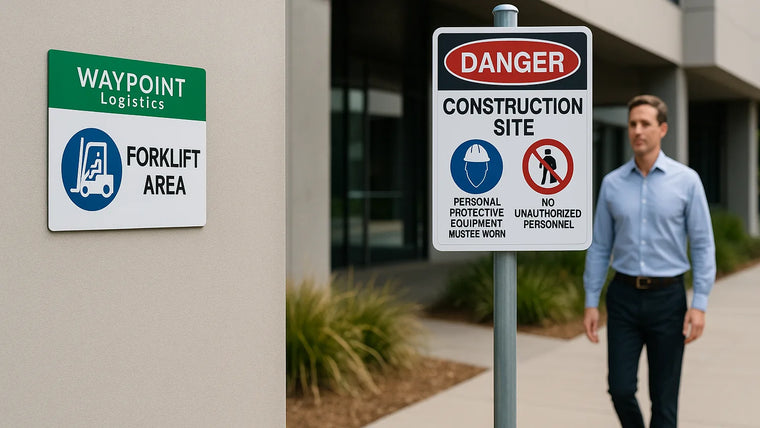
Wall-Mounted vs Post-Mounted Safety Signs
Wall‑mounting: Choose when you have a sound, visible masonry, concrete or steel surface along the approach path. It’s the fastest, lowest‑cost option (no posts...
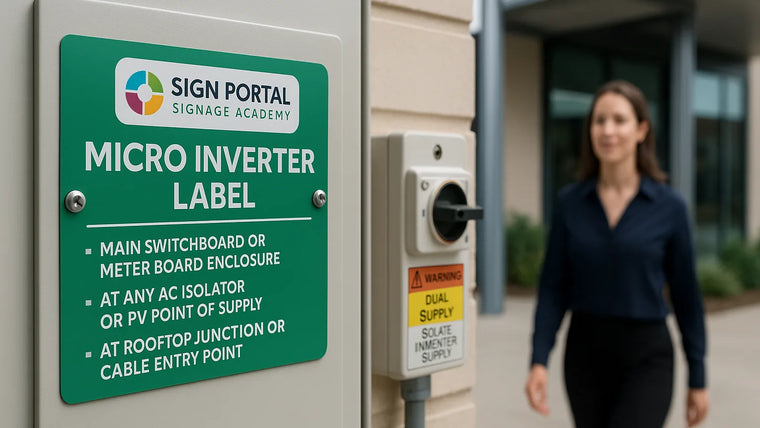
Where Are Micro Inverter Labels Typically Installed?
Learn where micro inverter labels are typically installed and what clear, consistent labelling should show on a solar PV system.