Sign Portal Signage Academy
Safety Signs
Explore Australian safety sign guidance covering sign types, colours, symbols, wording, placement and key AS 1319 workplace requirements.
All Safety Signs Articles
Clear, practical advice from our Australian signage team.
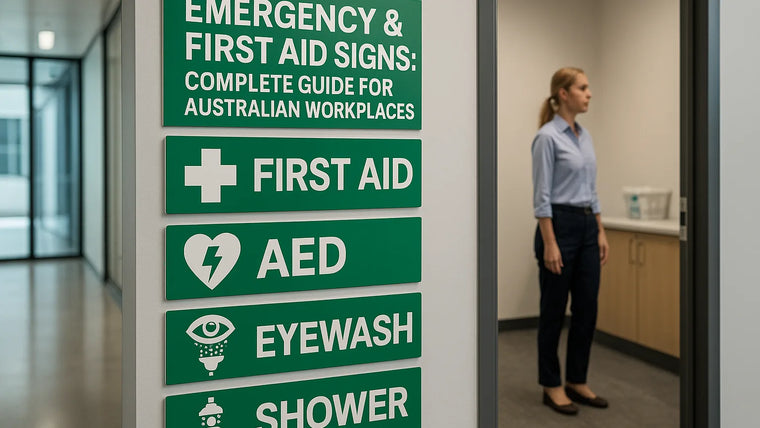
Emergency & First Aid Signs: Complete Guide for Australian Workplaces
Emergency signs clearly mark first aid rooms and kits, AEDs (defibrillators), emergency eyewash and showers, spill kits, emergency phones and fire equipment so people...
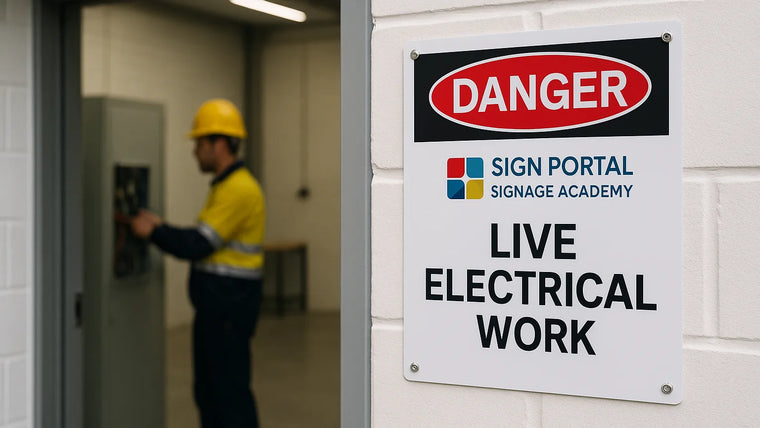
When Are Danger Signs Used?
Use a Danger sign only where the hazard, if not avoided or controlled, is likely to cause death or serious injury. In Australia this...
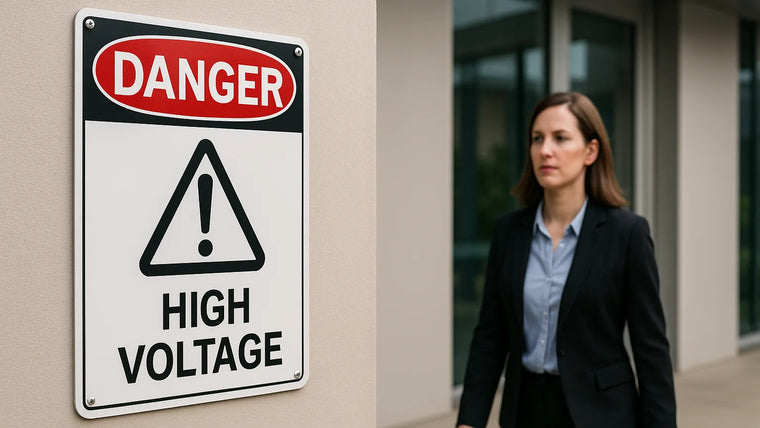
Danger Signs: Colours, Symbols and Meaning Explained
Danger (red‑header) safety signs, as defined in AS 1319:1994, are reserved for hazards likely to cause death or serious injury (e.g. live electrical equipment,...
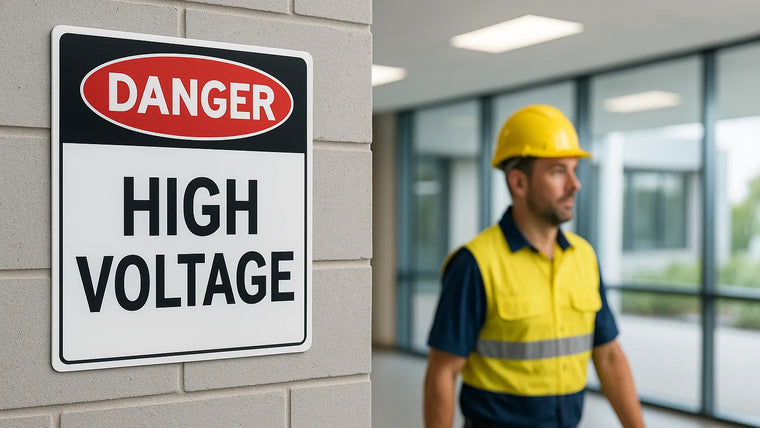
Danger Signs: Complete Guide for Australian Workplaces
Danger signs are used only where a hazard could cause death or serious injury. In line with AS 1319:1994, they display the word DANGER...

What Is the Difference Between Danger and Warning Signs?
In Australia, select the sign type defined in AS 1319:1994 (Safety signs for the occupational environment):- Danger signs: For a specific hazard or situation...
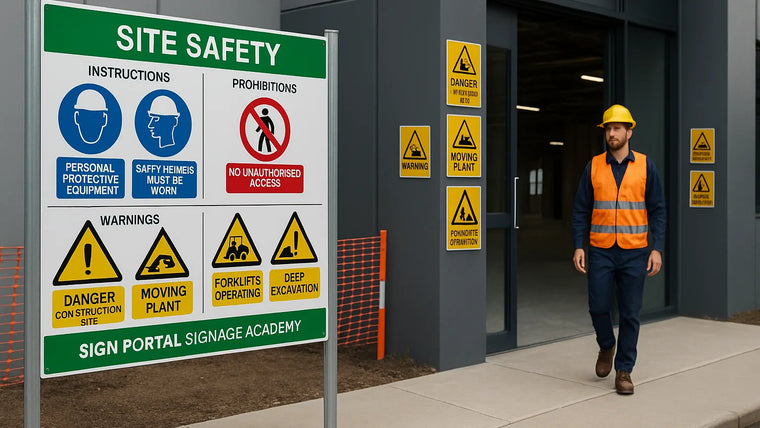
Site Safety Boards vs Individual Safety Signs: Which Is Better?
Use a consolidated site safety board when you need one clear, highly visible point of truth at site entry—supporting WHS communication duties and AS...
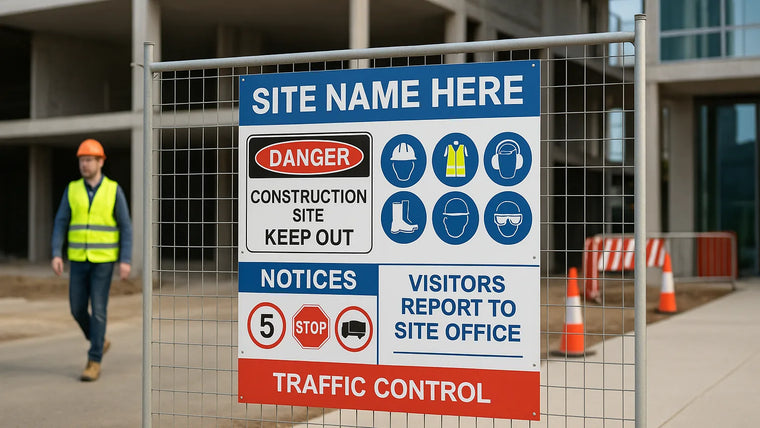
What Signs Are Commonly Used at Construction Site Entrances?
A compliant Australian construction site entrance typically displays, at a minimum, the following signage and information:- Project/site identification board: principal contractor’s legal name, ABN,...
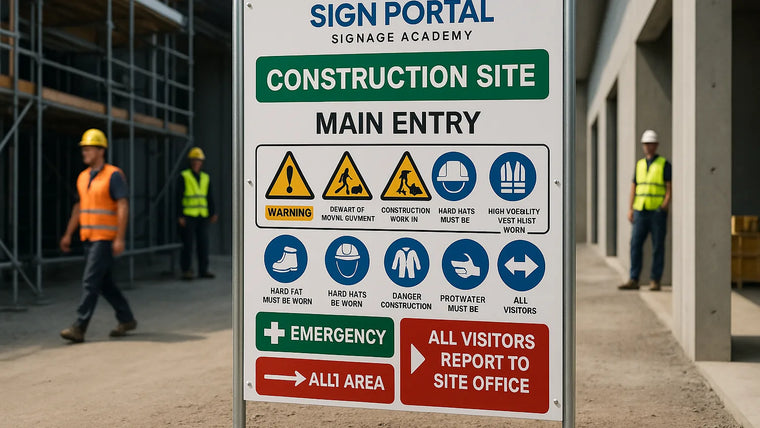
Construction Site Signage Checklist for Australian Projects
For Australian sites, display compliant entry/legal, PPE, hazard, emergency, traffic and electrical signs, with updates and durable materials.Need a construction site signage checklist for...
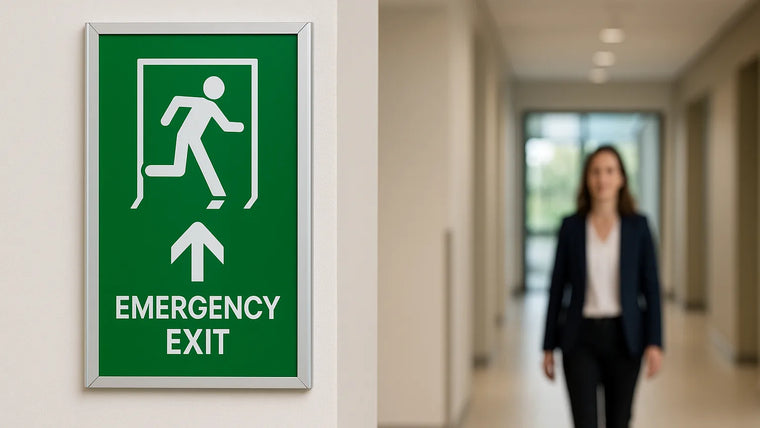
What Does a Green Safety Sign Mean in Australia?
In Australia, green safety signs are Emergency Information signs under AS 1319. They identify safe conditions and the location or direction of assistance—such as...
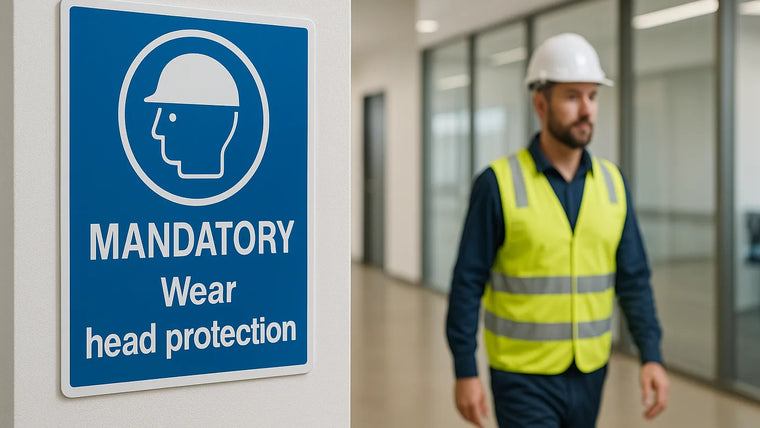
What Does a Blue Safety Sign Mean in Australia?
In Australia, a blue safety sign is a Mandatory sign under AS 1319:1994. It directs an action you must take to control risk—such as...
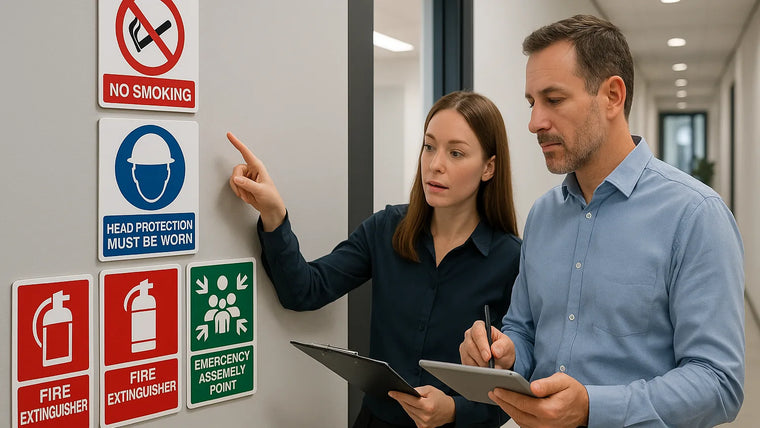
What Businesses Should Review During a Safety Signage Audit
Assess four areas to keep WHS signage compliant and effective: 1) Categories and content—Map each hazard to the correct AS 1319 sign type (Danger—immediate...
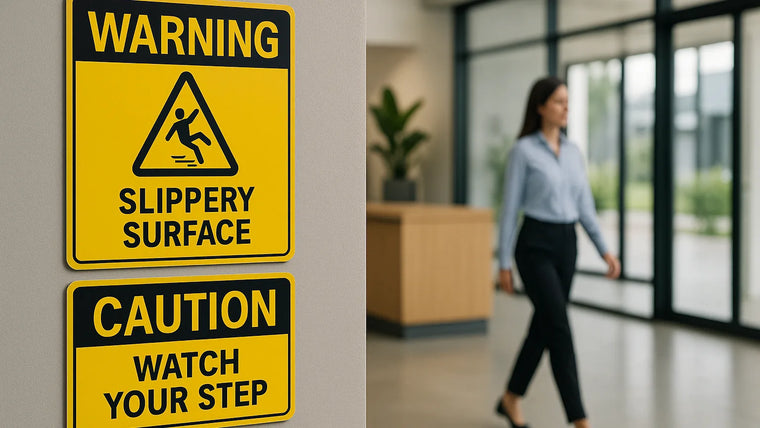
Warning & Caution Signs: Complete Guide for Australian Workplaces
Use warning and caution signs to alert people to hazards and housekeeping risks. Warning typically signals a notable hazard that could cause injury if...
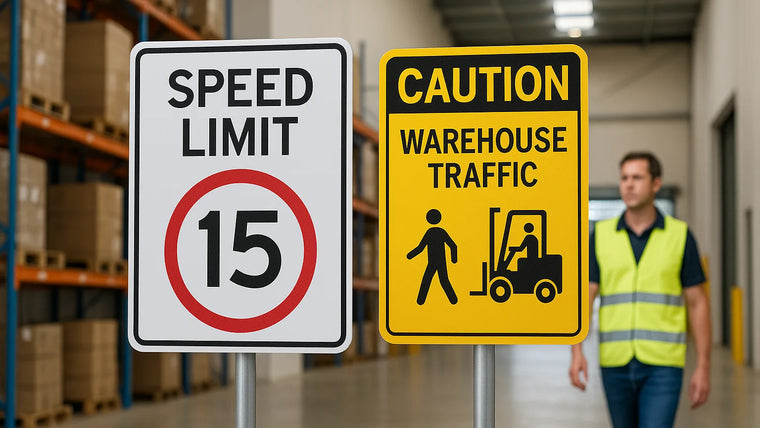
Warehouse Speed Limit and Traffic Signs
Warehouse speed limit and traffic signs set clear, site‑wide rules for vehicle and pedestrian movement by communicating speed, right‑of‑way, routes and crossings. Set site‑specific...
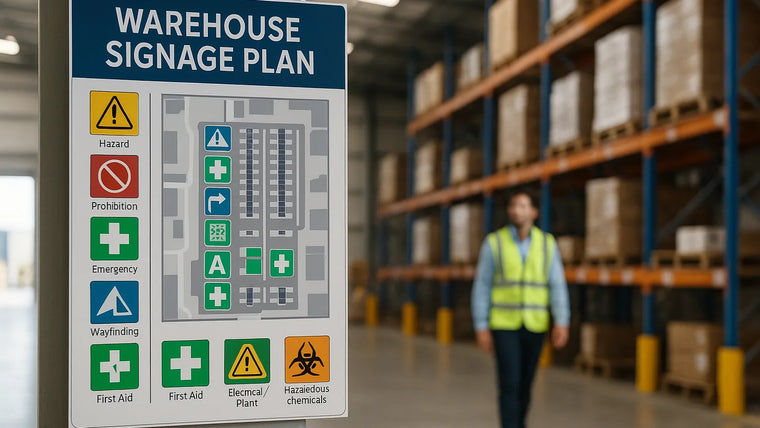
Warehouse Signage Plan: What to Include
Cover hazard, PPE, prohibition, emergency, traffic, racking, first aid, electrical and chemical signs. Add floor markings, map, schedule and reviews.A clear, consistent signage system...
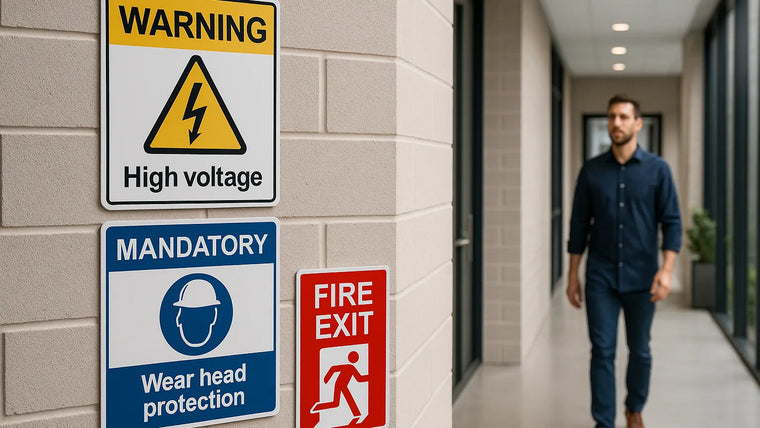
How Safety Signs Communicate Hazards and Instructions
Safety signs communicate through standardised colour, shape, symbols, plain language, hierarchy and strategic placement. In Australia, design and use should comply with AS 1319...
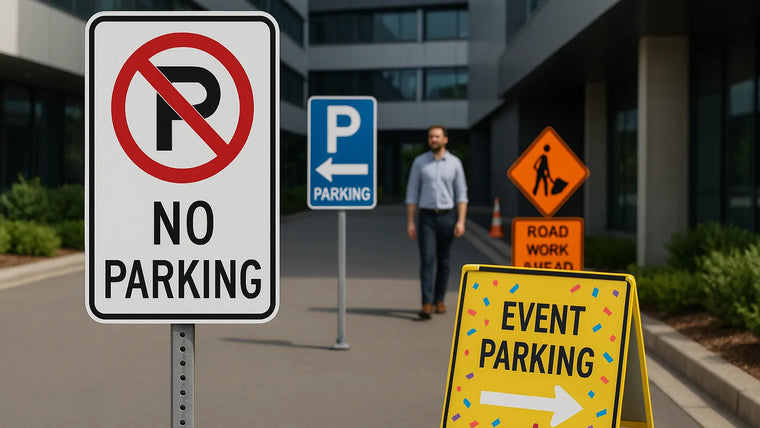
When Are Traffic & Parking Signs Used?
Traffic and parking signs are installed wherever vehicle movement and parking must be controlled or guided: on public roads and streets (including council and...
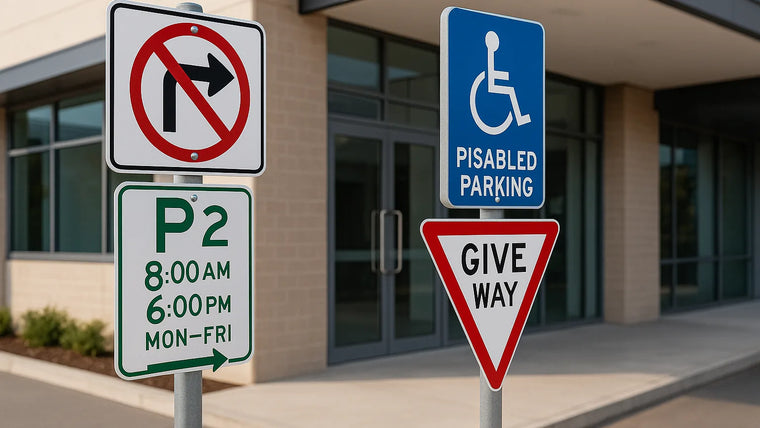
Traffic & Parking Signs: Colours, Symbols and Meaning Explained
Australia uses a standardised colour and shape code for traffic and parking signs: red = stop/prohibition (STOP, NO STOPPING, NO PARKING, NO U‑TURN; a...
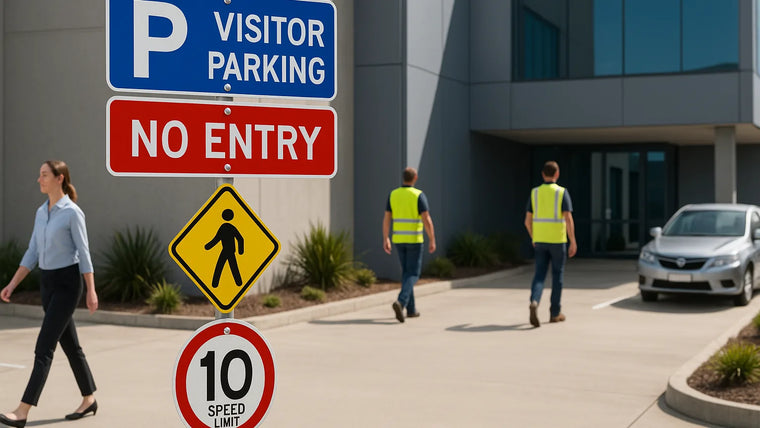
Traffic & Parking Signs: Complete Guide for Australian Workplaces
Specify aluminium or ACP signs to AS 1742/1743 with AS/NZS 1906.1 reflectivity; install to maintain sightlines and inspect regularly.Clear traffic and parking signage keeps...
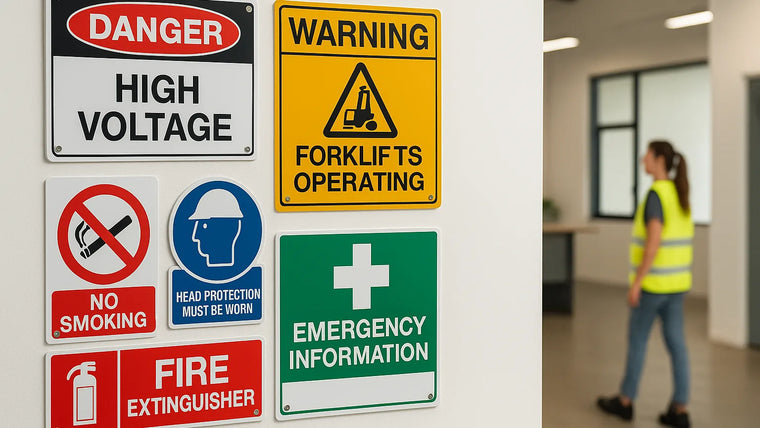
Safety Sign Categories Explained With Real-World Examples
In Australia, safety signage should comply with AS 1319:1994 Safety signs for the occupational environment. The main categories, their colours, shapes and typical uses...
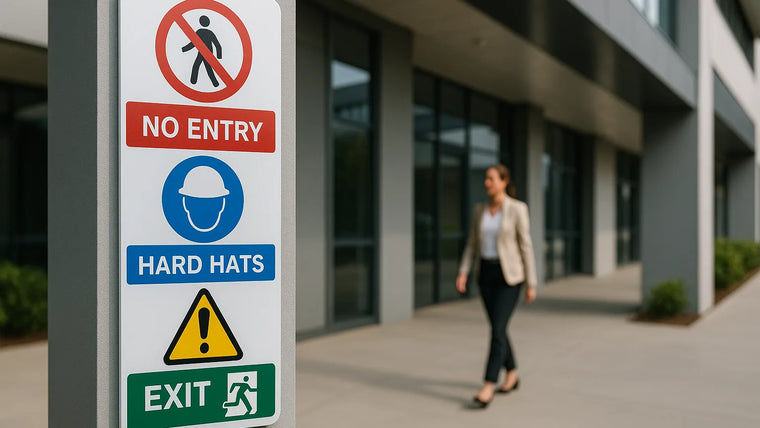
Public Area & Property Signs: Colours, Symbols and Meaning Explained
In public areas and on private property, colours, shapes and pictograms are standardised so people can interpret signs instantly:- Red: prohibition and fire equipment....
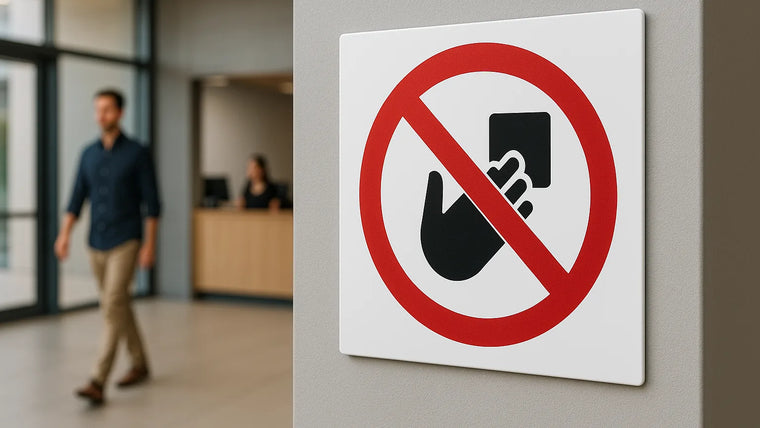
Prohibition Signs: Colours, Symbols and Meaning Explained
A prohibition sign indicates that a specified action is not permitted. Under AS 1319:1994, it features a black pictogram on a white disc, overlaid...
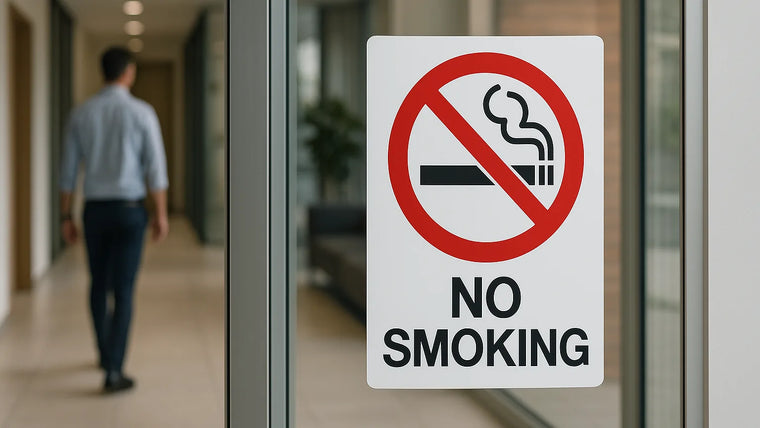
Prohibition Signs: Complete Guide for Australian Workplaces
Prohibition signs indicate behaviours that are not permitted because they would create or increase risk. In Australia, specify signs to AS 1319: a red...
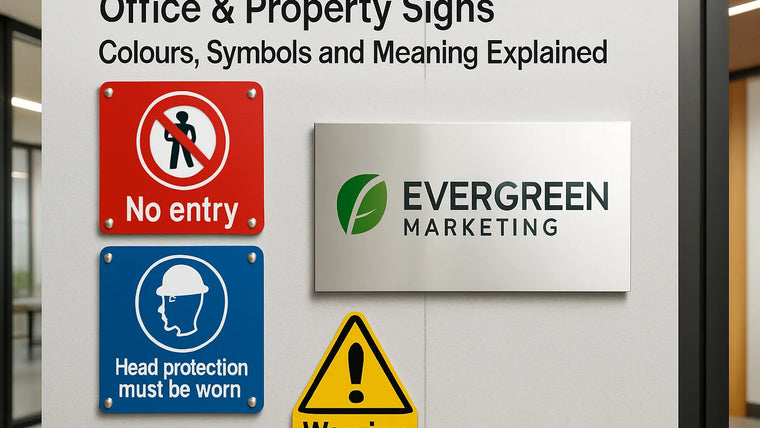
Office & Property Signs: Colours, Symbols and Meaning Explained
In Australia, safety sign colours and formats are defined by AS 1319:1994 (with exit signage and emergency lighting governed by the NCC and AS/NZS...
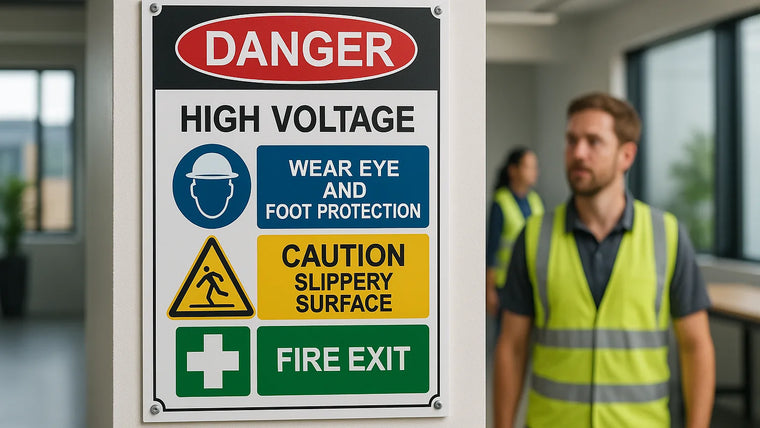
Multilingual Signs: Colours, Symbols and Meaning Explained
Multilingual safety signage should comply with AS/NZS 1319 (message types, colours and layouts) and, where appropriate for diverse workforces, pair those requirements with ISO...
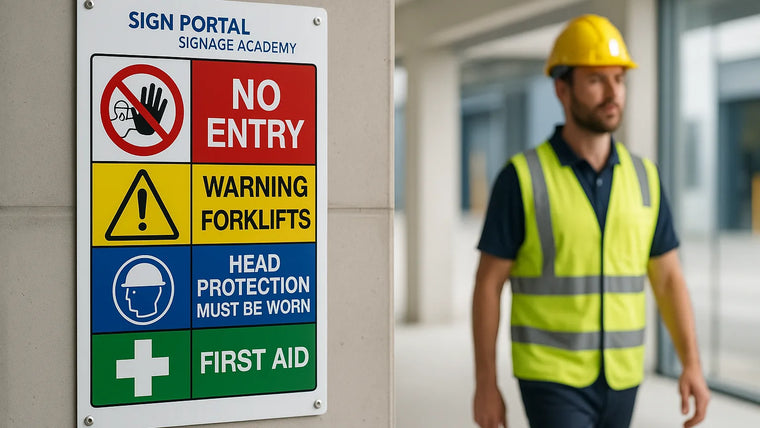
Multi Message Signs: Colours, Symbols and Meaning Explained
Multi‑message signs (also called combination signs) consolidate several critical safety instructions onto a single board or frame so workers see key hazards, prohibitions and...
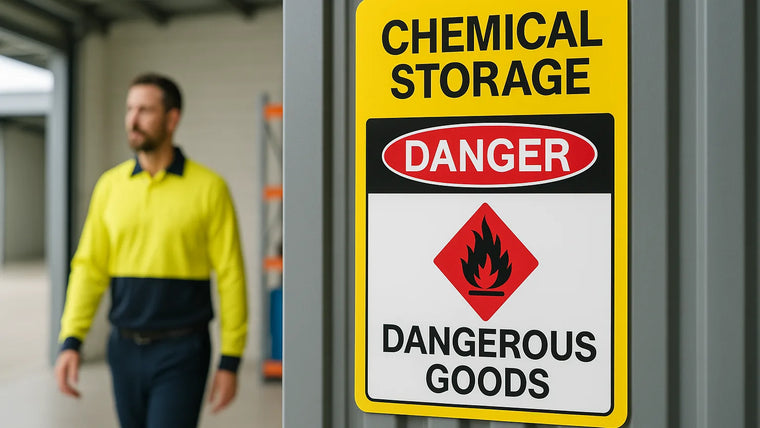
Chemical Storage and Dangerous Goods Signage: Buyer Considerations
Select materials matched to the environment and duty cycle. For outdoors, specify 1.6 to 3 mm marine-grade aluminium with UV-stable inks and an anti-graffiti...
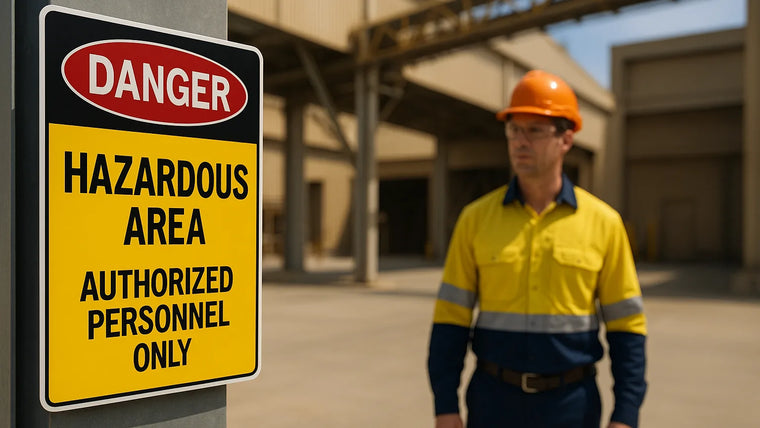
Hazardous Area Signage for Industrial Workplaces
Hazardous area signage must comply with AS 1319 and relevant WHS and dangerous goods requirements. Use the correct sign types (Danger, Warning, Prohibition, Mandatory,...
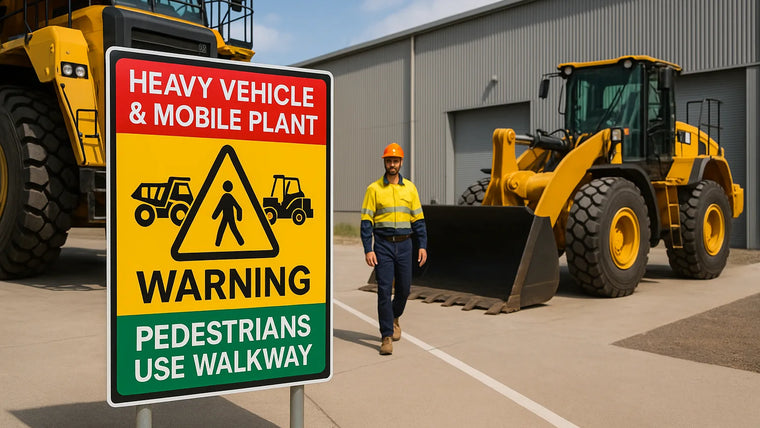
Heavy Vehicle and Mobile Plant Signs for Industrial Sites
Use Class 1/1W reflective on aluminium or ACP with AS 1319/1742 designs; keep messages large and clear, and place for long sightlines.When haul trucks,...
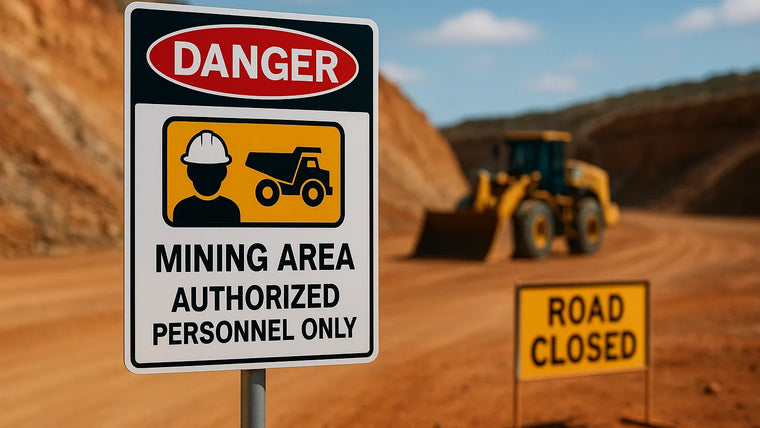
Mining Site Signage: Common Sign Types and Materials
On Australian mine sites, signage is typically specified to AS 1319 (Safety signs) and grouped as: mandatory PPE, prohibition, hazard (Warning and Danger), emergency...
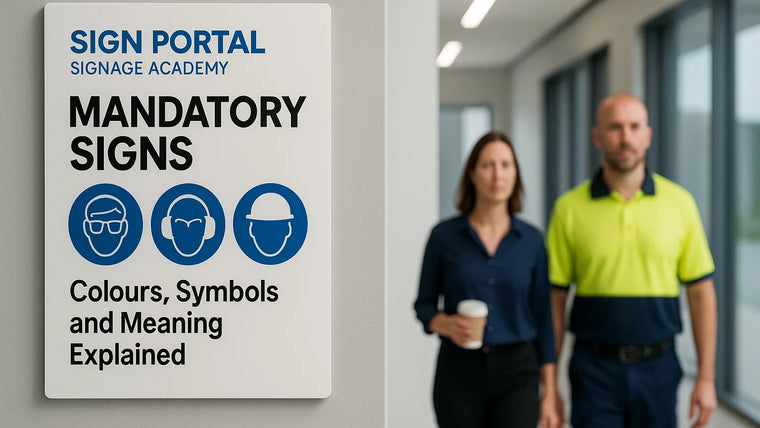
Mandatory Signs: Colours, Symbols and Meaning Explained
Mandatory signs (AS 1319) instruct people to carry out a required action. They show a white pictogram inside a solid blue circle, with a...
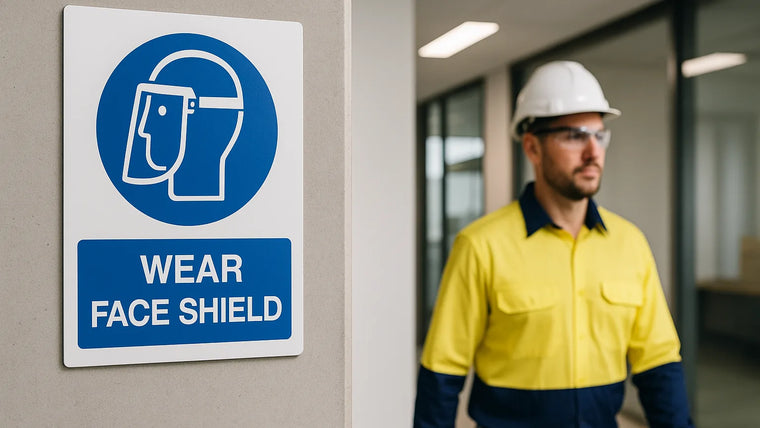
Mandatory Signs: Complete Guide for Australian Workplaces
Mandatory signs state actions that must be taken to reduce risk. In Australia they should comply with AS 1319 (Safety signs for the occupational...
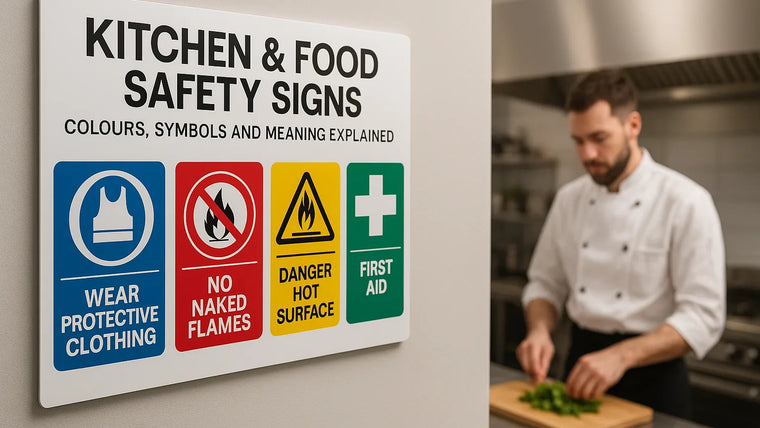
Kitchen & Food Safety Signs: Colours, Symbols and Meaning Explained
Australian commercial kitchens follow AS 1319 safety sign conventions so intent is unmistakable at a glance: blue circular signs (mandatory actions, e.g. Wash Hands,...

Kitchen & Food Safety Signs: Complete Guide for Australian Workplaces
Kitchen and food safety signage underpins compliance with FSANZ requirements and WHS laws, reinforcing safe food handling, hygiene and emergency procedures for staff and...
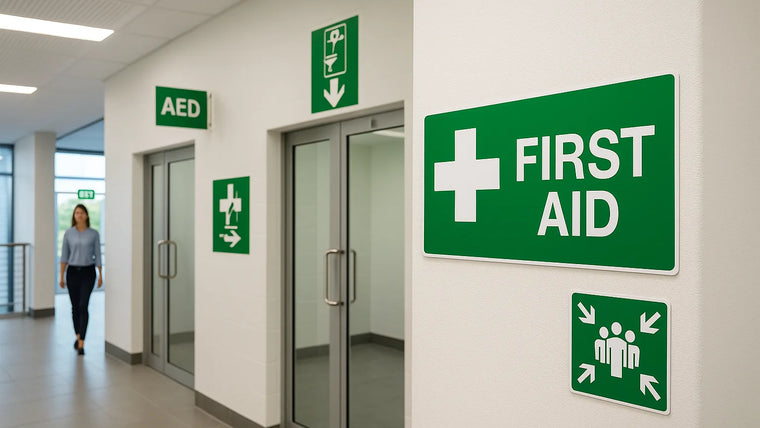
When Are Emergency & First Aid Signs Used?
Emergency and first aid signs identify where to obtain help, life‑saving equipment and safe egress routes. In Australia they should comply with AS 1319...
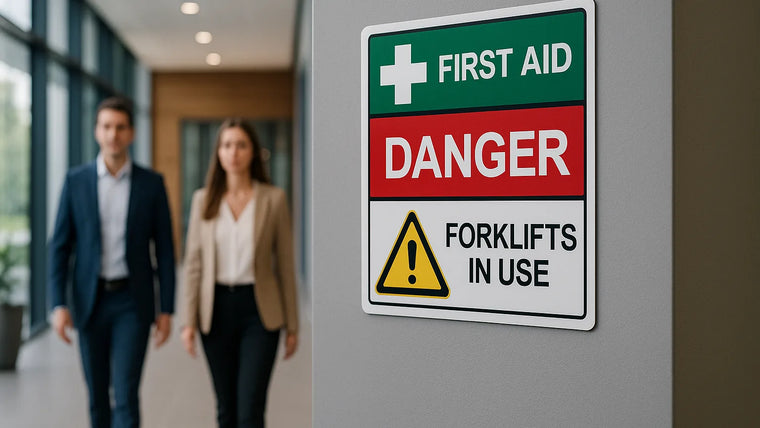
How Viewing Distance Affects Safety Sign Size
The further the viewing distance, the larger the text and symbols must be for rapid recognition. Size signs for the maximum distance and the...
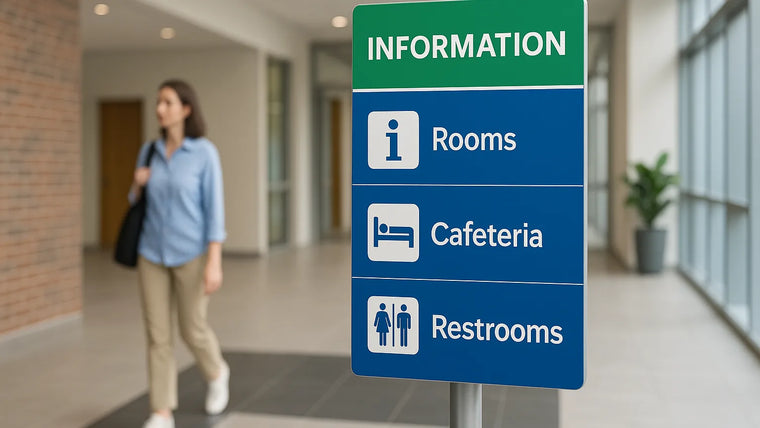
General Information Signs: Colours, Symbols and Meaning Explained
General information signs provide clear wayfinding and amenity guidance using familiar colour schemes (e.g. white on blue for facilities, white on green for directions...
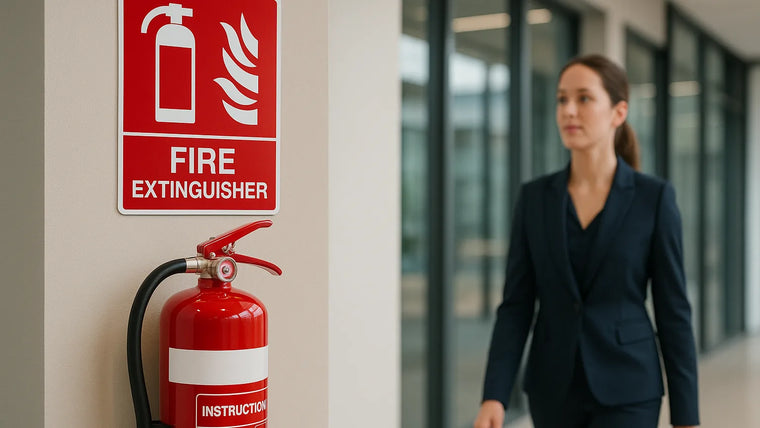
When Are Fire Safety Signs Used?
Fire safety signs must be installed wherever fire protection equipment, emergency controls or fire‑related prohibitions need clear identification, in accordance with the NCC and...
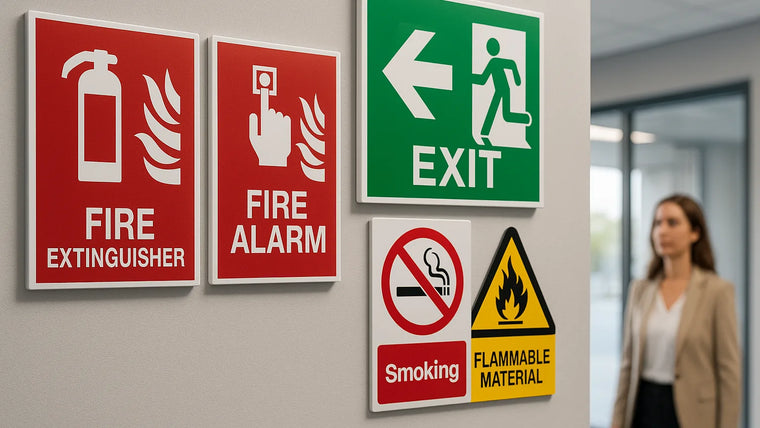
Fire Safety Signs: Colours, Symbols and Meaning Explained
In Australian workplaces, safety signage should comply with AS 1319 (safety signs), AS 2444 (portable fire equipment) and, for exit signs, AS 2293 (emergency...
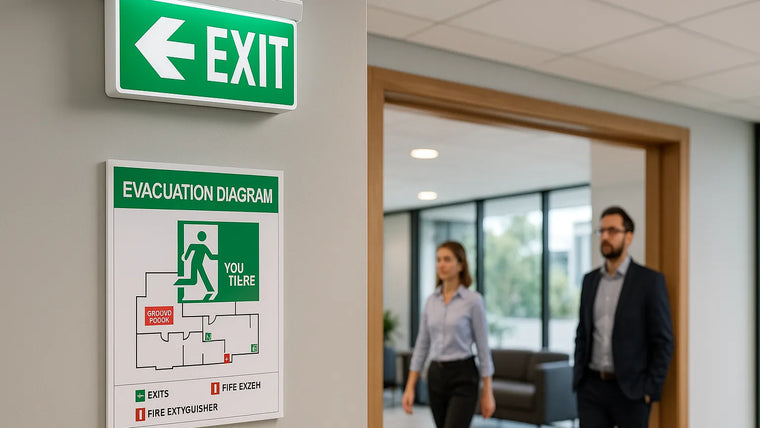
When Are Exit & Evacuation Signs Used?
Exit signs and evacuation diagrams are mandatory life‑safety features wherever people may need clear, unambiguous directions to leave a building or site in an...
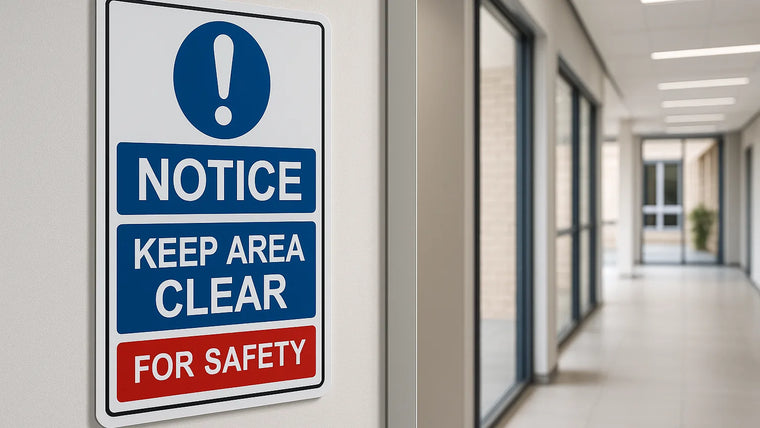
How to Check Whether a Workplace Safety Sign Is Fit for Purpose
Assess each sign against WHS Regulations and AS 1319 (and, where relevant, GHS for hazardous chemicals and AS/NZS 1906.1 for retroreflective materials):- Correct type,...
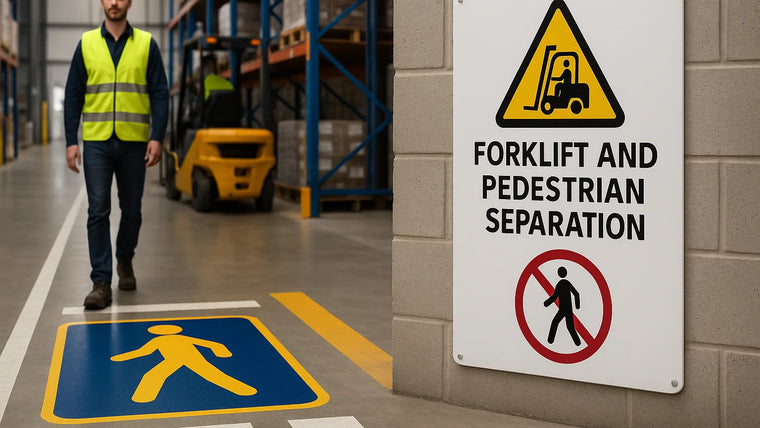
Forklift and Pedestrian Separation Signage
Forklift and pedestrian separation signage uses clear floor graphics, rigid safety signs and markings to define walkways, crossings and forklift traffic areas. Choose durable...
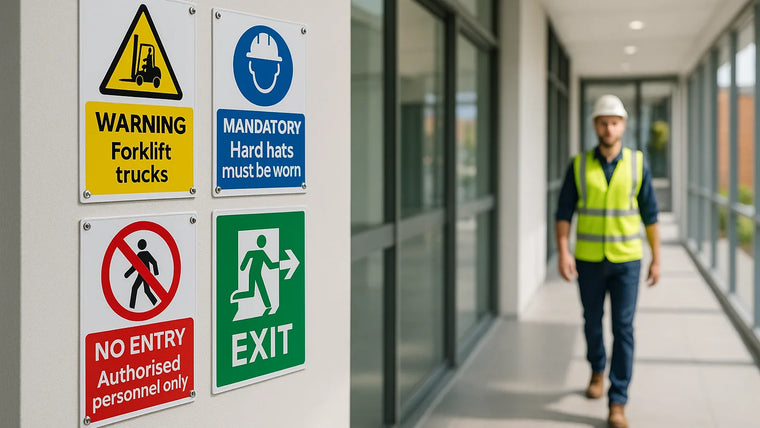
Why Consistent Safety Signage Matters Across a Site
Consistent, AS 1319–compliant safety signage turns scattered notices into a coherent, site‑wide communication system. Standard colours, symbols and wording across sign categories (prohibition, mandatory,...
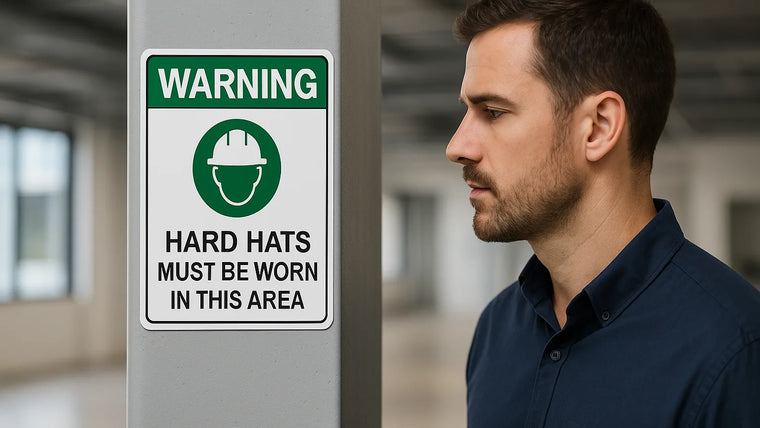
How to Read a Workplace Safety Sign
Look first at the colour and shape to identify the sign category, then read the signal word (e.g. Danger, Warning, Mandatory), interpret the pictogram,...
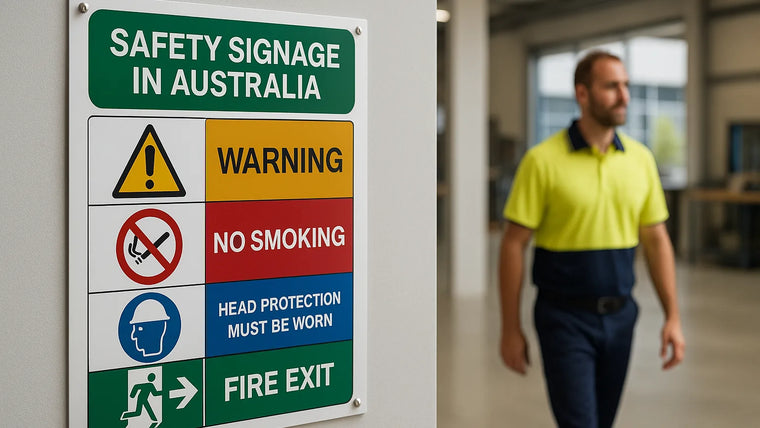
Safety Signage in Australia: Complete Beginner's Guide
Start with a WHS risk assessment. Use AS 1319‑aligned signs for hazards, actions, bans, emergency and fire; then size, place and maintain.If you are...
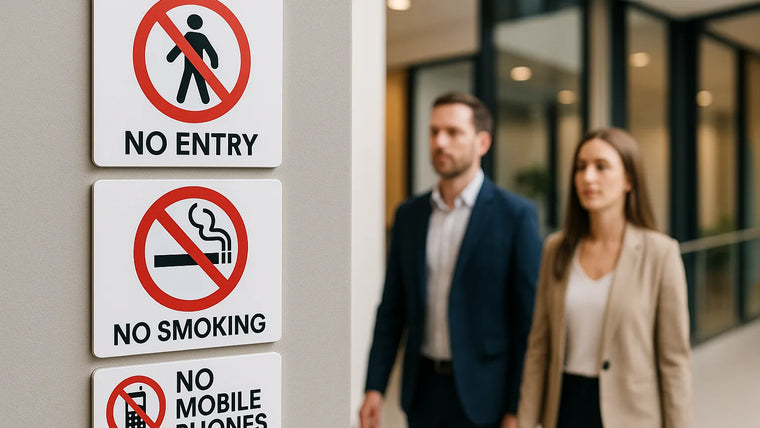
When Are Prohibition Signs Used?
Prohibition signs are used wherever a specific action is not allowed and must be clearly communicated for safety, security or policy reasons — for...
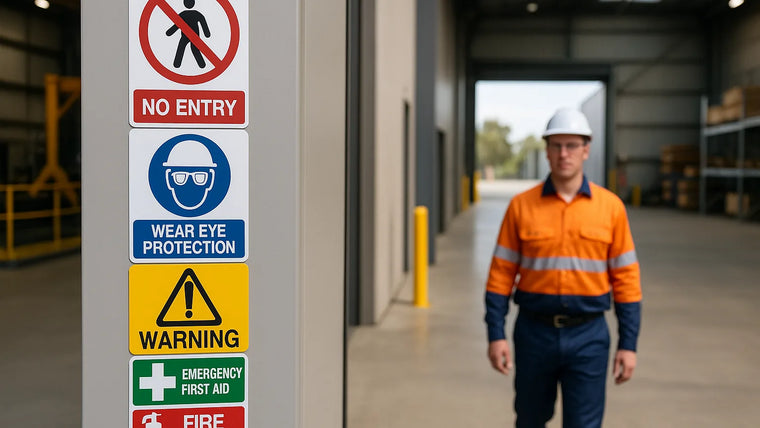
Industrial Safety Signage: Complete Guide for Australian Facilities
Industrial safety signage identifies hazards, states mandatory actions, prohibits unsafe behaviour, and directs people to emergency equipment and exits. In Australia, signage should align...
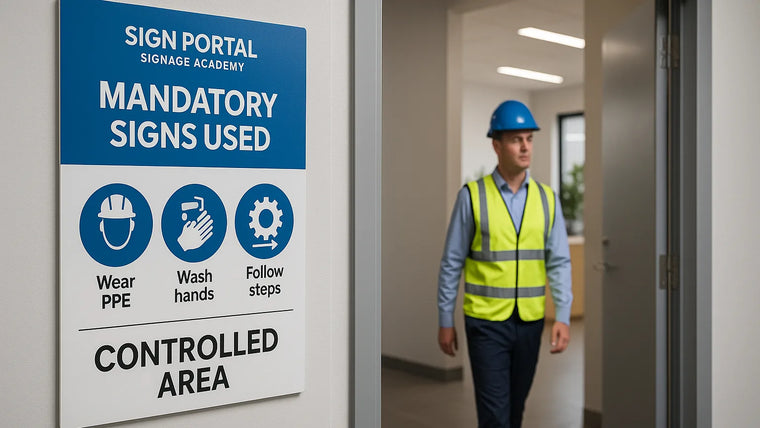
When Are Mandatory Signs Used?
Use mandatory signs whenever a specific action is required to control risk and work safely, as identified by a risk assessment and in line...
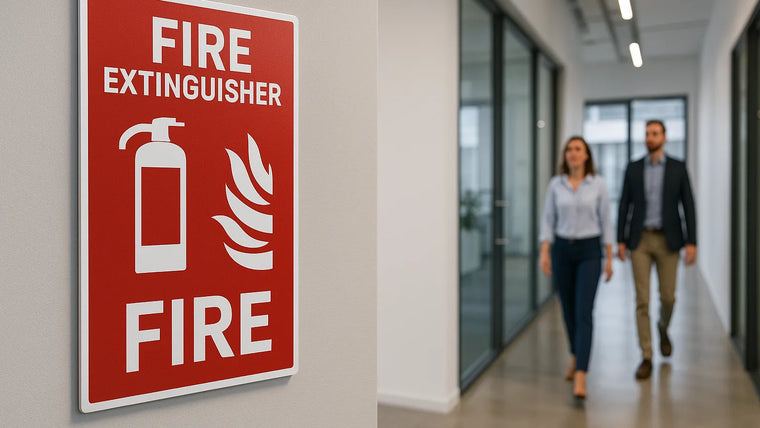
Fire Safety Signs: Complete Guide for Australian Workplaces
Fire safety signs help people locate fire equipment and exits and understand what action to take. In Australia, specify signs that comply with: •...
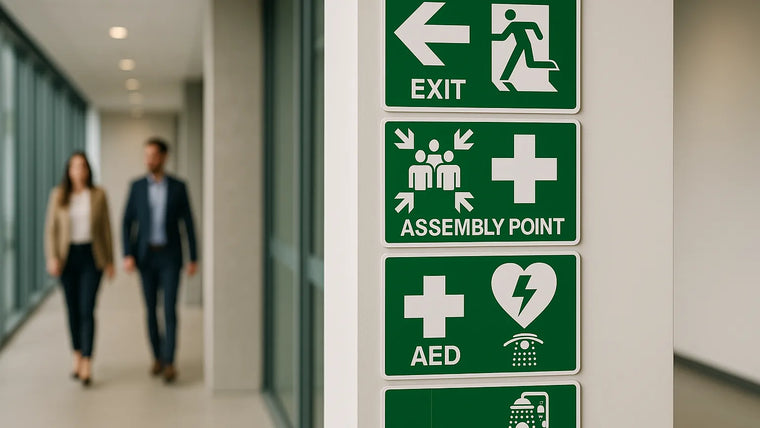
Emergency & First Aid Signs: Colours, Symbols and Meaning Explained
In Australia, emergency information and first aid signs are typically green with white symbols and text. They indicate the location of life‑saving equipment, facilities...
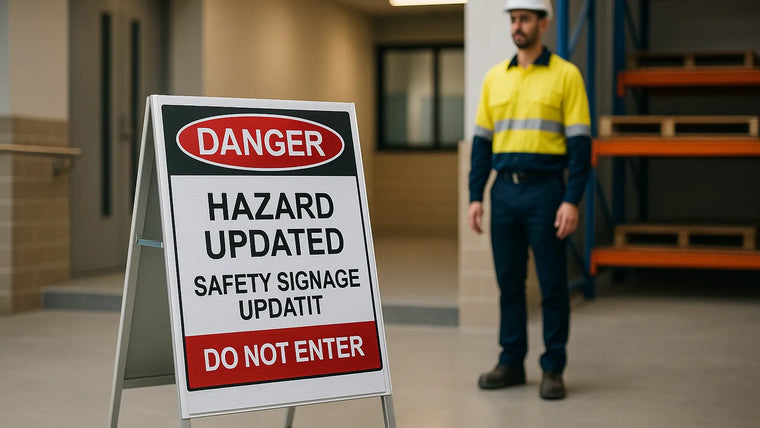
When Should Safety Signage Be Updated After a Workplace Change?
Update safety signage immediately whenever a change affects hazards or risk controls, site layout or access/egress, traffic routes, plant or processes, hazardous chemicals, PPE...
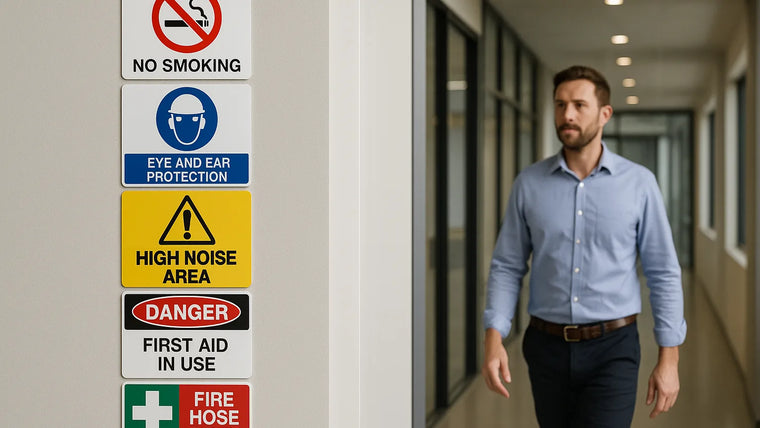
Safety Sign Colours and Shapes in Australian Workplaces Explained
In Australia, workplace safety signs must comply with AS 1319:1994. Use the correct category, colour and shape, and position signs so the message is...