They cover wayfinding, regulatory and info needs; specify clear, durable materials, install correctly, and maintain.
Public area and property signs span everything from wayfinding and amenities through to parking, access control and behaviour rules. In busy Australian workplaces and shared spaces, these signs reduce confusion, guide safe behaviour and help visitors navigate quickly.
This practical guide focuses on what to choose, how to design it so people can read it at a glance, which materials suit Australia’s climate, and how to install and maintain signs so they keep doing their job.
What these signs cover
Public area and property signs are the everyday, high-visibility messages people rely on in workplaces, campuses, retail centres, parks, strata properties and construction sites. They are not limited to safety — they include directions, permissions, restrictions and general information.
Think of them as the site’s visual language. When they are clear and consistent, people move smoothly; when they are missing or unclear, complaints and incidents rise.
Typical categories and messages

- Wayfinding and directories: building entries, receptions, lifts, levels, room IDs, toilets, parent rooms.
- Regulatory and behaviour: no smoking/vaping, CCTV in operation, dogs on leash, alcohol-free areas, quiet zones.
- Property and access control: private property, authorised personnel only, delivery entrance, loading zones, boom gates.
- Parking and transport: visitor parking, reserved bays, EV charging, speed limits, bike parking, set-down zones.
- Amenities and services: first aid, defibrillator (AED) location arrows, water refill, waste sorting, accessible facilities.
- Emergency information: assembly points, evacuation route arrows, exit direction add-ons (note: full evacuation diagrams may be regulated — seek specialist guidance).
- Open space and recreation: playground rules, BBQ instructions, pool rules, off-leash hours, track etiquette.
- Construction and maintenance: site entry rules, PPE icons, exclusion zones, after-hours contacts (often alongside statutory safety signage).
Material choices and durability
Choosing the right substrate balances visibility, durability, budget and installation method. In Australian conditions — strong UV, heat, tropical rain and coastal salt — substrate choice is critical.
Common, proven options for public area and property signs include:
- Aluminium composite panel (ACP): A rigid, lightweight panel with aluminium skins and a polyethylene core. Excellent for long-term outdoor panels, post-mounted parking and facility signs. Can be direct UV printed or faced with high-performance vinyl (including reflective).
- Corflute (fluted polypropylene): Cost-effective for temporary or semi-permanent signs such as events, short works and changeable notices. Suits fence ties and frames; best for shorter service life.
- Foam PVC (expanded PVC board): Smooth indoor panels for amenities, directories and wall-mounted messages. Not ideal for long-term full sun exposure.
- Acrylic (PMMA): Premium indoor identification, door and amenities panels. Can be reverse printed and rear-painted for a glass-like look. Suits stand-off mounts.
- Polycarbonate: Tough, impact-resistant clear sheet for high-abuse environments. Often used where vandal resistance matters.
- Traffolyte/phenolic laminates: Durable engraved plates for equipment labels, gates, switchboards and compliance plates.
- Vinyl graphics: For windows, walls and posts. Can be standard, high-tack, anti-graffiti laminated or reflective. Applied to smooth substrates or existing panels.
Quick comparison: robust panel vs temporary board
| Feature | Option A | Option B |
|---|---|---|
| Material | ACP (aluminium composite panel) | Corflute (fluted polypropylene) |
| Rigidity | High — stays flat on posts and walls | Moderate — can flex; may bow in wind over time |
| Typical thickness | 3 mm common for property and parking panels | 3–5 mm common for fence and event signs |
| Outdoor exposure | Suited to long-term outdoor use when properly fixed | Best for short to medium-term exposure |
| Best use cases | Parking, regulatory, facility ID, park rules | Works notices, events, changeable messages |
| Print method | Direct UV print or reflective/standard vinyl + laminate | Direct UV print for speed and economy |
| Shape and finish | CNC-routed to shape; clean bevels and holes/slots | Kiss/contour cut; eyelets optional |
| Mounting methods | Posts, screws with washers, stand-offs, VHB tape | Cable ties to fences, eyelets, temporary frames |
| Relative cost | Higher initial cost; longer service | Lower cost; shorter service |
Design and legibility essentials

Public signage must be understood at a glance. Prioritise contrast, hierarchy and recognisable pictograms so people can act without reading every word.
- Contrast and colour: Dark text on light backgrounds (or vice versa) improves legibility. Avoid low-contrast colour pairs.
- Type and sizing: Use clear, sans-serif fonts. Increase size with viewing distance; reserve capitals for short headings.
- Hierarchy: Lead with the action (e.g., Visitor parking), then supporting detail (2 hours, 8 am–6 pm).
- Icons: Universal icons (accessible, CCTV, no smoking) speed recognition.
- Reflectivity: Consider reflective films for vehicle approaches or low-light areas.
- Durability in design: Keep critical content away from edges, mounts and fasteners.
For artwork, supply vector files for crisp edges and scalable layout. If using rasters, provide full-size art at suitable resolution and embed all images.
- Visitor car park: white ACP panel, bold P symbol, purple heading, black directional arrow, reflective film for night visibility.
- Private property gate: compact ACP panel with CCTV icon, concise text, pre-drilled holes aligned to chain-link fence pitch.
- Amenities corridor: acrylic door signs with gender-neutral and accessible icons, rear-printed for a glass-like finish.
Sizes, placement and fixings
Size selection depends on viewing distance, approach speed and message length. For pedestrian areas, smaller panels suffice; for drive-by viewing, step up in size and consider reflective materials.
- Panels: Common rectangular formats for parking and property rules; larger landscape panels for park and facility information.
- Placement: Mount at consistent eye levels for pedestrians; raise roadside signs for clear sightlines and bumper clearance.
- Fixings: Use stainless screws with washers into solid substrates; stand-offs for premium acrylic; VHB tape for smooth indoor walls; cable ties or wire for fences; tamper-resistant screws where vandalism is a risk.
- Posts: ACP panels can be slotted or drilled for standard posts; ensure adequate rigidity for wind exposure.
Ordering and artwork supply
Clear specifications reduce back-and-forth and speed production. Provide:
- Final sizes (W × H), orientation and quantities.
- Substrate choice (e.g., 3 mm ACP, 5 mm corflute) and any reflective or anti-graffiti laminate.
- Hole or slot positions, post centres, stand-off locations or fence-mount notes.
- Artwork as press-ready PDF, AI or EPS with fonts outlined; or high-resolution TIFF/PNG for raster art.
- Colour guidance in CMYK and any samples or photos of existing signs for consistency.
- Variable data (e.g., bay numbers, room IDs) in a spreadsheet if sequential sets are required.
Repeat orders are straightforward when artwork and specifications are on file. Trade customers can streamline reorders by maintaining project-specific catalogues and part numbers.
How we manufacture in-house
Direct-to-substrate printing and precision cutting deliver clean, durable results and consistent repeatability across batches.
- UV flatbed printing: Two Mimaki JFX EX flatbed UV printers produce crisp, durable prints directly onto ACP, foam PVC and acrylic in our clean print rooms.
- CNC routing: Our MultiCam SM2412 routers ACP and other rigid panels to size and shape, adds slots for posts, and drills accurate fixing holes.
- Laser cutting and engraving: A Trotec Speedy 500 and a large-format 230 W CO2 laser cut acrylic and engrave traffolyte for durable labels and plates.
- Wide-format print-and-cut: A Roland VG-640 prints self-adhesive vinyls, including reflective films, with optional laminate; contour cutting ensures clean decal edges.
- Finishing and QA: Trimming, deburring, lamination where specified, and pack-out with edge protection for Australia-wide shipping, including regional and remote delivery.
Legal and council considerations
Some public area and property signs are subject to legislation, codes or council rules (for example, smoke-free areas, accessibility, parking controls or alcohol restrictions). Requirements vary by state, territory and local government. Where signage content is prescribed, confirm the wording, colours, icons and any symbol proportions with your governing authority before production.
- For behaviour and regulatory messages, verify that the phrasing aligns with local by-laws or workplace policies.
- If installing roadside or car park signs, check any applicable road authority guidance for layout conventions and reflectivity expectations.
- For accessibility-related symbols, confirm your organisation’s accessibility standards and internal brand usage.
When in doubt, request written confirmation from the responsible authority and include it with your order. This prevents rework and ensures consistent application across sites.
Maintenance and replacement
Routine care keeps signs legible and extends service life, especially outdoors.
- Cleaning: Use mild detergent and water with a soft cloth or microfibre. Avoid abrasive pads and strong solvents unless the film is rated for it.
- Inspection: Check fixings for loosening or corrosion, especially in coastal locations. Look for edge lifting, delamination or vandalism.
- Graffiti: If frequent, consider an anti-graffiti laminate for easier cleaning.
- Reflectivity: Night-time checks help identify reduced performance; replace if visibility drops or damage is evident.
- Update cycle: Replace when information changes (policies, contacts, hours) or when fading/vandalism undermines clarity.
Related Sign Portal resources: Public Area - Private Car Park Sign · Public Area - Keep Dogs On Leads Sign · Public Area - Level Access Sign
Frequently Asked Questions
What’s the difference between public area signs and safety signs?
Public area signs cover directions, property rules and information for everyday use, while safety signs warn of hazards or prescribe mandatory safety actions. Many workplaces use both together.
Which material lasts longest outdoors for property signage?
ACP (aluminium composite panel) with quality print or reflective film is a common choice for long-term outdoor property and parking signs due to rigidity and weather resistance.
Do I need reflective signs in car parks?
Reflective faces are recommended where vehicles approach at night or in low light. They improve recognition under headlights and are typical for parking and roadside locations.
How do I mount signs to chain-link fences?
Use panels with pre-drilled holes or eyelets sized to the fence pitch, then fix with UV-stable cable ties or wire. Add extra ties on larger panels to reduce flex in wind.
Can you match our existing building sign style?
Yes. Provide photos and artwork files or brand guidelines. Consistent colours, fonts and iconography can be replicated across new panels and decals.
What artwork files should I supply?
Press-ready PDF, AI or EPS with outlined fonts is ideal. For rasters, supply full-size at suitable resolution, and embed linked images. Include hole positions and any variable data.
Do you ship to regional and remote sites?
Yes. Orders are packed with edge protection and shipped Australia-wide, including regional and remote delivery.
Can signs be vandal-resistant?
Choose robust substrates (e.g., ACP or polycarbonate), tamper-resistant fixings and consider anti-graffiti laminate. Placement and height can also reduce tampering.
Keep learning
Related Articles
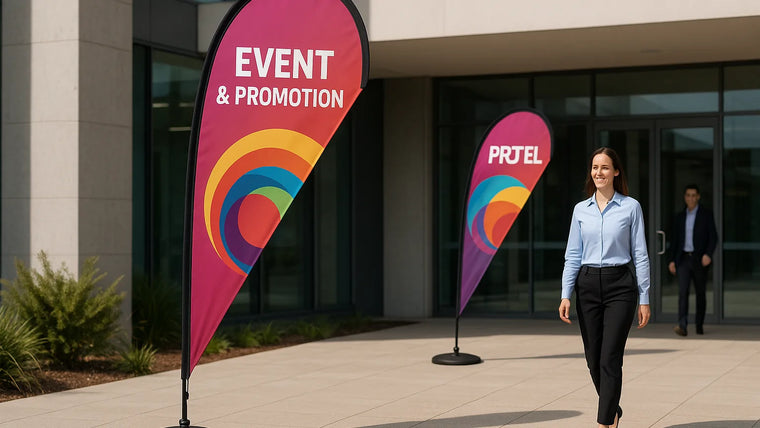
Teardrop Banners for Events and Promotions
Teardrop banners are aerodynamic, curved‑top fabric flags that hold tension to minimise flapping, delivering high visibility for events, retail forecourts and outdoor activations. Systems...
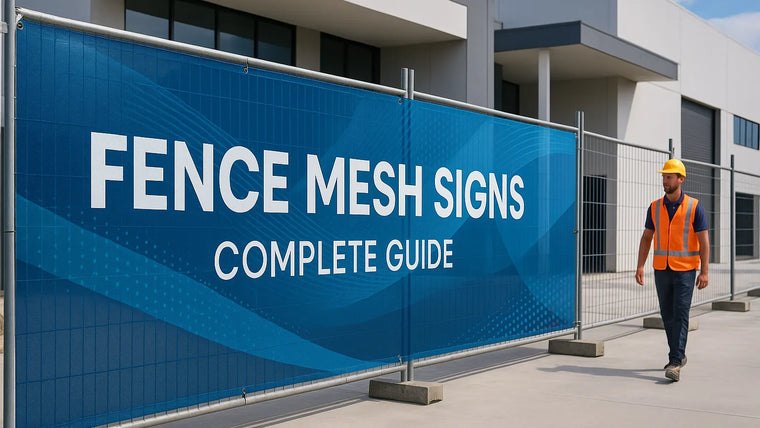
Fence Mesh Signs: Complete Guide
Fence mesh signs are printed mesh banners designed for temporary fencing and hoardings. Mesh allows airflow and can help reduce wind load compared with...
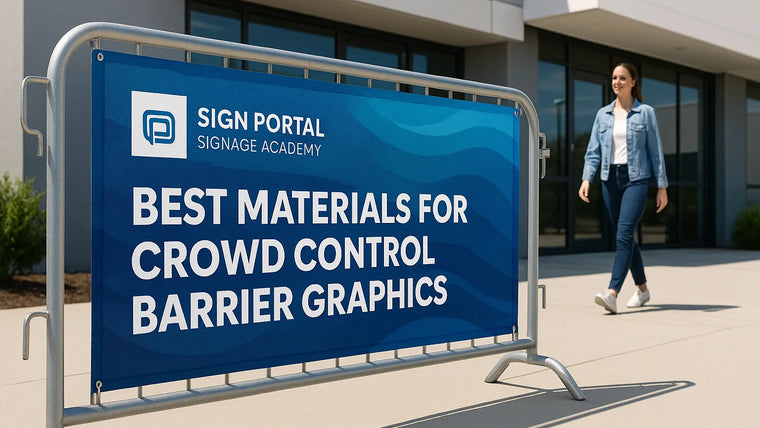
Best Materials for Crowd Control Barrier Graphics
For most outdoor events in Australia, perforated mesh banner is a versatile option because airflow can help reduce wind effects and it’s quick to...