Match material to environment: engraved laminates indoors; anodised aluminium, 316 stainless or subsurface films outdoors, with secure fixings.
Switchboard labels must stay readable for years, not months. Heat, UV, cleaning chemicals, abrasion, dust and moisture all work against legibility. The right material and manufacturing method make the difference between crisp, compliant warnings and faded stickers that create risk. This guide explains the main label materials used on electrical switchboards, how they are manufactured at Sign Portal, and how to match each option to Australian conditions.
What counts as a durable switchboard label?
Durability is the label’s ability to remain attached, readable and intact for the intended service life in its actual environment. For switchboards, that means resisting UV light, heat, chemical wipes, abrasion from hands and tools, and occasional impact. It also means contrast that does not wash out and adhesives or fixings that do not let go.
In practice, durability is driven by four factors: the base material, the way the message is formed (engraved, subsurface or surface print), the mounting method (adhesive or mechanical) and the environmental exposure. Getting all four right is what keeps labels legible.
How we validate “durable” at Sign Portal: we select materials and adhesives that meet recognised test methods for label systems (e.g. solvent/rub resistance and defacement per UL 969, cross‑hatch adhesion per ASTM D3359, and UV exposure per ISO 4892-3), then build practical margins based on Australian site conditions.
Our internal durability benchmark thresholds for switchboard labels (measured on powdercoated steel test coupons representative of Australian plant rooms) are: cross‑hatch adhesion ≥ 4B (ASTM D3359) after 72 h bond; 180° peel adhesion ≥ 8 N/10 mm on smooth polyester powdercoat for 200MP systems and ≥ 10 N/10 mm on textured/LSE coats for 300LSE systems; UL 969 rub resistance (20 double rubs water, 20 double rubs isopropyl) with no loss of legibility; accelerated UV weathering to 500 h (ISO 4892‑3, Method A) with ΔE ≤ 3 and no adhesive edge lift. Selected constructions are then validated outdoors on our Brisbane exposure rack for at least 12 months.

Common materials used on switchboards
Engraving laminates (often called Traffolyte)
Engraving laminates are multi-layer plastics where the top colour is engraved away to reveal a contrasting core colour. Because the message is physically cut into the cap, it will not rub off. They are popular for mains isolator markers, circuit identifiers and danger/voltage plates.
- Best for: long-term indoor use and many outdoor applications when specified correctly.
- Strengths: abrasion resistance, crisp legibility, no ink to fade, wide colour choices.
- Considerations: select UV-stable grades for outdoor use and the correct adhesive for powdercoated or textured panels.
- Typical spec we supply: 1.6 mm or 3.2 mm laserable laminate with 3M 200MP (467MP/468MP) acrylic adhesive for smooth powdercoat/metal, or 3M LSE (9472LE) when bonding to low‑surface‑energy/textured coats.
- Expected service life (typical): 10+ years indoors; 5–10 years outdoors with UV‑stable grades and correct adhesive selection.
Laserable plastic laminates (acrylic-based)
Similar to phenolic-style laminates but optimised for laser engraving and cutting. Fine detail and small text are achievable with clean edges, suited to dense circuit schedules and QR code plates.
- Strengths: precision detail, fast turnaround, tidy edges, complex shapes.
- Considerations: confirm heat and chemical resistance if used near solvents or cleaning agents.
- Typical spec we supply: UV-stable acrylic composite, 0.8–1.6 mm, laser cut with 1.5–2.0 mm corner radii to reduce snag/peel.
- Expected service life (typical): similar to engraving laminates; prefer indoor or shaded outdoor locations.
Anodised aluminium nameplates
Aluminium plates can be anodised and then marked, or printed and sealed. They handle heat well, present a professional metal finish and fasten reliably with rivets or screws where adhesives are not preferred.
- Strengths: temperature resistance, dimensional stability, metal aesthetics.
- Considerations: coastal environments can accelerate corrosion unless marine-grade finishes or stainless are used.
- Typical spec we supply: 5005 H34 aluminium, AA15 or AA25 anodic coating per AS 1231, laser marked or sealed subsurface print; 1.0–1.6 mm thickness with 3.2–4.8 mm fixing holes.
- Expected service life (typical): 10–20+ years depending on anodic thickness (AA25 preferred outdoors/coastal) and fixings.
Stainless steel plates
Stainless offers maximum chemical and abrasion resistance with a premium appearance. Laser-marked or engraved stainless is used where vandal resistance or harsh cleaning is expected.
- Strengths: high abrasion resistance, chemical resistance, longevity in industrial plants.
- Considerations: higher cost, typically mechanically fixed rather than adhesive-only.
- Typical spec we supply: Grade 316 stainless, 0.9–1.2 mm; fibre-laser marked black or rotary-engraved and paint-filled; countersunk screw or rivet fixing.
- Expected service life (typical): 20+ years with appropriate fixings and isolation from dissimilar metals.
Polycarbonate or polyester overlays (subsurface print)
Overlays are clear or textured films printed on the back (subsurface), protected by the film thickness, then laminated with industrial adhesive. They suit mimic panels, control fascias and rated equipment overlays.
- Strengths: excellent chemical and scratch resistance, graphic protected behind the film, textures diffuse glare.
- Considerations: choose correct adhesive for powdercoat and plastics; ensure radius corners to avoid peel.
- Typical spec we supply: hard-coated polycarbonate (e.g. 0.25–0.5 mm Lexan-type, matte 8B35 texture) or 0.125–0.25 mm polyester with 3M 200MP or 300LSE adhesive. Window areas and embosses available.
- Expected service life (typical): 7–15 years depending on thickness, texture, and UV exposure.
Printed vinyl labels
Digitally printed vinyl with a protective laminate is common for indoor panels and temporary or non-critical markers. It enables full colour, gradients and rapid changes but is the least robust option in harsh exposure.
- Strengths: economical, flexible, fast to produce, conforms to mild curves.
- Considerations: select polymeric or cast grades for better stability; always laminate; reserve for low-abrasion areas.
- Typical spec we supply: polymeric 70–80 µm or cast 50 µm vinyl with 70–80 µm clear matte laminate; rounded corners ≥2 mm.
- Expected service life (typical): 3–7 years indoors; limit outdoor use to temporary applications.
Durability factors in Australian conditions
Australia’s UV levels, heat and coastal salt can degrade inks, plastics and adhesives faster than temperate regions. Indoor plant rooms can also run hot and dusty. Think about actual exposure, not just the postcode.
- UV and heat: choose UV-stable laminates, subsurface films or metal plates for sunlit or hot enclosures. Acrylic PSAs typically rate to ~93–149 °C depending on system; allow 72 hours for full bond build after install.
- Coastal and industrial: prefer stainless or properly finished aluminium; specify high-bond adhesives or mechanical fixings.
- Chemical cleaning: subsurface polycarbonate/polyester or stainless fare best against frequent wipe-downs.
- Abrasion: engraved laminates and metal plates resist scuffing from gloves and tools better than surface-printed vinyl.
- Condensation/dust: clean, dry surfaces at install time are critical—avoid bonding below 15 °C substrate temperature or when the surface is at/near the dew point.
- Powdercoat type: textured and low‑surface‑energy polyester coats need LSE adhesives (e.g. 3M 300LSE family) and additional application pressure to wet‑out the peaks/valleys.
- Galvanic and bimetal effects: when mechanically fixing metals, isolate stainless fasteners from aluminium plates with nylon or fibre washers in coastal sites.

Manufacturing methods that impact longevity
Engraving (laser or rotary)
Engraving physically removes a top layer to reveal a contrasting core. It does not rely on ink adhesion, so messages remain legible even after repeated scuffs. At Sign Portal, we laser-engrave and cut on a Trotec Speedy 500 for precision small text and symbols, and route rigid plates on our MultiCam SM2412 when thicker composites or metals are required. We specify minimum stroke widths for durability and add 0.2–0.3 mm stroke compensation on paint-filled metals to maintain legibility after curing.
UV flatbed printing
UV-curable inks bond to many substrates with excellent colour and speed. For labels that will be handled frequently, we either specify a hard-wearing laminate over the print or use subsurface methods so the ink is protected by material thickness. Our Mimaki JFX EX flatbeds produce crisp legends on rigid sheets before we register and cut them to finished size. Where required, we apply a post-print clear to improve chemical rub performance.
Subsurface reverse printing
Printing on the back of clear polycarbonate or polyester protects the artwork entirely. We then apply an industrial adhesive layer, so the print sits between the substrate and the panel. This is ideal for control fascias and mimic panels needing chemical resistance. Windows, dead-front effects and selective textures (matte/gloss) can be built in.
Cutting and finishing
Clean edges and correct corner radii reduce peel and snags. We cut plastics and thin metals on our Trotec and large-format 230 W CO2 laser, and route thicker sheets on the MultiCam. Vinyl labels are print-to-cut on our Roland VG-640, then laminated and kiss-cut for easy application. Deburring and chamfering are applied to metal plates to remove sharp edges; holes are positioned clear of electrical clearances.
Colour, contrast and verification: we profile materials with an X‑Rite i1 device and keep master swatches for high‑contrast electrical colours (e.g. black/white, yellow/black, red/white). Serialized and QR‑coded plates are 100% camera‑verified and spot‑scanned before packing.
Material match-up for typical scenarios
Use the quick comparison below to choose between two of the most common long-life options for switchboards in tough environments.
| Feature | Option A | Option B |
|---|---|---|
| Material | Engraving laminate (Traffolyte-style) | Subsurface polycarbonate overlay |
| Message durability | Engraved through cap; no ink to wear | Ink protected behind film thickness |
| Chemical resistance | Good; depends on grade and cleaners | Excellent with hard-coated films |
| Abrasion resistance | High; engraving resists scuffing | High; texture options reduce scratching |
| Heat tolerance | Good for indoor panels; specify for hot areas | Good; verify for high-heat enclosures |
| Mounting | Adhesive back or screw/rivet | Pressure-sensitive adhesive (PSA) |
| Best use | Circuit IDs, isolator plates, asset tags | Control fascias, mimic panels, wipe-down areas |
| Outdoor suitability | Yes with UV-stable grades | Yes with UV-stable films/adhesives |

Installation choices that affect performance
Even the best label fails if it is not mounted correctly. Surface preparation and the right fixing method are essential.
- Surface preparation: remove dust, oil and release agents. Clean, dry and degrease powdercoat before bonding.
- Adhesive selection: use high-bond acrylic transfer adhesives or foam tapes matched to powdercoat, plastics or metal. For textured finishes, consider thicker adhesive systems to bridge texture.
- Mechanical fixings: screws or rivets provide insurance in hot, dusty or vibration-prone switch rooms. Combine with adhesive for a sealed fit.
- Edge design: radius corners and avoid sharp points that catch gloves; consider chamfers on rigid plates.
- Application pressure: achieve firm, uniform pressure of ~100–200 kPa (use a silicone hand roller, 2–4 passes) to ensure adhesive wet‑out.
- Dwell and cure: plan for 24 h handling and 72 h full bond at 20–23 °C; extend cure time at lower temperatures or use gentle warming (30–40 °C) post‑apply.
- Primers: on difficult substrates, 3M Primer 94 can improve bond—verify compatibility with your powdercoat system first.
Field installation checklist
- Pre‑install: confirm label locations against the switchboard schedule (AS/NZS 3000 requirements for identification); isolate as required under site LOTOTO and AS/NZS 4836.
- PPE: safety glasses, gloves suitable for solvents, hearing protection for drilling, and arc‑rated PPE as required by site rules.
- Environment: ensure substrate temperature ≥15 °C and surface above dew point; avoid high humidity/condensation.
- Clean: wipe with mild detergent, rinse, then final wipe with 70–90% isopropyl alcohol; allow to dry. Do not touch the bond area afterwards.
- Dry fit: check alignment and clearance to hinges, door seals and fasteners; mark position with low‑tack tape guides.
- Bond: apply firm, even pressure (hand roller if available) from centre out; avoid bubbles. For textured powdercoat, use LSE adhesive systems.
- Edge seal (optional): for frequent wash‑downs, run a thin fillet of clear industrial sealant around rigid plates to prevent moisture ingress.
- Mechanical: if specified, drill pilot holes with the board isolated, deburr, then fix with stainless screws/rivets; avoid swarf ingress.
- Torque: for small stainless screws into threaded inserts, 0.8–1.2 N·m is typically sufficient—avoid crushing thin doors.
- Verify: cross‑check text, circuit numbers and orientation; photograph installed labels for records.
- Handover: annotate as‑built drawings/schedules and upload photos to your asset system.
Commissioning and documentation checklist
- Confirm all mandatory markings per AS/NZS 3000 and any site‑specific labelling guides are present.
- Record adhesive system used (e.g. 3M 468MP or 9472LE), install date/time and ambient temperature at install.
- Note any mechanical fixings (material, size, torque) and washer/isolation details for metals.
- Capture serials/QR codes into the asset register; test scans of QR/barcodes in situ.
- Obtain sign‑off from the responsible electrical person and attach photo evidence to the work order.
- Industrial plant room: engraved laminate circuit IDs with mechanical fixing to resist dust, heat and accidental knocks.
- Control fascia: subsurface polycarbonate overlay with textured finish for chemical wipe-downs and anti-glare viewing.
- Temporary works board: laminated polymeric vinyl labels for short-term isolation notices during shutdowns.
- Coastal kiosk: 316 stainless main isolator plate with rivets and nylon washers; engraved laminate feeder IDs bonded with LSE adhesive.
Artwork and ordering considerations
Supplying clean artwork speeds production and avoids errors. Vector files (PDF, AI, EPS) with fonts outlined are ideal. For variable data (circuit lists, board references), a spreadsheet with clear columns allows automated proofing and consistent outcomes.
- Minimum text size: for engraved tags, keep text at practical sizes for readability in the field; we’ll advise based on material and colour contrast.
- Colour choices: pick high-contrast combinations (e.g., white on black, black on yellow) to maintain legibility in low light.
- Mounting notes: tell us if surfaces are textured powdercoat, stainless or plastic; we’ll match adhesives or add fixing holes.
- Reorders: our Trade Portal stores customer-specific catalogues so repeat jobs can be reordered with a few clicks.
- Proofing: we issue digital proofs with dimensions and material/adhesive call‑outs; production begins after written approval.
Maintenance, inspection and replacement
Labels do not require complex maintenance, but periodic checks protect legibility. Add label inspection to your routine switchboard checks.
- Cleaning: use mild detergents or isopropyl alcohol on non-porous materials; avoid strong solvents unless the material is rated for them.
- Inspection: look for lifting edges, adhesive creep, chalking or fading, and abrasion on frequently touched markers.
- Replacement triggers: any loss of contrast, peeling, illegibility or incorrect information warrants replacement.
- Spare sets: keep a small kit of common circuit IDs or blank engraved tags for rapid onsite updates.
Periodic inspection checklist
- Confirm all mandatory labels required by AS/NZS 3000 are present and legible.
- Check each label for: edge lift, cracks, impact damage, fading/chalking, and contamination build-up.
- Lightly probe edges with a plastic pick; if lift exceeds 2–3 mm or re-bonds poorly, schedule replacement.
- Wipe with approved cleaner and confirm no dye transfer from the label.
- Verify data accuracy: circuit numbers, feeder names, voltage/energy sources.
- Record findings with date-stamped photos to your asset system; raise work orders for any nonconformance.
- Spot‑test adhesion annually with a 25 mm tab peel; note any reduction vs previous records.
Repair and rework in the field
Minor damage can often be repaired without a full replacement. For safety, isolate as required under site procedures and AS/NZS 4836 before any drilling or mechanical work on switchboards.
- Edge re‑bond (minor lift): clean the substrate edge with isopropyl alcohol, warm the area slightly (~30–40 °C) and press down with a roller. For persistent lift on textured coats, fit a replacement with an LSE adhesive.
- Adhesive replacement (label intact): gently heat (not above 60 °C on painted panels), peel label, remove residue with citrus adhesive remover then IPA, and re‑apply fresh transfer adhesive sheet; re‑install using firm pressure.
- Plate swap (mechanically fixed): remove fasteners, deburr if required, fit new plate with stainless hardware and nylon washers; apply anti‑seize on screws where dissimilar metals are present.
- Data correction: for engraved plates, we can supply snap‑fit overlay tabs or micro‑plates to cover obsolete characters, but full replacement is preferred for critical information.
- Do not: drill or rivet into energised enclosures; use aggressive solvents (e.g. MEK, acetone) on plastics unless verified compatible.
Repair checklist
- Identify failure mode: adhesive lift, impact damage, chemical attack, UV fade, or data error.
- Confirm substrate: powdercoat type/texture, metal or plastic; select matching adhesive (200MP vs LSE) or mechanical fixings.
- Prepare: clean, degrease, and lightly abrade only if permitted by site standards; vacuum away dust/swarf.
- Re‑bond method: use a silicone roller and maintain ~100–200 kPa pressure; clamp rigid plates (non‑marring blocks) for 1–2 hours if possible.
- Verify: photograph before/after, update asset records, note adhesive lot and install conditions for traceability.

FAQs
Which material lasts longest on outdoor switchboards?
Stainless steel plates, anodised aluminium with appropriate finish, engraved UV-stable laminates and subsurface polycarbonate overlays are all proven long-life choices outdoors. The best pick depends on abrasion, chemicals and coastal exposure.
Are printed vinyl labels suitable for switchboards?
Yes for indoor, low-abrasion areas and short- to medium-term use, provided they are laminated. For harsh or high-touch locations, choose engraved laminates, metals or subsurface overlays.
Can you make small text and QR codes legible?
Yes. Laser engraving and high-resolution UV printing allow fine detail. We will advise minimum sizes based on material and colour contrast to ensure scan and read reliability.
What adhesive should I use on powdercoated panels?
Use high-bond acrylic adhesive systems formulated for powdercoat and low-surface-energy finishes. For heavy plates or textured coats, consider combining adhesive with mechanical fixings.
How do I supply a circuit schedule for engraving?
Send a spreadsheet with board ID, circuit numbers and label text in separate columns. We import this into our workflow to generate consistent proofs and engraved tags.
Do you offer repeat ordering for replacement labels?
Yes. Through our Trade Portal we can store customer-specific catalogues so you can reorder exact matches quickly, including serialised or variable-data sets.
Will cleaning chemicals damage my labels?
Subsurface polycarbonate/polyester overlays and stainless plates handle frequent wipe-downs best. For engraved plastics, check cleaner compatibility and avoid aggressive solvents.
What service life should I expect?
With correct specification and installation, 10+ years indoors is typical for engraved laminates and subsurface overlays, and 10–20+ years for anodised aluminium and stainless plates outdoors. Actual life depends on UV, chemicals, abrasion and cleaning regimes.
Can you supply test data with our order?
Yes. On request we include a material/adhesive certificate with lot numbers and our latest adhesion/rub test snapshots for the construction supplied.
About the photos in this article
All images shown are original photographs captured by Sign Portal in our Brisbane facility and on Australian worksites. We maintain shot logs, dates and raw files for each photo to document real materials, equipment and outcomes.
For transparency, we retain original RAW files (e.g. SP-IMG-2024-0xxx) with time/date metadata, location notes and subject approvals where required. Images illustrate our actual equipment (Trotec Speedy 500, MultiCam SM2412, Mimaki JFX EX, Roland VG‑640) and real installations completed by our team.
Technical sources and standards we reference
- AS/NZS 3000 (Wiring Rules) – identification and switchboard marking requirements.
- AS 1231 – Aluminium and aluminium alloys—Anodic oxidation coatings (AA15/AA25 guidance).
- AS/NZS 4836 – Safe working on or near low-voltage electrical installations and equipment (for installation/repair practices).
- UL 969 – Marking and Labelling Systems (solvent/rub/defacement performance for label constructions).
- ASTM D3359 – Standard Test Methods for Rating Adhesion by Tape Test (cross-hatch adhesion checks).
- ISO 4892-3 / ASTM G154 – UV exposure of plastics (accelerated weathering guidance).
- ISO 9227 / ASTM B117 – Neutral salt spray (for coastal/corrosion considerations on metals).
- 3M Adhesive 200MP – Technical data and application guidance (e.g. 467MP/468MP transfer tapes; peel/shear and application pressure).
- 3M 300LSE family – Technical data (e.g. 9471LE/9472LE for low-surface-energy substrates).
- LEXAN hard‑coated polycarbonate films (e.g. 8B35 texture) – Chemical/abrasion performance.
- Standards Australia – access to AS/NS standards catalogues.
Related Sign Portal resources: PV SW Electrical and Warning Label for Solar Installations · Meter Isolator Electrical Label · Electrical Warning Label - PV DP
Frequently Asked Questions
Which material lasts longest on outdoor switchboards?
Stainless steel, anodised aluminium with the right finish, UV-stable engraved laminates and subsurface polycarbonate overlays are top performers outdoors.
Are printed vinyl labels suitable for switchboards?
Yes for indoor, low-abrasion and short- to medium-term use with lamination. For harsh areas, prefer engraved, metal, or subsurface options.
Can you make small text and QR codes legible?
Yes. We laser engrave and high-resolution print to achieve fine detail, advising minimum sizes for reliable scanning and reading.
What adhesive should I use on powdercoated panels?
Select high-bond acrylic adhesives formulated for powdercoat and low-surface-energy surfaces; add screws or rivets for insurance where needed.
How do I supply a circuit schedule for engraving?
Provide a spreadsheet with board ID, circuit numbers and label text in separate columns for automated proofing and consistent engraving.
Do you offer repeat ordering for replacement labels?
Yes. Our Trade Portal stores customer-specific catalogues for quick reorders, including serialised or variable-data sets.
Will cleaning chemicals damage my labels?
Subsurface polycarbonate/polyester and stainless handle frequent cleaning best. For engraved plastics, confirm cleaner compatibility first.
Keep learning
Related Articles
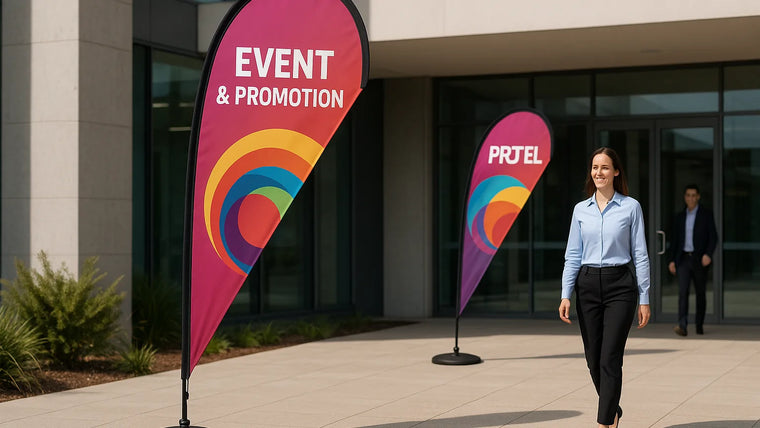
Teardrop Banners for Events and Promotions
Teardrop banners are aerodynamic, curved‑top fabric flags that hold tension to minimise flapping, delivering high visibility for events, retail forecourts and outdoor activations. Systems...
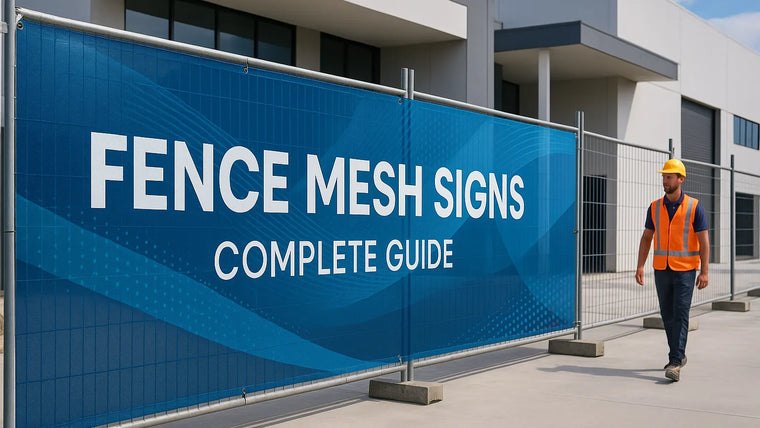
Fence Mesh Signs: Complete Guide
Fence mesh signs are printed mesh banners designed for temporary fencing and hoardings. Mesh allows airflow and can help reduce wind load compared with...
Best Materials for Crowd Control Barrier Graphics
For most outdoor events in Australia, perforated mesh banner is a versatile option because airflow can help reduce wind effects and it’s quick to...