Match site, service life and viewing distance to substrate, graphics and fixing, then check permits and standards for Australian UV, wind and salt.
This outdoor signs Australia complete buyer’s guide gives you a fast way to choose the right material and finish for your site, climate and service life. For long‑term panels, use ACP or solid aluminium with a laminated face; for short‑term promos, choose Corflute or banners; pick reflective sheeting for traffic and safety; and use acrylic for premium sheltered areas. We’ll show when each option actually makes sense on site, how we print and finish them in‑house, and the practical steps to install, maintain and meet Australian Standards without surprises.
How we re‑skin on site or in our shop (typical method):
- Verify substrate integrity (no oil-canning, corrosion, loose fixings). If the panel is compromised, order a replacement ACP sign panel or aluminium sign.
- Warm and peel the old graphic at 45°; remove adhesive residue with approved remover, then isopropyl alcohol wipe. Avoid saturating ACP edges.
- Dry fit new laminated decal, hinge, apply with firm squeegee pressure, and post‑heat edges where specified by the film manufacturer.
- Seal edges on reflective systems where required; replace any compromised fixings.
- Record the refresh date on the rear label to support future maintenance cycles.
For torn banners, small edge tears can be repaired with welded or reinforced patches; beyond that, replacement is usually more economical — see banners. For chipped acrylic edges, light machine polish can restore clarity; through‑cracks near fixings are not repairable — see acrylic signs for replacements.
Compliance and Australian Standards
Check the governing standard before production: AS 1319 for workplace safety, AS 1742 for road/traffic, and AS/NZS 1906.1 for reflective classifications where specified.
Outdoor signage can intersect with different requirements depending on context. Workplace safety signs commonly follow AS 1319 conventions for categories such as prohibition, mandatory, warning, danger and emergency information. Road and traffic control signage is specified under the AS 1742 series and relevant road authority requirements, which differ from general workplace signs. Where traffic-grade retroreflectivity is specified, reflective sheeting selection should align with AS/NZS 1906.1 classifications and the authority’s specification.
Do not assume a sign is compliant because it looks similar to another example online. Identify the governing requirement for your site and confirm the current specification before production.
Common outdoor sign applications in Australia
- Retail fascia, pylons and shopfront branding.
- Construction site boards, safety and project signage.
- Council and public-space notices, wayfinding and park signage.
- Warehouse and industrial identification, PPE and equipment labels.
- Schools and campus wayfinding, building identification and accessibility information.

Order outdoor signage products online in Australia
- ACP sign panels
- Aluminium signs
- Banners and mesh
- Decals and window films
- Acrylic signs
Related Sign Portal resources: Weatherproof Signage for Australian Conditions · Outdoor Signs
Frequently Asked Questions
What outdoor sign material lasts the longest in coastal areas?
Solid aluminium with corrosion-resistant hardware is often preferred near the coast. Combine with suitable films and laminates and avoid dissimilar-metal contact to reduce galvanic corrosion.
When should I choose reflective material for an outdoor sign?
Use reflective when night-time visibility or traffic control is required. For road-related applications, follow the relevant authority specification and AS/NZS 1906.1 classifications.
Is ACP suitable for every outdoor project?
ACP suits many general sign panels, but some buildings and applications impose fire-performance or other requirements. Check the project specification and product documentation before selecting ACP.
Do I need a laminate on outdoor prints?
Not always. Lamination adds abrasion and cleaning resistance and can improve durability, but suitability depends on the print film, environment and cleaning practices.
Can you replace just the graphic without changing the whole sign?
Often yes. Systems using applied films or replaceable face panels can renew graphics while retaining frames or posts if the structure remains safe and serviceable.
What file format is best for outdoor sign artwork?
Supply vector artwork for logos and cut paths where possible, with high-resolution images and clear finished dimensions. Include bleed for edge-to-edge prints and separate cut/drill layers from print.
How do I size a safety sign for readability?
Base size on viewing distance and message complexity. Prioritise symbol and key text size, keep wording concise and position signs in clear line of sight before the decision point.
Keep learning
Related Articles
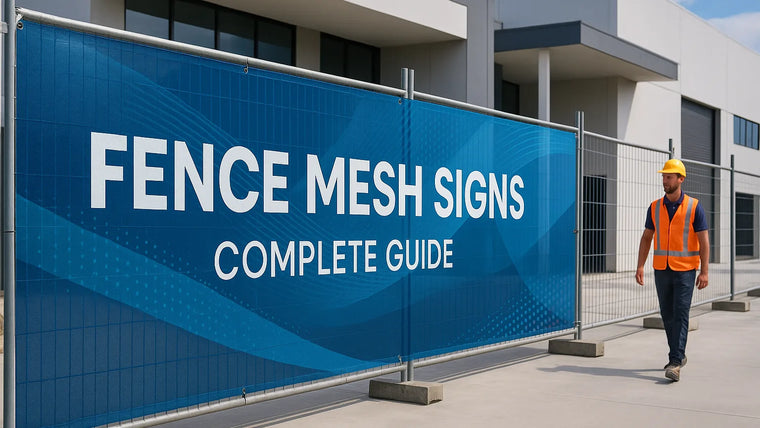
Fence Mesh Signs: Complete Guide
Fence mesh signs are printed mesh banners used on temporary fencing and hoardings. The perforated material allows airflow compared with a solid banner, while...
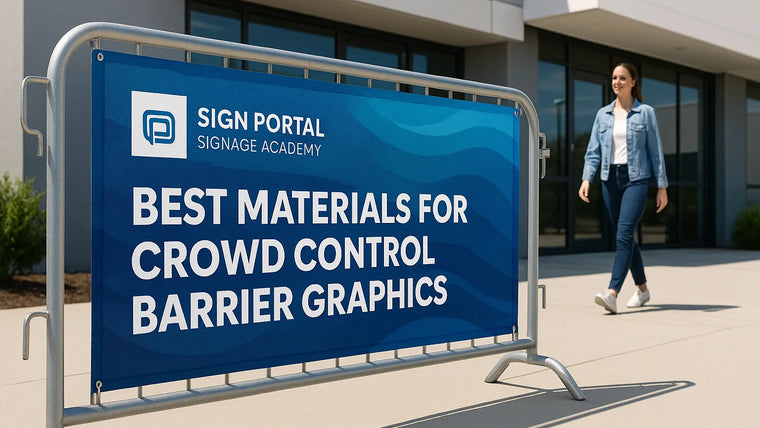
Best Materials for Crowd Control Barrier Graphics
For most outdoor events in Australia, perforated mesh banner is a versatile option because airflow can help reduce wind effects and it’s quick to...
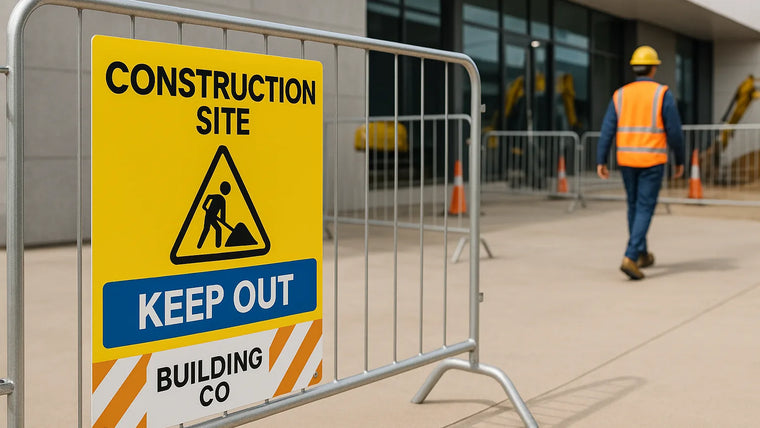
Crowd Barrier Signage for Construction Sites
Crowd barrier signage for construction sites uses panels, banners or decals mounted to portable barriers to guide pedestrians, brand perimeters and reinforce safety messages....